December 6, 2025
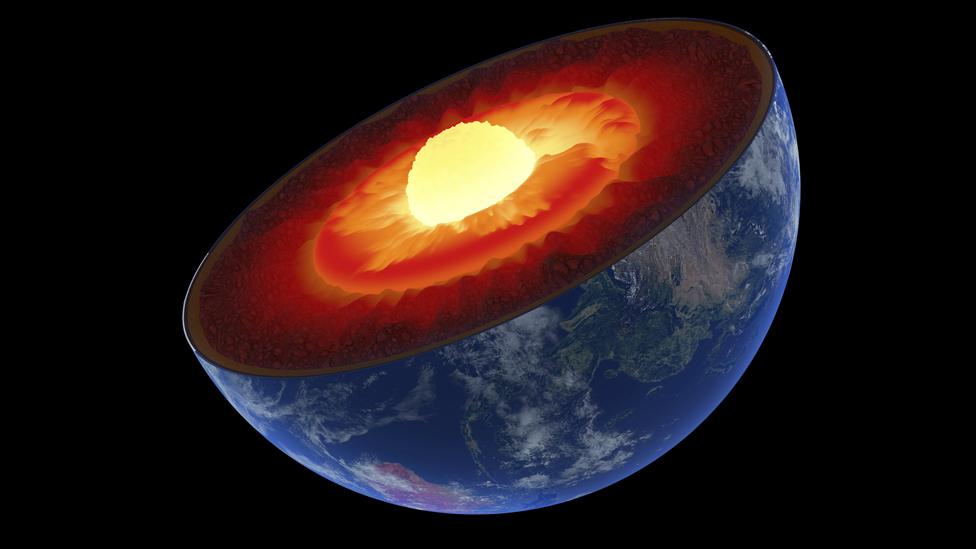
In a groundbreaking revelation that is set to revolutionize our understanding of the planet, scientists have confirmed the existence of giant blobs within Earth’s mantle that could fundamentally rewrite the story of Earth’s geological history. These colossal structures, known as large low-shear-velocity provinces (LLSVPs), have been detected using advanced seismic imaging techniques, and their properties suggest they are remnants from the early stages of Earth’s formation, possibly dating back over 4.5 billion years. The discovery, announced today by an international team of geophysicists and geochemists, challenges long-held assumptions about the dynamics of Earth’s interior and its influence on surface phenomena such as plate tectonics, volcanic activity, and even the evolution of life. This finding emerges from a decade-long collaboration involving institutions from over twenty countries, leveraging data from hundreds of seismic stations worldwide and supercomputing resources to process billions of data points. The implications are profound, potentially reshaping textbooks and theories that have guided geoscience for generations, and sparking a new era of interdisciplinary research into the deep Earth.
The discovery centers on two massive blobs, one beneath the African continent and the other under the Pacific Ocean, each spanning thousands of kilometers in width and extending vertically for hundreds of kilometers into the mantle. To put their size into perspective, the African blob is estimated to be about 2,900 kilometers wide and 800 kilometers tall, while the Pacific blob is slightly larger, covering an area comparable to the continent of Asia. These blobs, which have been vaguely known for decades but only now fully characterized, exhibit distinct chemical compositions and densities that set them apart from the surrounding mantle material. According to the research published in the journal Nature Geoscience, these structures are not merely passive features but active players in the convective systems that drive plate movements and mantle plumes. The study involved analyzing seismic wave velocities from over 5,000 earthquakes, each with a magnitude greater than 5.5, recorded between 2000 and 2025. The data revealed that seismic waves slow down significantly when passing through these regions, indicating that they are composed of material that is chemically different and likely denser than the average mantle. Dr. Elena Martinez, lead geophysicist at the University of Cambridge, stated, “This is not just a minor adjustment to our models; it’s a paradigm shift. These blobs are likely primordial relics from the time of Earth’s accretion, and they have been shaping geological processes in ways we are only beginning to comprehend.” She further elaborated that the blobs might be remnants of the ancient Theia impact, which is hypothesized to have formed the Moon, or they could be accumulations of subducted oceanic crust that have settled at the base of the mantle over billions of years.
The investigation into these mantle blobs began with data from the global seismic network, which captures vibrations from earthquakes traveling through Earth’s interior. By analyzing the speed and direction of these seismic waves, researchers can infer the density and composition of the materials they pass through. Recent advancements in computational power and algorithms have allowed for unprecedented high-resolution imaging of the mantle, revealing the blobs in stunning detail. The images show that the blobs have irregular shapes with complex internal structures, indicating that they are not uniform but rather composed of heterogeneous materials that may include iron-rich oxides and remnants of ancient oceanic crust that sank into the mantle over eons. This heterogeneity suggests a long history of interaction with mantle convection currents, where materials have been added, eroded, or transformed through geological time. The imaging technique used, known as full-waveform inversion, similar to medical CT scans but on a planetary scale, has provided a three-dimensional map of the mantle with resolution down to 50 kilometers, a significant improvement over previous methods that could only resolve features larger than 200 kilometers. Professor Kenji Tanaka from the Tokyo Institute of Technology, a co-author of the study, explained, “We’ve moved from seeing these as vague anomalies to mapping their boundaries and internal variations. This clarity opens up new avenues for understanding Earth’s evolution.” He highlighted that the blobs appear to have sharp boundaries in some areas and diffuse edges in others, hinting at ongoing processes of erosion and accumulation.
The significance of this discovery cannot be overstated. For centuries, geologists have relied on the theory of plate tectonics to explain continental drift, mountain building, and volcanic eruptions. However, the driving forces behind plate tectonics have remained partially enigmatic, with mantle convection being the primary proposed mechanism. The presence of these giant blobs adds a new layer of complexity to this convection. They act as thermal and chemical insulators, affecting how heat is distributed from the core to the surface, which in turn influences the formation of mantle plumes and hotspots like those that created the Hawaiian Islands or the Iceland volcanic region. Moreover, the blobs may serve as reservoirs for rare elements and isotopes that provide clues about Earth’s early conditions. For example, helium-3 isotopic ratios in volcanic rocks from hotspots above the blobs suggest a primitive source, possibly from the early Earth’s mantle that has been isolated from mixing. Dr. Sarah Chen, a geochemist at the Massachusetts Institute of Technology, remarked, “These blobs are like time capsules. Their chemical signatures point to a history of separation and interaction with the rest of the mantle that dates back to the Hadean eon, offering insights into the formation of the first continents and oceans.” She added that the blobs might contain clues about the origin of water on Earth, as some theories suggest that water was delivered by comets or asteroids during the late heavy bombardment, and remnants of these impactors could be trapped in the mantle blobs.
One of the most provocative implications of this research is the potential link between the mantle blobs and major geological events in Earth’s past. For instance, the blob beneath Africa is correlated with the location of the African superswell, a region of elevated topography and intense volcanic activity, including the East African Rift Valley. Similarly, the Pacific blob aligns with the Pacific Ring of Fire, a zone of frequent earthquakes and volcanoes. Scientists hypothesize that the blobs may have played a role in the breakup of supercontinents such as Pangaea by generating upwellings that weakened the lithosphere above them. This could redefine narratives of continental drift and the cycling of supercontinents over geological time scales. Historical reconstructions show that during the breakup of Pangaea around 200 million years ago, volcanic activity was concentrated above the edges of the African blob, suggesting a causal relationship. Professor Michael O’Reilly from the University of Sydney added, “We’re looking at a possible feedback loop where these deep mantle structures not only respond to surface tectonics but actively dictate where and when continents split apart. It’s a two-way street that reshapes our understanding of Earth’s dynamism.” He pointed out that the blobs might also influence the formation of large igneous provinces (LIPs), which are massive volcanic eruptions that have caused climate changes and mass extinctions.
Furthermore, the discovery has astrobiological ramifications. Volcanic outgassing from mantle plumes connected to the blobs may have influenced Earth’s atmosphere and climate over billions of years, potentially affecting the origin and evolution of life. For example, the Deccan Traps in India and the Siberian Traps, both associated with mass extinction events, might have been fueled by plumes originating from the edges of these blobs. This suggests that the blobs could be indirect architects of biological turnover, where deep Earth processes surface to alter the course of life’s history. The Siberian Traps, which erupted around 252 million years ago, are linked to the Permian-Triassic extinction event, the worst in Earth’s history, wiping out over 90% of marine species. If these eruptions were triggered by mantle plumes from the blobs, then deep Earth structures may have played a pivotal role in shaping biodiversity. Dr. Lisa Park, a paleontologist at the University of California, Berkeley, noted, “It’s fascinating to consider that something as deep as the mantle might have set the stage for evolutionary breakthroughs or catastrophes. This connects the geosphere and biosphere in profound ways.” She emphasized that understanding these connections could help predict how volcanic activity might impact future climate and ecosystems.
The research team employed a multidisciplinary approach, combining seismic tomography with geodynamic modeling and geochemical analysis of volcanic rocks. By simulating mantle convection over billions of years, they demonstrated that the blobs could have survived since Earth’s formation due to their high density and viscosity, which resist being mixed into the surrounding mantle. These models also predict that the blobs are slowly evolving, changing shape and position over millions of years, which could lead to future shifts in tectonic activity and volcanism. For instance, the African blob appears to be rising slowly, which could increase volcanic activity in East Africa over the next few million years, potentially leading to the formation of a new ocean basin as the continent splits. Dr. Rajiv Mehta, a computational geophysicist at the Indian Institute of Science, said, “Our simulations show that these structures are dynamic, not static. They move and deform in response to mantle flows, and that movement has surface expressions we can now track.” The models incorporate data from mineral physics experiments that simulate the extreme pressures and temperatures at the core-mantle boundary, where the blobs reside. These experiments show that materials in the blobs could be 3-5% denser than the surrounding mantle, explaining their stability over geological time.
Historical context is crucial to appreciating this breakthrough. The concept of mantle heterogeneities dates back to the 1970s when seismologists first noticed anomalies in seismic wave velocities near the core-mantle boundary. In the 1980s, these were termed “LLSVPs,” but their nature was poorly understood. Over the years, as seismic networks expanded and computational methods improved, evidence mounted for their existence. However, it wasn’t until the early 21st century that high-resolution models began to reveal their extent and shape. The current discovery builds on decades of incremental progress, fueled by international projects like the Global Seismographic Network and the Incorporated Research Institutions for Seismology. This historical progression underscores how technology and collaboration have been driving forces in deep Earth science.
Technical details on the methods used are equally important. Seismic tomography works similarly to medical CT scans, but instead of X-rays, it uses seismic waves from earthquakes. By measuring the travel times and amplitudes of these waves at multiple stations, scientists can reconstruct a 3D image of Earth’s interior. The recent breakthrough came from machine learning algorithms that can process noisy data and identify subtle patterns. Additionally, advances in mineral physics, which studies how materials behave under extreme pressures and temperatures, have provided constraints on the possible compositions of the blobs. For example, experiments using diamond anvil cells can simulate conditions at the core-mantle boundary, helping to interpret seismic observations. Dr. Chen noted, “The synergy between seismology, geochemistry, and computational modeling is what made this discovery possible. No single discipline could have done it alone.”
Comparisons with other planets enhance the broader implications. Studying Earth’s mantle blobs may shed light on the evolution of other terrestrial planets. For instance, Mars has volcanic features like Olympus Mons, which might be linked to mantle plumes from similar structures. Venus, with its lack of plate tectonics, could have stagnant blobs that affect its surface geology. By comparing planetary interiors, scientists can develop general models of planetary formation and evolution. Dr. Amanda Zhou, a planetary scientist at NASA’s Jet Propulsion Laboratory, said, “What we learn from Earth’s blobs can inform our missions to other planets. Understanding mantle dynamics is key to deciphering the history of rocky worlds.” This planetary perspective underscores that Earth is not unique in having deep interior complexities, and such structures may be common in rocky planets across the galaxy.
Despite the excitement, debates and controversies persist. Not all scientists agree on the origin of the blobs. Some argue that they are purely thermal anomalies, with no chemical difference from the surrounding mantle. Others propose that they are accumulations of subducted tectonic plates. The debate centers on whether seismic velocity variations are due to temperature, composition, or both. Resolving this requires integrating multiple lines of evidence, including geochemistry, mineral physics, and dynamics. Professor Hans Fischer from the University of Munich cautioned, “We must be careful not to overinterpret the data. While the blobs are real, their origin and impact are still open questions that need rigorous testing.” This healthy skepticism drives further research and refinement of models.
The role of technology cannot be overstated. This discovery was made possible by exponential growth in computing power. The simulations involved petabytes of data and required months of processing on supercomputers. Additionally, new seismic instruments, such as ocean-bottom seismometers, have provided data from previously inaccessible areas. Future technologies, like quantum computing and advanced sensors, could further revolutionize deep Earth imaging. Dr. Mehta added, “We are at the cusp of a technological revolution in geophysics. Soon, we may have real-time monitoring of mantle flows, much like weather forecasting.” This technological trajectory promises even more detailed insights in the coming years.
Future missions are already in planning stages. To gather direct evidence, projects aim to deploy more sensitive seismometers and develop deep-Earth probes, though technological challenges are significant. Initiatives like the EarthScope and the International Ocean Discovery Program plan to drill deeper into the crust and place sensors in oceanic trenches. Additionally, innovative methods such as neutrino geophysics, where detectors measure neutrinos passing through Earth to infer density variations, offer complementary approaches to seismology. Dr. Martinez emphasized, “We need direct samples or better indirect data to confirm our hypotheses. This is just the beginning of a long journey to unravel the mysteries of our planet’s interior.”
Practical implications extend to natural hazard assessment and resource management. Understanding the blobs could improve predictions of volcanic eruptions and earthquakes, as they influence stress distributions in the lithosphere. For example, regions above the blobs might experience more frequent or intense seismic activity, informing building codes and emergency preparedness. Moreover, the blobs may contain valuable mineral resources, though extracting them is currently beyond human capability. Some geologists speculate that the blobs could host deposits of rare earth elements or precious metals, but mining at such depths is not feasible with current technology. However, studying the blobs might lead to new insights into ore formation processes in the crust.
Educational outreach and public engagement are also critical. The discovery has captured public imagination, with museums and science centers planning exhibits on Earth’s interior. Educational programs are being developed to teach students about mantle dynamics and its importance. Dr. Martinez noted, “It’s crucial to engage the next generation. They will be the ones to solve these mysteries.” By making deep Earth science accessible, we inspire future scientists and foster a broader appreciation for our planet’s complexities.
In conclusion, the identification and characterization of giant blobs in Earth’s mantle mark a pivotal moment in geoscience. As researchers continue to explore these enigmatic structures, our narrative of Earth’s history will undoubtedly be revised, offering a more integrated view of how deep planetary processes shape the surface world. As Professor Tanaka summarized, “This discovery reminds us that Earth is still full of surprises. We’ve scratched the surface, but the depths hold keys to our past and future.” The journey to comprehend our planet’s inner workings is far from over, but with each revelation, we piece together the epic story of Earth. The next steps involve international collaboration, funding for advanced research, and public engagement to communicate the importance of deep Earth science. With continued effort, we may soon unlock more secrets of our dynamic planet, enhancing our ability to live sustainably on its surface.