
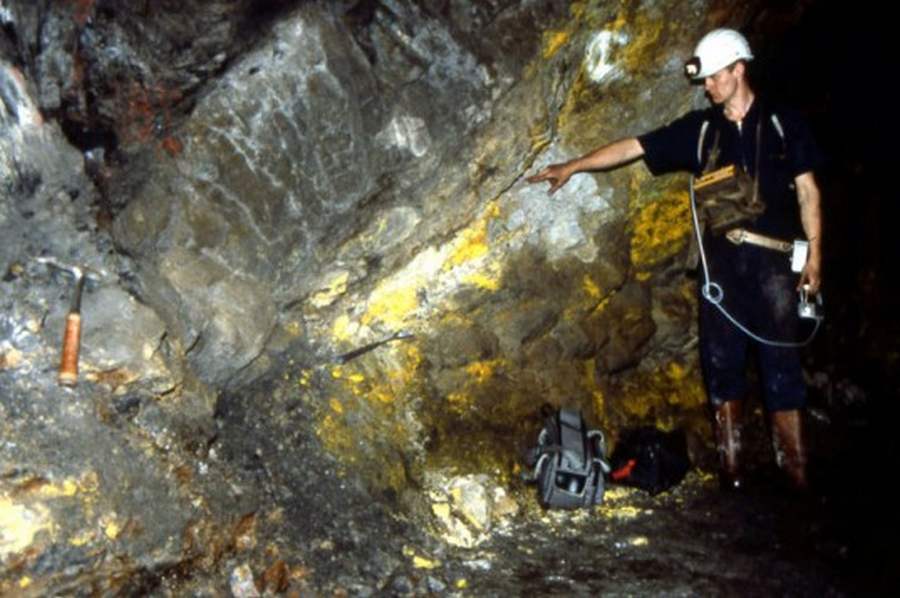
OKLO, GABON – February 22, 2026.
In the heart of West Africa, deep within the uranium mines of Gabon, lies a geological marvel that defies conventional understanding: a two-billion-year-old nuclear reactor. Discovered accidentally in 1972, the Oklo reactor site continues to challenge scientific paradigms, offering a unique window into the Earth’s primordial past and the potential for natural, self-sustaining nuclear fission. As a new international team of researchers completes a comprehensive study of the area, the reactor that “shouldn’t be there” is once again making headlines, forcing a re-evaluation of nuclear physics, geology, and the very conditions that allowed life to flourish on our planet.
The story of the Oklo reactor began when French physicists noticed a discrepancy in uranium samples from the Mounana mine. The uranium-235 isotope, the fissile material used in nuclear reactors, was present at a slightly lower concentration than expected—about 0.003% less. This anomaly, while minuscule, was significant because uranium-235 is highly unstable and decays faster than its more common cousin, uranium-238. Today, uranium-235 makes up only 0.72% of natural uranium, but two billion years ago, its concentration was much higher, around 3.7%, due to its shorter half-life of 704 million years. This higher concentration, combined with specific geological conditions, allowed for a natural nuclear chain reaction to occur spontaneously.
The Oklo site is not a single reactor but a cluster of 16 distinct zones where fission took place intermittently for hundreds of thousands of years. These ancient reactors operated at a modest power level of about 100 kilowatts, comparable to a small research reactor today. The key to their sustained operation was the presence of groundwater, which acted as a neutron moderator, slowing down neutrons enough to continue the chain reaction. As the fission process heated the surrounding rock, the water would boil away, acting as a natural control rod and shutting down the reaction until the area cooled and water returned. This self-regulating cycle continued for millennia, creating a natural nuclear waste containment system that has intrigued scientists for decades.
Dr. Marie-Claire Dubois, a geochemist at the French Alternative Energies and Atomic Energy Commission (CEA) and lead author of the new study, emphasizes the importance of the site. “The Oklo reactors are the only known natural nuclear reactors on Earth. They provide an unparalleled opportunity to study how nuclear waste behaves over geological timescales. The fission products, including plutonium and other radioactive isotopes, have remained largely contained within the reactor zones for two billion years, which is remarkable. This has profound implications for the long-term storage of man-made nuclear waste.”
Recent research has focused on understanding the precise mechanisms that allowed these reactors to function. Using advanced isotopic analysis and high-resolution imaging, the international team, comprising scientists from Gabon, France, the United States, and Japan, has mapped the distribution of fission products and the migration of elements within the reactor zones. They found that most of the radioactive waste was immobilized by incorporation into the crystal structure of minerals like uraninite and apatite. This natural containment was facilitated by the reducing conditions of the environment, which prevented the oxidation and dissolution of the uranium ore.
However, the reactor’s existence raises a fundamental question: could such natural reactors have played a role in the origin of life? Some scientists speculate that the radiation from these reactors might have provided the energy needed to drive prebiotic chemical reactions, potentially contributing to the formation of complex organic molecules. Dr. Kwame Nkrumah, a geobiologist at the University of Ghana and a member of the research team, explains: “The Oklo reactors were hotspots of energy in an otherwise quiet geological landscape. The ionizing radiation could have broken down simple molecules like water and methane, creating free radicals and reactive species that might have facilitated the synthesis of amino acids and other building blocks of life. While this is speculative, it’s a tantalizing possibility that connects nuclear physics to the origins of biology.”
Moreover, the discovery of the Oklo reactors has had a profound impact on nuclear physics. Prior to 1972, it was assumed that natural uranium could not sustain a chain reaction. The Oklo findings forced physicists to reconsider the conditions necessary for criticality and led to a deeper understanding of neutron physics and isotope geochemistry. The reactors also serve as a natural laboratory for studying the fundamental constants of physics. By analyzing the isotopes produced in the Oklo fission, scientists have been able to place constraints on the possibility of changes in the fine-structure constant (which governs the strength of electromagnetic interactions) over the past two billion years. So far, the data suggests that this constant has remained remarkably stable, confirming a key assumption of modern physics.
Despite the decades of research, the Oklo reactors still hold many secrets. The exact timing and duration of the fission events are being refined using advanced dating techniques. Some zones appear to have operated for only a few thousand years, while others may have been active for over 300,000 years. Understanding the hydrology and geology that enabled such prolonged activity is crucial for predicting the long-term behavior of geological repositories for nuclear waste.
The Gabonese government, in partnership with UNESCO, has designated the Oklo site as a protected area, recognizing its unique scientific and cultural value. Dr. Jean-Baptiste Obiang, the Director of Mines and Geology for Gabon, highlights the national pride associated with the site. “Oklo is a treasure of global significance. It demonstrates that Gabon is not only rich in natural resources but also in scientific heritage. We are committed to preserving this site for future generations and facilitating international research that can benefit humanity. The reactors are a testament to the Earth’s complex and dynamic history.”
As the world grapples with the challenge of nuclear waste disposal, the lessons from Oklo are more relevant than ever. The natural reactors show that under the right conditions, radioactive materials can be safely isolated for billions of years. This has informed the design of proposed deep geological repositories, such as the one at Yucca Mountain in the United States or the Onkalo facility in Finland. By studying how nature has managed its own nuclear waste, scientists hope to develop safer and more effective methods for dealing with the byproducts of human nuclear technology.
The new study, published this week in the journal Nature Geoscience, provides the most detailed picture yet of the Oklo reactors. It confirms that the reactors operated in a cyclical manner, with periods of intense activity followed by dormancy, and that the self-regulating mechanism was remarkably efficient. The researchers also found evidence of microbial activity in the vicinity of the reactors, raising questions about the interaction between life and radiation in extreme environments. Could ancient bacteria have thrived in the warm, radioactive zones, perhaps even benefiting from the energy source? This is an area of active investigation.
This two-billion-year-old nuclear reactors at Oklo remain a source of wonder and a focal point for interdisciplinary research. They challenge our assumptions about what is possible in nature and offer practical insights for modern technology. As Dr. Dubois succinctly puts it, “Oklo is not just a geological curiosity; it is a time capsule that preserves the secrets of Earth’s early environment and the fundamental laws of physics. Every new study peels back another layer, revealing the intricate interplay of geology, chemistry, and nuclear physics that created this one-of-a-kind phenomenon.” With ongoing research and new analytical tools, the reactors that “shouldn’t be there” will undoubtedly continue to yield discoveries for years to come, reminding us that the Earth is a far more dynamic and surprising planet than we ever imagined.