April 9, 2026
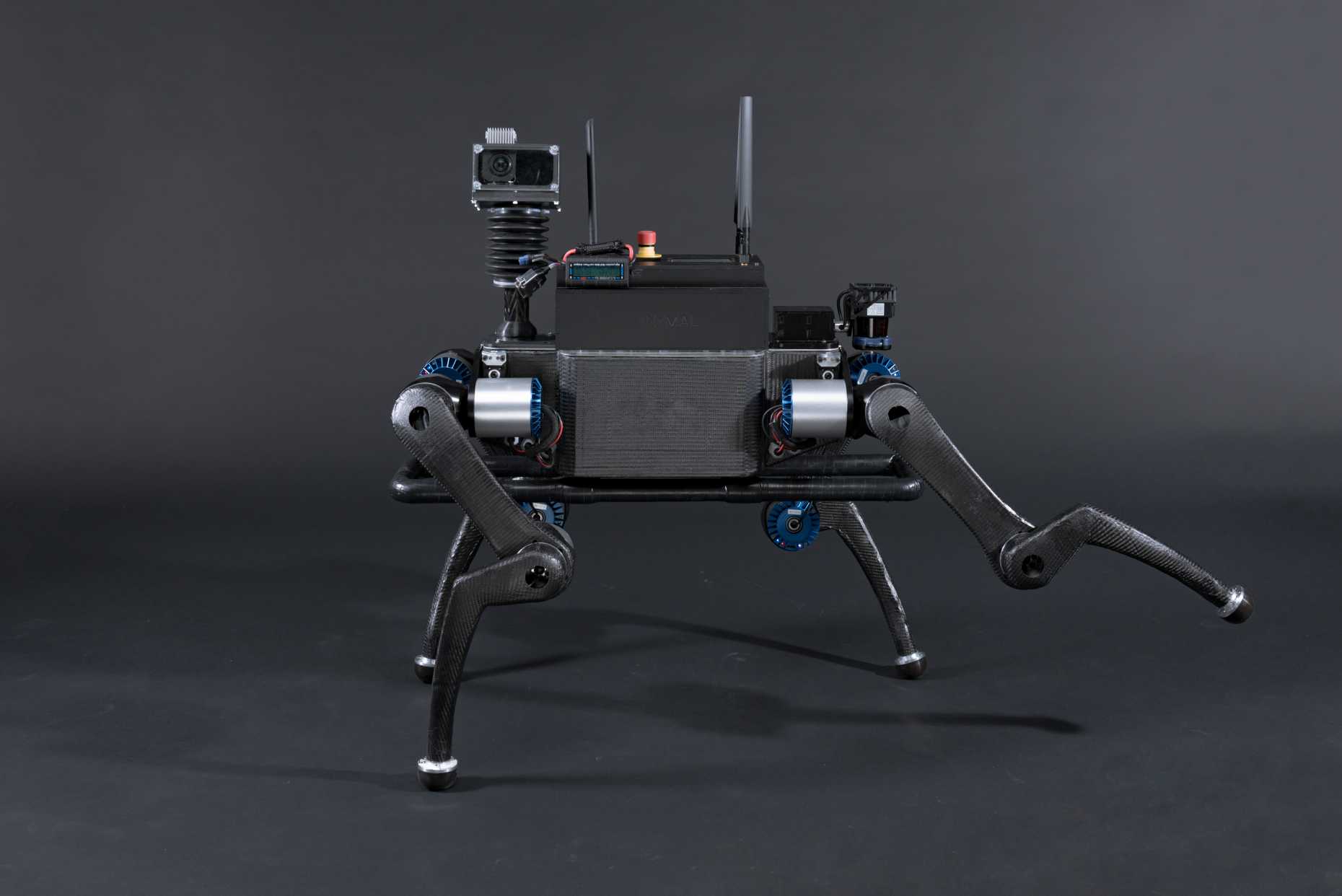
In a landmark revelation this week, researchers from ETH Zurich and the University of Basel have unveiled a revolutionary exploration concept that could fundamentally shift our search for extraterrestrial life on Mars. By pivoting away from the traditional, heavy-wheeled rovers like Perseverance, scientists are now advocating for the deployment of semi-autonomous, four-legged walking robots. This new generation of explorers, spearheaded by the quadrupedal robot known as ANYmal, has demonstrated the ability to navigate treacherous Martian-like terrain and conduct scientific analysis up to three times faster than current technology allows. The breakthrough, published in Frontiers in Space Technologies, marks a pivotal moment in planetary robotics, offering a solution to the “speed limit” that has long hampered our efforts to find biosignatures—chemical or physical traces of ancient life—on the Red Planet.
The primary hurdle in current Mars exploration is the communication delay between Earth and the Martian surface. Because signals take minutes to travel across the void, human operators must guide rovers through a painstaking, step-by-step process of driving, stopping, and validating before any science can occur. This slow pace is a bottleneck for the search for life, which requires the sampling of vast areas to find the right geological “sweet spot.” However, during recent field tests at the Marslabor facility in Switzerland, the ANYmal robot proved it could bridge this gap. Equipped with a robotic arm, a microscopic imager, and a Raman spectrometer, the robot successfully identified complex minerals like gypsum and carbonates—substances often associated with water and biological processes—entirely through a semi-autonomous approach.
“Our study demonstrates that a multi-target semi-autonomous exploration approach is a viable option for geological investigations in planetary surface missions where the inability to control a robot in real-time significantly slows down exploration times,” stated the research team. This efficiency is staggering; while a traditional human-guided mission might take over 40 minutes to analyze a handful of rocks, the walking robot completed similar tasks in just 12 to 23 minutes. By granting the robot the “freedom” to select and analyze targets based on its onboard AI, scientists can receive a curated map of the most promising biological hotspots without having to micromanage every movement.
The physical design of these legged robots offers another massive advantage: agility. Current rovers are essentially high-tech tanks, restricted to relatively flat plains or gentle slopes. Walking robots, however, can step over jagged rocks, climb steep crater walls, and enter subterranean lava tubes—areas where frozen water or microbial life might still hide today. “While this may still not be as fast as a human could perform the same tasks, it is significantly more efficient than rovers,” the scientists noted in their report. This agility, combined with lightweight payloads, means that future missions could involve a “swarm” of walking robots deployed from a single lander, blanketing a wide area of the Martian crust in a fraction of the time a single rover would take.
Beyond the immediate search for life, these autonomous walkers are being eyed for resource prospecting. As NASA and international partners push toward the Artemis program goals of human settlements on the Moon and Mars, identifying local resources like water ice and building materials becomes critical. The researchers confirmed that ANYmal was able to distinguish between different rock types with high accuracy, reaching a 100% success rate in lunar-simulated environments. This ability to rapidly “scout” the land makes these robots the perfect vanguard for future astronaut crews, ensuring that when humans finally step onto the Red Planet, they know exactly where the most valuable treasures are buried.