
June 19, 2026
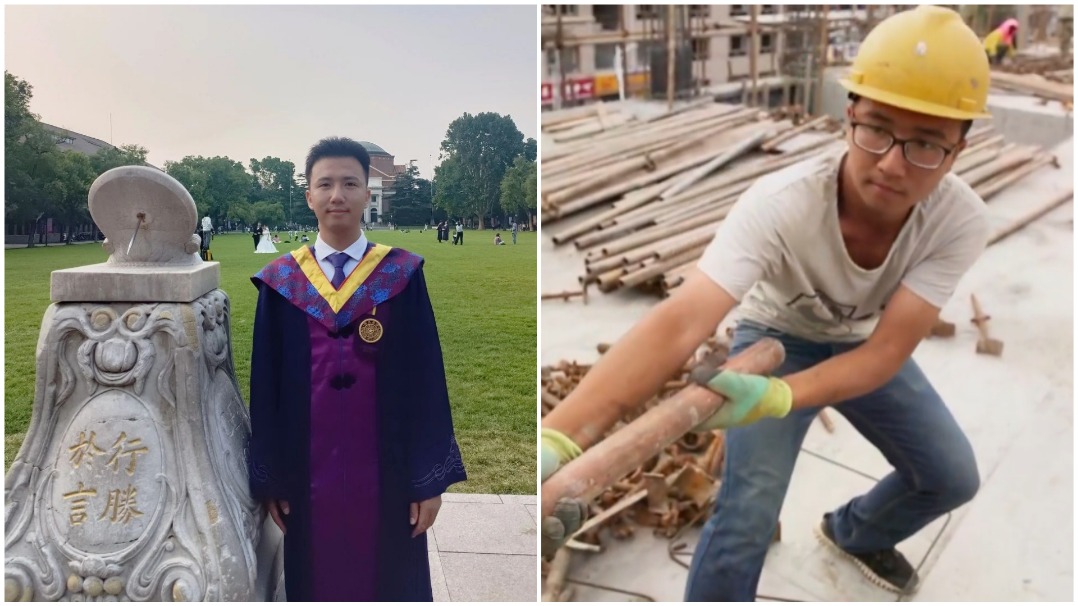
The name Shan Xiaolong continues to resonate as a powerful symbol of resilience and the transformative power of education, a “construction site boy” whose journey from poverty to the pinnacle of Chinese academia has become an inspiring national success story . Six years after his astonishing admission to Tsinghua University caused a nationwide sensation, Shan’s narrative has evolved from a singular moment of triumph into a sustained testament of character and ambition. Born in 2000 into a farmer’s family in Xiji county, Guyuan, Northwest China’s Ningxia Hui autonomous region, Shan’s early life was marked by significant hardship .
His father, once a laborer, suffered a debilitating back injury that prevented him from continuing heavy work, while his mother battled an eye disease for many years, leaving the family in a constant struggle for survival . To support his family and fund his education, Shan took up a temporary construction job during the summer vacation after his gaokao, earning a daily wage of 200 yuan ($27.5) by performing grueling tasks like carrying bricks and mixing mortar under the scorching sun, a stark contrast to the academic success that awaited him . It was in this setting, amidst the dust and heat of a construction site, that he received his admission letter to China’s most prestigious university, having achieved a remarkable score of 676 on the national college entrance exam, securing his place in the Department of Electronic Engineering .
The transition from a life of manual labor to the halls of Tsinghua University was profound, but Shan’s success was not a simple matter of arrival. He immersed himself in his studies, viewing his time at the university as an opportunity to not only better himself but also to contribute to his nation’s development. He was profoundly inspired by a lecture from Major General Zhu Fengrong, a 1966 Tsinghua alumna who devoted herself to nuclear tests in northwestern China, which instilled in him the importance of integrating individual values with the country’s needs .
This realization led him to make the pivotal decision to join the People’s Liberation Army Navy during his junior year, seeking a new environment to deepen his understanding of service and personal growth . This experience in the military was transformative, helping him see through the “fame” that had followed him since his admission and solidifying his belief that his journey was just a small part of his life’s story . Upon completing his military service and returning to Tsinghua, he served as a counselor for the school’s Student Affairs Office, where he focused on supporting students from similar humble backgrounds, encouraging them to seize opportunities and pursue their dreams just as he had done .
On June 30, 2024, Shan was among the 3,500 undergraduate students attending the commencement of the class of 2024, marking a significant milestone in his academic career . Rather than seeking immediate employment to support his now poverty-alleviated family, Shan decided to continue his studies, pursuing a master’s degree at Tsinghua to explore the mysteries of artificial intelligence—a field that had ignited his passion for exploring the frontiers of technology .
His journey from a “construction site boy” to a postgraduate student at a world-class university has been punctuated by acts of giving back, including organizing a free public welfare classroom in his hometown for students from economically disadvantaged families and participating in overseas exchanges and astronomical research projects that broadened his perspective on global science . Looking toward the future, Shan has expressed interest in two distinct but equally noble paths: contributing to the promising AI industry with his academic research or returning to his hometown to serve as a grassroots civil servant, embodying the spirit of service he developed through his military service and his time at Tsinghua .