
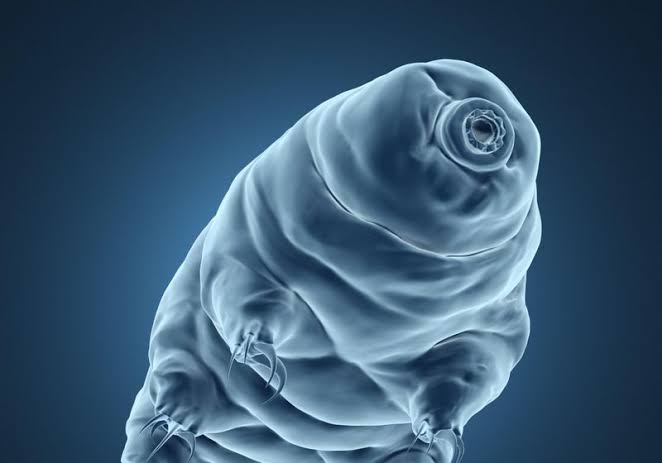
Scientists studying microscopic creatures have uncovered astonishing new details about their survival, revealing that these tiny animals are not merely passively tough, but actively manage stress through sophisticated biological mechanisms. The most profound discoveries concern tardigrades, also known as water bears, which are less than a millimeter long but are renowned as nature’s apocalypse champions. For years, their ability to withstand freezing temperatures, crushing pressure, the vacuum of space, and doses of radiation that would be lethal to nearly all other life forms was a subject of intense curiosity, but the exact mechanisms remained elusive .
Now, a series of studies have proposed one of the first biological explanations for this resilience, indicating it is not a passive process but an active one that involves intricate signaling from the mitochondria, the powerhouse of the cell . This new understanding has massive implications, potentially paving the way for innovations in cell preservation, the engineering of drought-resistant crops, and even the design of safer cancer treatments .
At the heart of this discovery is the tardigrade’s ability to enter a survival state called a “tun” in response to extreme osmotic stress—when their watery habitats dry up, leaving them vulnerable to high concentrations of salt or sugar . To understand this, researchers analyzed the proteins that tardigrades turn on during this hibernation-like state. Their experiments revealed that many of the proteins expressed are related to mitochondrial function, challenging the earlier belief that their survival was simply due to water rushing out of their bodies .
Instead, the mitochondria send a specific signal that allows the tardigrade to manage the stress, and they even change this signaling based on whether it is salt or sugar, indicating that they actively differentiate between the threats . A key protein identified in this process is peroxiredoxin, an antioxidant that protects cells from harmful molecules called reactive oxygen species. While humans can make this protein, tardigrades are able to use it to prevent cell death, providing a crucial piece of the puzzle explaining their extraordinary resilience .
The scientific community continues to explore the limits of this resilience. In one remarkable experiment, researchers exposed tardigrades to the highest simulated hypergravity ever achieved in an ultracentrifuge, a force one million times Earth’s gravity. Remarkably, they survived, behaved normally, and even reproduced, establishing them as the most hypergravity-resistant animal currently known . In contrast, other similarly sized animals died from the loss of cellular integrity . The study revealed that exposure to anoxia, hyperosmotic stress, and hypergravity all resulted in a large increase in reactive oxygen species, which is required for their survival. Significantly, this survival hinges on reactive oxygen species signaling via the enzyme NADPH oxidase, and inhibiting this enzyme suppressed their ability to withstand both hypergravity and osmotic stress .
Perhaps the most profound insights have come from studying a newly identified species, Hypsibius henanensis, in response to ionizing radiation . Tardigrades can withstand gamma radiation doses that are nearly 1000 times higher than the lethal limit for humans, but the exact molecular basis was a mystery . Through detailed genomic, transcriptomic, and proteomic analyses, scientists identified 2801 genes that responded to radiation exposure, and from these, they uncovered three distinct molecular mechanisms for radiotolerance . First, they discovered that a gene called DOPA dioxygenase 1 (DODA1), which they propose was acquired through horizontal gene transfer from bacteria, is activated by radiation .
This gene allows the tardigrade to synthesize betalains, a type of plant pigment with potent free radical-scavenging properties, providing a defense against the oxidative damage caused by radiation . Second, a tardigrade-specific radiation-induced disordered protein called TRID1 was found to facilitate DNA damage repair through a process of phase separation, effectively speeding up the mending of broken DNA strands . Finally, two mitochondrial proteins, BCS1 and NDUFB8, were found to accumulate and accelerate NAD+ regeneration, which in turn powers a critical DNA repair pathway known as PARP1-mediated repair . These three pathways work in concert, revealing a multifaceted cellular arsenal that expands our understanding of cell survival under extreme conditions.
The secrets of these microscopic creatures are not limited to tardigrades. Scientists are also studying bdelloid rotifers, tiny freshwater animals that have survived for 40 million years without sex, a feat that has baffled biologists . Their secret partly lies in their remarkable ability to “steal” genes from other organisms; in fact, an astonishing 10% of their active genes appear to have originated from other species . A recent study discovered that some bdelloid rotifers use genes borrowed from bacteria to produce complex chemicals, including antimicrobial compounds, that can fight off fungal infections . This horizontal gene transfer seems to act as a substitute for the genetic shuffling that occurs during sexual reproduction, allowing these “ancient asexuals” to keep pace with their enemies and survive harsh conditions . The research not only solves an evolutionary riddle but also holds clues for developing more effective antibiotics, as these chemicals are toxic to pathogens but not to animal cells .
The practical applications of this research are immense and wide-ranging. Scientists are optimistic that understanding these mechanisms will lead to breakthroughs in medicine, agriculture, and even space exploration . For instance, a specific protein called CAHS12, which forms a protective gel-like network inside tardigrade cells during dehydration, has been used to preserve synthetic cells . When these synthetic cells, containing the protein, were dried out and rehydrated, they survived and remained functional, a breakthrough that could revolutionize the storage and transport of biological products like vaccines and biosensors without the need for refrigeration .
Similarly, the discovery of the radiation-protective Dsup protein has sparked interest in its potential use to protect astronauts from cosmic radiation or even to prevent DNA damage in human cells that leads to cancer . The journey from discovery to application is long, but by studying these microscopic creatures, scientists are uncovering a treasure trove of unexplored molecular mechanisms that could one day allow humans to harness nature’s most extraordinary survival strategies .