
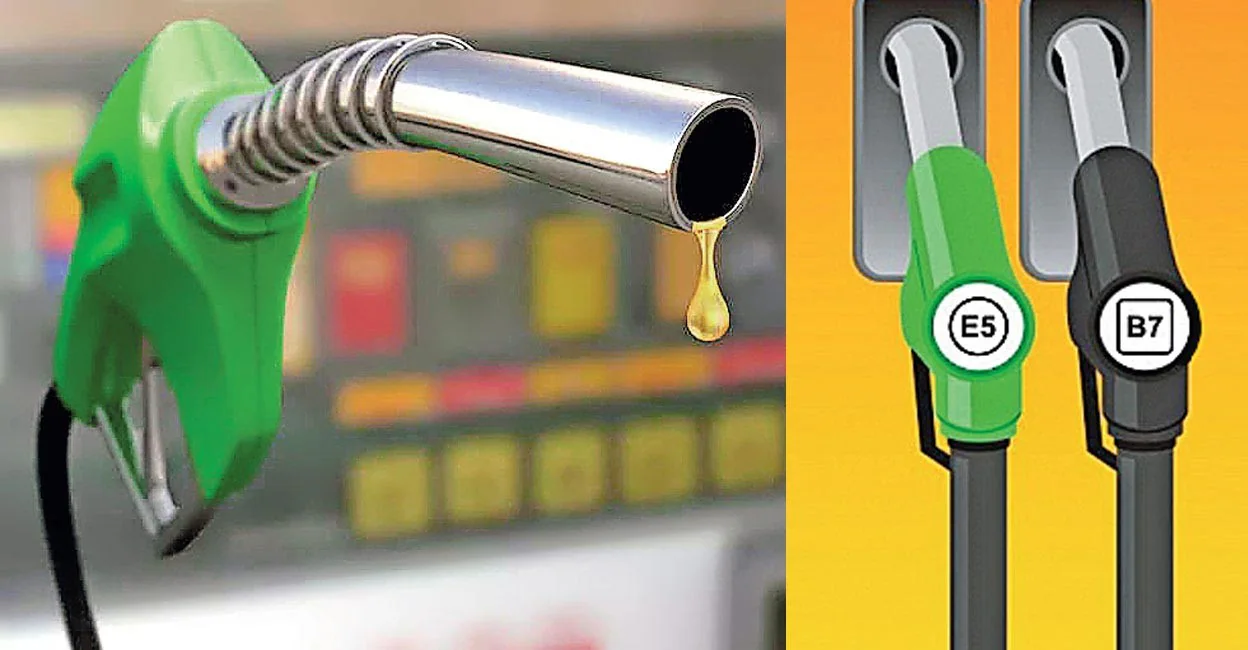
The question of whether ethanol can completely replace petrol is a subject of intense global debate, touching on energy security, environmental sustainability, and economic viability. While countries like India are aggressively pushing for higher ethanol blends, with some even introducing E85 fuel (containing 80-85% ethanol), the scientific and practical consensus indicates that a complete, direct replacement is highly unlikely in the near future . Instead, the reality is more nuanced, involving a transition to a diversified fuel portfolio where ethanol plays a significant, but not exclusive, role alongside petrol and other advanced biofuels. The path is fraught with technical challenges, economic hurdles, and serious questions about food security and land use.
The primary technical obstacle to replacing petrol with ethanol lies in its fundamental chemical properties. Ethanol possesses a significantly lower energy density than petrol, containing roughly only 70% of the energy of an equivalent volume of gasoline . This translates directly to reduced fuel economy; a vehicle running on a high-ethanol blend like E75 (75% ethanol) would experience a 24.6% higher fuel consumption compared to using pure petrol . This physical limitation means that a complete switch to ethanol would necessitate much larger fuel tanks or far more frequent refueling stops to travel the same distance.
Furthermore, ethanol is not a “drop-in” fuel like some other advanced biofuels. It is corrosive, mixes readily with water, and cannot be easily transported through existing petroleum pipelines, requiring dedicated logistics and infrastructure . To run on high concentrations of ethanol, standard vehicles require significant modifications, including changes to the fuel delivery system, a richer air-to-fuel mixture, and adjustments to the engine’s compression ratio and ignition timing to compensate for ethanol’s different burning properties .
Despite these challenges, ethanol offers compelling performance advantages that make it an attractive blending component. It has a higher octane number than regular gasoline, which improves an engine’s resistance to “knocking” or pre-ignition . This high octane rating allows for higher compression ratios, which can be leveraged to improve engine efficiency and power output . In fact, research has shown that optimizing an engine for ethanol blends like E75 can lead to considerable increases in power (up to 20%) while simultaneously reducing emissions of many key pollutants, with one study showing a decrease of 37.8% in hydrocarbons (HC), 27.17% in carbon monoxide (CO), and 15.71% in carbon dioxide (CO2) . This combination of high performance and lower tailpipe emissions is a primary driver behind government policies promoting ethanol blending, as seen in India, the United States, and Indonesia . Indeed, India aims to increase its national average ethanol penetration to 26% by 2030-31, a target that has already seen blending rise from a mere 1.53% in 2014 to 20% today .
The global push for ethanol is heavily motivated by geopolitical and economic factors, primarily the desire for energy independence. For a country like India, which imports a vast majority of its petroleum, replacing a portion of this imported fuel with domestically produced ethanol offers a powerful strategy to reduce import bills and enhance national security . The recent rollout of E85 in India, which is priced nearly Rs 20 per litre cheaper than petrol, exemplifies this strategy . The government has made massive investments in production and blending facilities, making a reversal of this policy unlikely despite logistical challenges in maintaining multiple fuel grades . This economic incentive creates a powerful synergy between the agricultural and energy sectors, turning farmers into producers of “fuel” as well as food .
However, this synergy has a dark side, leading to one of the most contentious debates surrounding ethanol: the “food vs. fuel” dilemma. As India transitions from a sugarcane-based ethanol industry to one increasingly reliant on food grains like maize and rice, the impact on food security and prices becomes a critical concern. A study on India’s E25 target by 2030 found that procuring 43 million tonnes of maize for ethanol would require diverting two-thirds of the current production area of maize toward the fuel market, which has the potential to generate substantially higher inflationary pressures in the food market . The diversion of grains to fuel has already been linked to a 15-20% spike in maize prices in 2024, disproportionately affecting low-income households that spend a large portion of their income on food . Critics argue that using food crops for fuel is inefficient and environmentally damaging, noting that grain-based ethanol requires 2,500-3,000 litres of water per litre of fuel, far more than sugarcane, and contributes to monoculture farming that depletes soil fertility .
Ultimately, the scientific community points to a more promising long-term solution: the development of “drop-in” fuels. These are advanced biofuels engineered to be chemically identical to petrol, diesel, and jet fuel . Unlike ethanol, drop-in fuels can be used in existing engines and infrastructure without any modifications. They are made from complex hydrocarbons and offer the same high energy density as petroleum-based fuels, making them suitable for heavy-duty transport and aviation . While significant research and development is underway to produce these advanced fuels from non-food biomass like corn stalks and wood, they are not yet commercially viable on a mass scale. Therefore, while ethanol, especially in higher blends, serves as a crucial bridge fuel for reducing fossil fuel dependence and lowering emissions today, it is not a direct replacement for petrol but rather a complement to it. The “ideal biofuel” of the future will likely not be ethanol, but a more complex, energy-dense molecule that seamlessly integrates into our existing energy ecosystem, effectively making the “best replacement for petroleum… petroleum” . The current trajectory, therefore, is not a complete replacement of petrol by ethanol, but a gradual evolution towards a future where a diverse mix of renewable fuels, optimized for specific purposes, will power our world.