
The question of Ukraine’s nuclear weapons is a complex tapestry woven from historical fact, geopolitical pressure, and contemporary rhetoric. It is not a simple myth, but a reality that has evolved dramatically. Today, Ukraine does not possess nuclear weapons, and its government officially denies any intention to develop them. However, the historical fact that it once inherited the world’s third-largest nuclear arsenal makes the issue a persistent and potent element in its struggle for national security. The modern discussion often involves Ukraine asserting that its security guarantee—previously the 1994 Budapest Memorandum and now its aspiration to join NATO—is the real-world alternative to a nuclear deterrent that it voluntarily and controversially gave up.
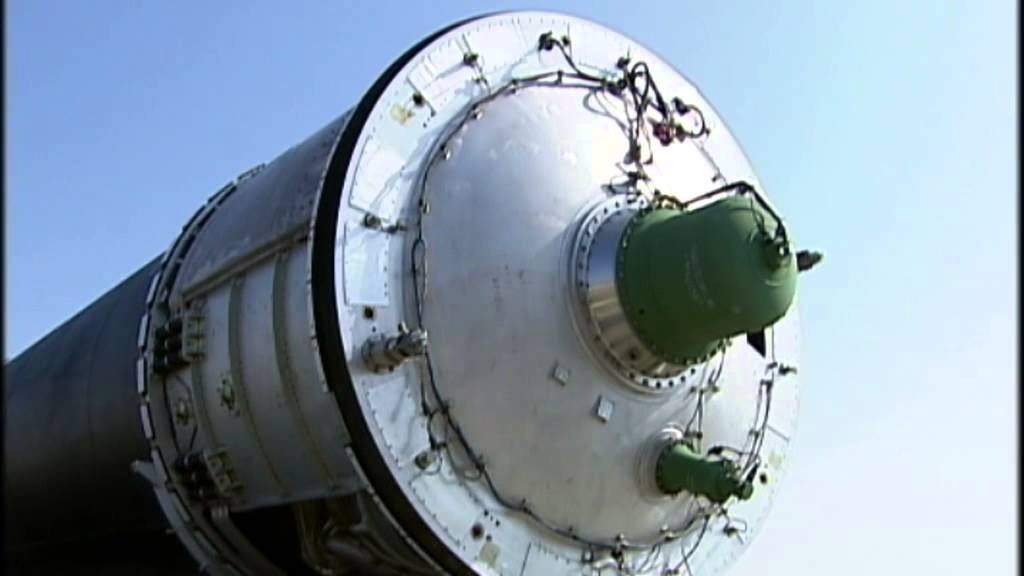
The historical reality is unequivocal. Upon the dissolution of the Soviet Union in 1991, Ukraine inherited a massive nuclear stockpile, a legacy of its integral role in the Soviet nuclear infrastructure. This arsenal, which included an estimated 1,900 strategic nuclear warheads, hundreds of tactical nuclear weapons, and the associated delivery systems like intercontinental ballistic missiles, made Ukraine the third-largest nuclear power in the world. However, this status was largely theoretical. Ukraine possessed the physical weapons but lacked the independent operational control over them, as the command-and-control systems remained tied to Moscow. This distinction is critical. Despite the presence of the weapons on its soil, Ukraine was not a de facto nuclear power in command of its own deterrent.
Faced with this unprecedented inheritance, Ukraine was subjected to immense international pressure to disarm. The United States, Russia, and other major powers, fearing the proliferation of nuclear weapons to newly independent states, engaged in a concerted campaign of diplomatic and economic coercion. The outcome of this pressure was the signing of the Budapest Memorandum in December 1994. Under this pivotal agreement, Ukraine formally acceded to the Treaty on the Non-Proliferation of Nuclear Weapons (NPT) as a non-nuclear state and committed to transferring all of its nuclear warheads to Russia for dismantlement. In exchange, the memorandum provided security “assurances” to Ukraine from the United States, the United Kingdom, and Russia. These signatories pledged to respect Ukraine’s independence, sovereignty, and its existing borders and to refrain from the threat or use of force against it. The issue of whether these were legally binding “guarantees” or weaker “assurances” has been a point of bitter contention, with some arguing that the English version’s wording was weaker than the Ukrainian and Russian translations. Regardless, this act of denuclearization was a monumental step, demonstrating a conscious strategic choice by Ukraine to trade a potentially powerful, but difficult to maintain, nuclear arsenal for the promise of international security and integration.
The debate re-emerges powerfully today because the foundation of that 1994 agreement has been shattered. The annexation of Crimea by Russia in 2014 and the full-scale invasion in 2022 are widely seen as a direct violation of the spirit and letter of the Budapest Memorandum. This has led to a widespread narrative, both in Ukraine and among international observers, that the decision to give up nuclear weapons was a profound mistake—a strategic betrayal that left Ukraine vulnerable to the very type of aggression the memorandum was supposed to prevent. In this context, discussions about Ukraine “re-nuclearizing” are not just historical footnotes but become potent political signals. In October 2024, President Volodymyr Zelenskyy remarked that during a meeting with Donald Trump, he had stated, “Ukraine either has to have nuclear weapons, which would be our protection, or we have to be part of some alliance like NATO” . This was a powerful articulation of Ukraine’s security dilemma, pointing to the 1994 disarmament as the source of its current vulnerability and NATO membership as the only viable replacement for the nuclear deterrent it once had.
Despite such statements and the persistent theorizing about Ukraine’s technical ability to build a bomb—given its advanced nuclear energy industry, Soviet-era missile production facilities, and access to nuclear materials—the Ukrainian government has consistently, categorically, and officially ruled out pursuing a nuclear weapons program. Foreign Ministry spokesman Heorhii Tykhyi has explicitly stated that Ukraine is fully committed to the NPT and does not possess, develop, or intend to acquire nuclear weapons . This official stance is not merely an altruistic gesture; it is a stark calculation of realpolitik. Developing a nuclear weapon would likely trigger immediate and severe consequences, including a strong military response from Russia and a total loss of international support, especially from the US and its NATO allies, who would see it as a dangerous and destabilizing act. Even Russian experts have publicly dismissed the idea as technically and financially unfeasible for Ukraine, which lacks the specialized facilities for warhead production and the immense funding required.
In conclusion, the story of Ukraine’s nuclear weapons is a dramatic illustration of the promise and peril of non-proliferation. The historical reality of Ukraine’s brief nuclear status is true, but it was a possession without full control, a burden as much as a boon. The decision to denuclearize in 1994 was a monumental act of trust that was subsequently broken by Russia’s aggression. While the technical and political debate about Ukraine’s latent nuclear capability continues to smolder in the background, it remains a theoretical proposition. Today, Ukraine officially and firmly rejects any path towards re-nuclearization, pinning its hopes for future security not on rediscovering a Soviet-era legacy, but on achieving its long-sought goal of integration into the Western alliance, a pursuit that continues to define its modern history and its struggle for survival.