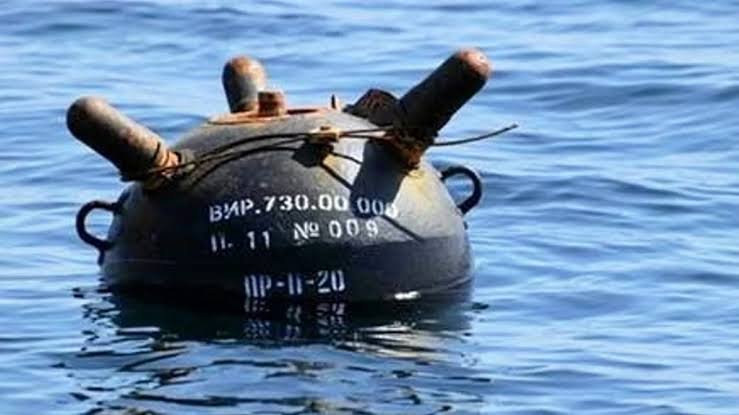
The specter of the sea mine, a weapon that first saw widespread use in the American Civil War, continues to haunt the world’s most advanced navies. While it may seem an anachronism in an era of smart missiles, hypersonic weapons, and drone warfare, the naval mine remains arguably the most dangerous and destabilizing weapon in the maritime arsenal. Its lethal combination of immense destructive power, extremely low cost, and the profound psychological fear it generates ensures its relevance in modern conflicts, from the strategic straits of the Persian Gulf to the contested waters of the Pacific. The underlying reasons for its enduring threat are found in its devastating physics, its asymmetric value, and the strategic paralysis it can inflict on global commerce and military operations.
The physical mechanism by which a mine destroys a ship is as ingenious as it is terrifying. It is a common misconception that the explosion itself is the primary agent of destruction. In reality, the true damage is wrought by the aftermath of the detonation. When a mine explodes underwater, it creates a powerful shock wave and a rapidly expanding gas bubble. This bubble surges upward, forcing the ship’s hull upward in the middle—a stress the vessel was never designed to endure. A fraction of a second later, the bubble collapses, creating a void that violently drops the ship’s center back down, leaving its weight supported only by the bow and stern. This brutal sequence, known as the “lift-void-collapse” cycle, generates extreme bending forces that can easily snap the ship’s keel, effectively breaking its back. Ships are designed for steady loads, not the kind of violent flexing caused by this process, making even a single, well-placed mine a catastrophic threat.
This physical destructiveness is compounded by an economic and tactical asymmetry that is unique in modern warfare. The cost-benefit analysis of a mine is staggering. It is estimated that the cost to manufacture and lay a single mine is a mere 0.5% of the cost to find and remove it, and the effort to clear a minefield is 200 times greater than the effort to lay it. This asymmetry is at the heart of why mines are the quintessential “asymmetric” weapon, allowing weaker naval powers to challenge far stronger ones. In 2026, this dynamic was starkly illustrated in the Strait of Hormuz, where Iran effectively choked a major global shipping lane, not with a fleet of warships, but with a relatively small number of mines. Modern mines like Iran’s Maham-7, a green cone weighing just 200 kilograms, are designed with features to evade detection, such as sound-absorbing shapes and long-lasting, self-contained sensor suites. Even more alarming is the emergence of “smart” mines like Iran’s Sadaf-02, which can be programmed to distinguish between the acoustic signatures of civilian tankers and military destroyers, essentially acting as underwater snipers that can ignore decoy vessels and only target high-value assets. The sheer difficulty and danger of clearing these weapons after a conflict places an immense burden on naval forces and can paralyze maritime trade for months.
Perhaps the most telling indicator of the sea mine’s enduring power is the historical record. Since the end of World War II, more U.S. Navy ships have been damaged or sunk by mines than by any other weapon. A stark statistic reveals that between 1950 and 2026, mines have been responsible for over 75% of all U.S. Navy battle casualties. The Second World War itself showcased the devastating strategic impact of mining. Operation Starvation, the U.S. aerial mining campaign against Japan in 1945, sank or damaged over 1.25 million tons of Japanese shipping, a result that surpassed all other anti-shipping efforts combined. This campaign, which involved laying 12,000 mines, was so effective that some analysts have argued its impact rivaled that of the atomic bombs in crippling the Japanese economy. In 1972, the U.S. again turned to mines to effectively block North Vietnam’s main port of Haiphong, forcing the North Vietnamese back to the negotiating table. These historical examples are not relics of the past; they are blueprints for how a minefield, even a low-tech one, can alter the course of a conflict.
Despite the advent of advanced sonar, unmanned underwater vehicles (UUVs), and AI-assisted detection, the mine threat has not only persisted but has evolved to become more dangerous. The international community, including the U.S., has historically allocated less than 1% of its naval budget to mine warfare—a startling oversight that is now proving costly. This lack of investment, coupled with the fact that many historic mine-countermeasure allies are less willing to commit forces, has left navies dangerously vulnerable. While new technologies like unmanned surface vessels with advanced sonar arrays are being deployed to hunt and destroy mines, the fundamental challenge remains: finding a small, dark, often plastic object on a vast, complex ocean floor is akin to searching for a needle in a haystack. Mines remain a “sleeper threat” that can be easily deployed by state and non-state actors to create chaos and exert immense geopolitical leverage. The sea mine’s ability to combine devastating physical force with strategic asymmetry and a legacy of proven effectiveness ensures it will remain the Navy’s most dangerous and persistent adversary for the foreseeable future, a silent killer that lies in wait beneath the waves.