
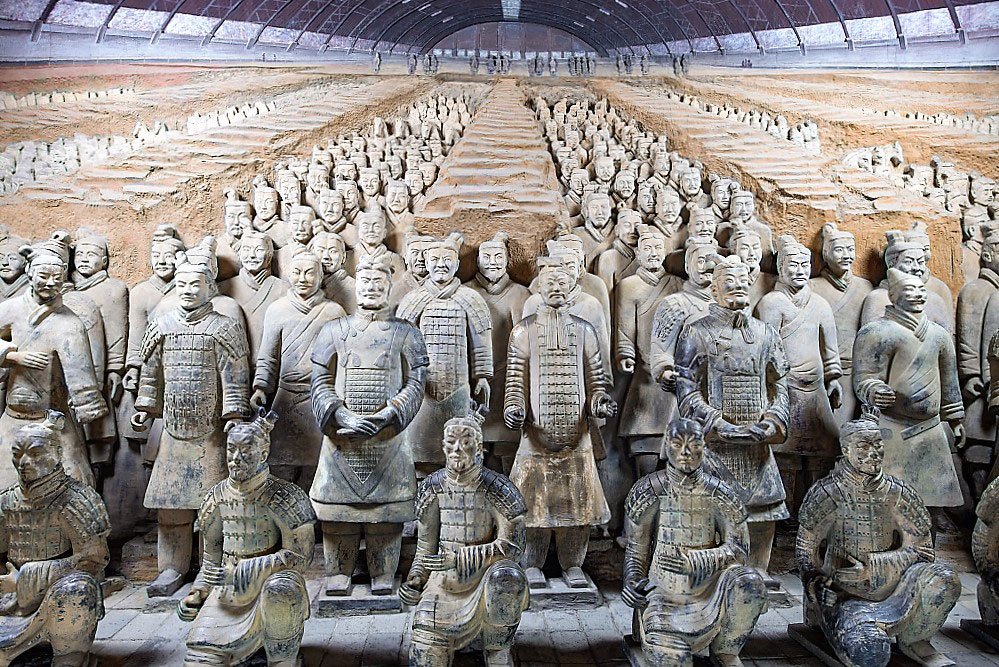
The Terracotta Army, one of the most significant archaeological discoveries of the 20th century and a UNESCO World Heritage Site since 1987, continues to yield remarkable finds while facing the complex challenges of preservation and security in the modern era . Discovered in March 1974 by local farmers near Xi’an in Shaanxi Province, this vast collection of life-size terracotta sculptures was created to guard the tomb of Qin Shi Huang, the first emperor of a unified China . The mausoleum complex, a testament to the emperor’s power and the brilliance of ancient Eastern culture, has been described as the “Eighth Wonder of the World” and remains one of the greatest archaeological finds of the 21st century . As of 2026, the site is not merely a static relic of the past but a dynamic arena for ongoing research, with new discoveries regularly reshaping our understanding of Qin Dynasty military organization, art, and burial practices .
A New Chapter of Discovery: The 2025 Excavations in Pit 2
The year 2025 marked a significant milestone in the site’s archaeological history with a new round of excavations in Pit 2, a section known for its complex military formation and well-preserved painted figures . Covering an area of approximately 30 square meters in the eastern section of Passage 9, the excavation yielded two ancient war chariots, 15 pieces of chariot and horse fittings, and nine weapons, including ritual objects . These findings were formally announced at the 2025 Shaanxi Archaeological Achievements Exchange, highlighting their importance in the broader context of Chinese archaeology . Pit 2 itself, which is L-shaped and spans about 6,000 square meters, is estimated to contain over 1,300 terracotta warriors and horses, including chariot soldiers, cavalry, kneeling archers, and standing archers, making it the most comprehensive display of Qin military formations .
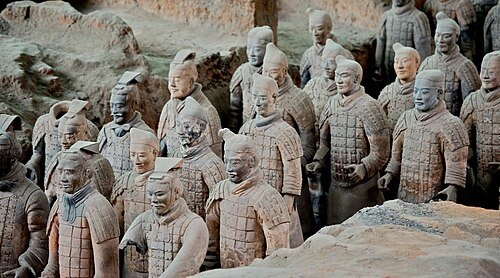
Perhaps the most intriguing aspect of this recent discovery is the nature of the chariots themselves. Archaeologists noted that the vehicles were buried without their wheels, a feature not previously confirmed in this section of the pit . This finding has led the project leader and research fellow at the museum, Zhu Sihong, to conclude that these chariots likely served a symbolic rather than a functional role within the underground army . In death, as in life, the emperor’s authority was represented by military might, but the inclusion of wheel-less chariots in the burial pits suggests that the representation was conceptual rather than literal, designed to convey the idea of military power rather than its practical application . This contrasts with the painstaking realism of the terracotta warriors themselves, which are crafted with individualized faces, armor, and hairstyles, and stand as a testament to the extraordinary skill of Qin Dynasty artisans .
The Dual Nature of Preservation: Scientific Advances and Security Threats
While the archaeological community celebrates new discoveries, the Terracotta Army faces a dual threat from environmental factors and human actions that require sophisticated preservation strategies. The site has become a focal point for international scientific collaboration, particularly with France, to address these challenges. In May 2026, a symposium on cultural heritage protection was held in Paris, co-organized by the Emperor Qinshihuang’s Mausoleum Site Museum and the French Foundation for Heritage Science . Discussions centered on long-term cooperation, including joint research on the conservation of the Terracotta Warriors, the establishment of joint laboratories, and talent training mechanisms . A highlight of this partnership is the joint research on wooden relic conservation, which draws comparative insights from the study of fire-damaged heritage sites, including Notre-Dame Cathedral in Paris .
This international cooperation is part of a broader effort to preserve the site’s integrity. One significant area of focus is the conservation of the warriors’ original paint. The vivid colors that once adorned the figures often peel and fade rapidly upon exposure to air, a problem that has plagued archaeologists since the site’s discovery . To combat this, the museum has implemented an “On-Site Emergency Protection Laboratory” and an “Archaeological Excavation and Protection Platform” that provides a constant temperature and humidity environment immediately upon excavation . This system creates a full closed-loop process from excavation to restoration, ensuring that painted warriors receive unprecedented timely protection and preserving the “Chinese colors” for future generations . Furthermore, AI virtual restoration technology has been developed to assist in the painstaking process of reassembling broken figures, improving efficiency and avoiding secondary damage .
Despite these technological advances, the site has recently been the subject of threats that underscore the delicate balance between accessibility and preservation. In August 2026, a power outage at the museum caused a blackout, prompting a nationwide safety review . Visitors used their phone flashlights to continue viewing exhibits in the darkened hall, and Chinese media reported that staff continued to allow entry despite the issue . The National Cultural Heritage Administration issued a notice putting museums nationwide on notice to strengthen emergency management, pointing to failures in risk assessment, emergency preparedness, and visitor management, including severe overcrowding . The blackout highlighted the vulnerability of the site and the need for robust infrastructure to protect the relics.
More alarmingly, a domestic tourist jumped into the display pit in August 2026, damaging two clay warriors . The man, surnamed Sun, was found to suffer from a mental illness after he “climbed over the guardrail and the protective net” into the pit, which can be up to 5.4 meters deep . He “pushed and pulled” the clay warriors, causing damage to two of them . This incident, while not directly related to the site’s physical deterioration, highlights the ongoing security challenges facing the museum. The Terracotta Army, which draws millions of visitors annually, must balance the imperative of public access with the need to protect these irreplaceable artifacts from both unintentional accidents and deliberate acts of vandalism.
A Window into the Past and Future
The Terracotta Army is more than just a collection of statues; it is a window into the politics, economics, military, art, and social life of the Qin Dynasty . Built by Emperor Qinshihuang, who unified China for the first time, the mausoleum complex is a meticulously planned site of immense historical, scientific, and artistic value . The thousands of life-size clay warriors and horses, each possessing unique features, are a testament to the organizational capacity and artistic sophistication of the Qin state . The continued research at the site is also helping to shift the perspective of archaeology from simple “treasure hunting” to a rigorous scientific discipline focused on preserving historical information .
The site has also become a pioneer in using technology to bring history to life. The museum has introduced AR (Augmented Reality) and 3D modeling to allow visitors to see fine details of the warriors on their mobile devices, creating a more immersive and educational experience . This “historical IP + digital technology” model is not only revitalizing cultural tourism but also helping to make Chinese cultural heritage more accessible and engaging for a global audience . The continuous exploration and innovation in excavation, protection, and public engagement at the Terracotta Warriors Museum serve as a model for the management of historical sites worldwide .
In conclusion, the Terracotta Army stands at a crossroads between ancient history and modern challenges. Ongoing archaeological discoveries, such as the symbolic chariots of Pit 2, are constantly reshaping our understanding of the past. At the same time, international collaborations, technological innovations, and a commitment to scientific archaeology are helping to preserve the site for the future. However, incidents like the power outage and the security breach serve as stark reminders of the fragility of this cultural treasure. As China and the world continue to marvel at the “Eighth Wonder of the World,” the ongoing work of archaeologists, conservators, and security personnel remains vital to ensuring that the legacy of the First Emperor endures for centuries to come.