April 13, 2026
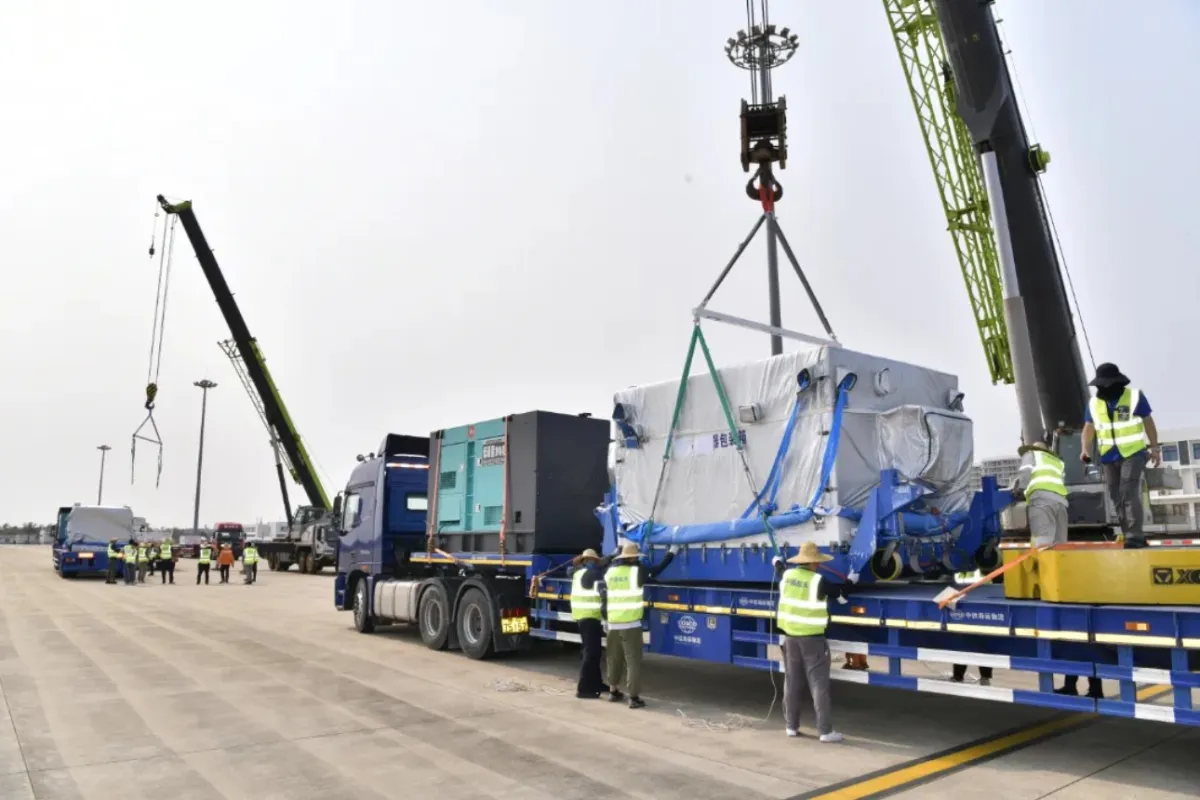
In a major stride toward unraveling the secrets of the lunar frontier, China has officially commenced pre-launch operations for its ambitious Chang’e-7 lunar probe mission. On April 13, 2026, the China Manned Space Agency (CMSA) confirmed that the spacecraft components have been safely transported to the Wenchang Spacecraft Launch Site in Hainan province. The complex was moved via a combined air-and-ground convoy, with arrival completed as of April 9 . Scientists are now initiating the final round of rigorous testing on the launch vehicle and the probe itself, marking the beginning of the countdown to a mission that aims to make history at the lunar south pole .
The Chang’e-7 mission is currently scheduled for launch in the second half of 2026, though space authorities have not yet locked a specific date, pending technical readiness and optimal orbital alignment . What makes this mission a global focal point is its destination: the lunar south pole. Unlike previous missions that landed in the equatorial or mid-latitude regions, Chang’e-7 is targeting an area near the Shackleton Crater, characterized by rugged terrain and permanently shadowed regions (PSRs) where sunlight never reaches . *Tang Yuhua, deputy chief designer of the Chang’e-7 mission, emphasized the stakes involved: “If lunar water ice is successfully located, it could significantly reduce the cost and time required to transport water from Earth, facilitating the establishment of a human base for long-term activities on the moon and enabling further exploration of Mars or deep space”* .
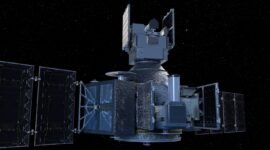
The engineering complexity of Chang’e-7 is unprecedented in China’s lunar exploration history. The mission architecture is a comprehensive “four-in-one” + relay satellite system, consisting of an orbiter, a lander, a rover, and a flying detector (hopper) . This configuration allows the mission to adopt a comprehensive detection approach that involves orbiting, landing, roving, and hopping to conduct environmental and resource surveys . The inclusion of the “hopper” or flying detector is a standout innovation, designed to leap off the lunar surface and descend into the dark craters to conduct in-situ analysis of hidden water ice reservoirs—a feat never accomplished by any previous international mission . *Researchers from the National Space Science Center explained the scientific strategy: “This model can calculate the distribution areas of illumination, lunar soil temperature, and stable regions for volatiles like water ice. It can be applied to analyze the thermal stability of water ice in the lunar south pole, particularly in the landing zone of the Chang’e-7 mission, thereby identifying potential distribution areas for water ice and providing important support for future water ice detection missions”* .
While the technology is groundbreaking, the scientific payload is equally aggressive. One of the primary objectives is to conduct high-precision remote sensing and in-situ detection of water ice at the south pole . Ahead of the launch, Chinese scientists have developed a high-resolution thermal stability model to map where ice is most likely to be preserved geologically. This “treasure map” will guide the spacecraft’s drills and spectrometers to the most promising digging sites . Additionally, the mission is designed to achieve breakthroughs in key surface technologies, including high-precision soft landing, legged movements (walking), and hopping across the uneven polar terrain . This multi-modal mobility is essential for navigating the sharp peaks and deep basins of the lunar south pole, which are vastly different from the flat mare regions visited by Chang’e-5.
Strategically, Chang’e-7 is not flying solo; it is the vanguard of a deeper integration of China’s space resources. The CMSA noted that China is currently moving to deeply integrate its resources and capabilities in the current crewed lunar landing (manned) and unmanned lunar exploration programs . This synergy is designed to enhance the comprehensive effectiveness of China’s moon endeavors, effectively merging the technological pipelines of the Chang’e probes with the future infrastructure required for the International Lunar Research Station (ILRS) , which China is leading in collaboration with multiple international partners . The mission will also carry payloads developed through international cooperation, signaling an open invitation for global scientific collaboration despite the competitive race back to the Moon . As the launch window approaches, all eyes are on Wenchang, where the countdown to the search for water at the bottom of the world has officially begun.