
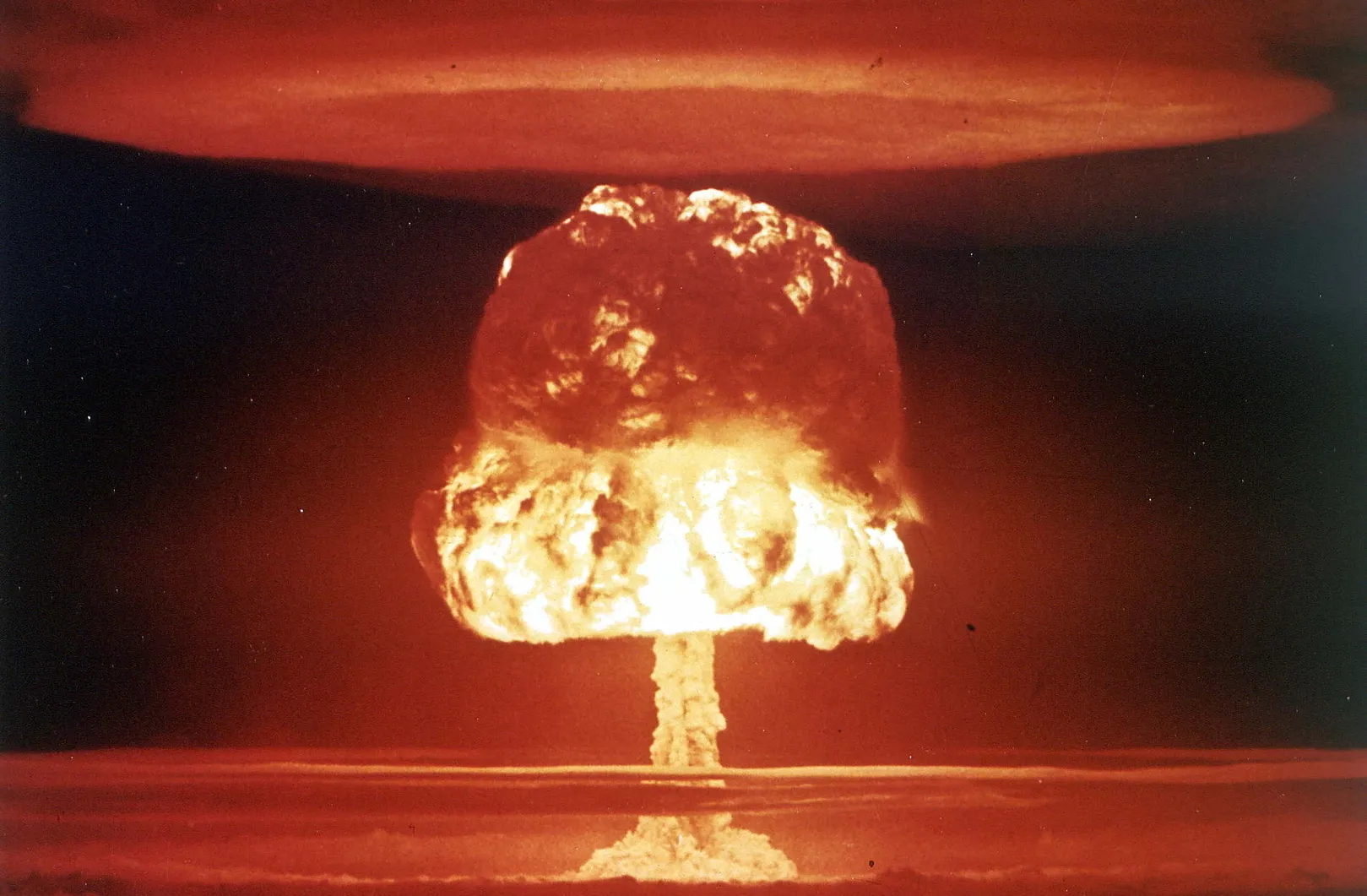
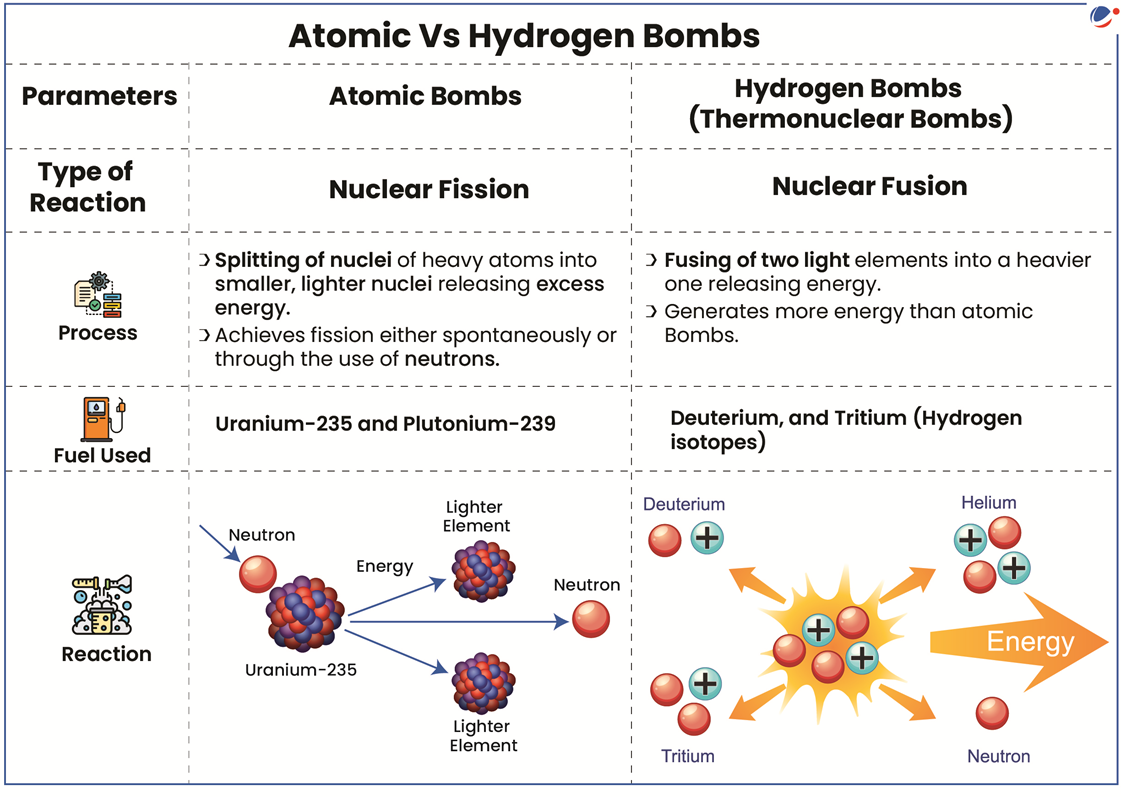
A hydrogen bomb, also known as a thermonuclear weapon, represents a pinnacle, or perhaps a nadir, of human engineering, unlocking the immense energy bound within the atomic nucleus through a sophisticated interplay of physical processes. Unlike its predecessor, the fission bomb (often called an atomic bomb), which derives its energy solely from the splitting of heavy atomic nuclei like uranium-235 or plutonium-239, the hydrogen bomb harnesses the far greater power of nuclear fusion—the process that powers the stars. This transition from fission to fusion represents a multi-stage process where fission provides the necessary conditions to ignite fusion, and sometimes, that fusion, in turn, boosts a final fission stage, leading to explosions of unprecedented magnitude. Understanding the physics of this devastating weapon requires delving into the fundamental interactions of matter and energy at the subatomic level, tracing the journey from the microscopic world of colliding particles to the macroscopic reality of an unparalleled explosion.
The operational foundation of all modern thermonuclear weapons rests on a complex design architecture. It’s crucial to understand that a hydrogen bomb isn’t simply a giant container of hydrogen. Instead, it’s a meticulously designed device consisting of two primary components housed within a single casing: the ‘primary’ and the ‘secondary’. The primary is effectively a fission bomb. It functions by rapidly compressing a subcritical mass of fissile material, typically plutonium-239, into a supercritical state using conventional high explosives. As this material is compressed, its density increases, causing the rate of neutron collisions to skyrocket. This triggers a self-sustaining chain reaction where each fission event releases energy and multiple neutrons, which then cause subsequent fission events. This cascading reaction occurs in mere fractions of a microsecond, releasing a tremendous amount of energy in the form of searing heat and, critically, intense X-ray and gamma-ray radiation. This radiation is the key to igniting the next stage.
The energy and radiation bursting forth from the primary are immediately directed towards the secondary stage, which contains the fusion fuel. This transfer is not random; the internal structure of the weapon is designed as a radiation implosion system. The secondary stage usually contains lithium deuteride (LiD). While ‘hydrogen’ bomb is the common term, the actual fusion fuel is often this solid compound. When the primary detonates, the intense pulse of X-rays floods the interior of the weapon casing. This X-ray radiation travels much faster than the expanding shockwave from the primary’s explosion. The radiation interacts with the tamper—the heavy outer layer surrounding the secondary stage—causing it to vaporize and explode outwards. This outward explosion, in a physical reaction (Newton’s third law), generates an incredibly powerful inward force, compressing the secondary stage with immense pressure. This is known as radiation implosion, a critical mechanism for achieving the conditions necessary for fusion.
Simultaneously, the X-ray radiation penetrates the secondary and is absorbed by a central rod, or “spark plug,” typically made of fissile material like plutonium-239 or uranium-235, which runs through the center of the fusion fuel. The immense heat and pressure from the radiation and the imploding tamper also compress this spark plug. As the spark plug’s material is compressed to supercriticality, it undergoes its own rapid fission chain reaction. This fission event at the core of the secondary serves two critical purposes: First, it provides a massive, internal boost of heat and pressure, supplementing the external radiation implosion. Second, and more importantly, the fission chain reaction releases a dense burst of neutrons.
These neutrons, streaming outwards from the central spark plug, immediately encounter the compressed lithium deuteride (LiD) fuel. This leads to a crucial transmutation process. The neutrons interact with the lithium-6 nuclei (an isotope of lithium), causing them to split (fission) into helium and, crucially, tritium (H-3), an isotope of hydrogen with two neutrons. So, the neutron flux effectively breeds the necessary fusion fuel (tritium) in situ, right when and where it is needed. The secondary now contains a high-density, incredibly hot plasma containing both deuterium (already present in the LiD) and the newly created tritium. This creates the optimal environment for the next, most powerful stage: nuclear fusion.
Under the extreme temperatures and pressures now achieved in the core of the secondary—millions of degrees Celsius and millions of atmospheres—the kinetic energy of the deuterium and tritium nuclei becomes so immense that they can overcome their natural electrostatic repulsion (the Coulomb barrier). When these nuclei collide with sufficient force, they fuse together, forming a heavier helium-4 nucleus and releasing a high-energy neutron in the process. This specific reaction, D + T → He-4 + n + 17.6 MeV, is highly energetic. The 17.6 million electron volts (MeV) released per reaction is far greater than the energy released in a typical chemical reaction (a few eV) and, atom-for-atom, much more efficient than fission.
This massive release of fusion energy is what gives the hydrogen bomb its immense power. However, the process doesn’t necessarily end there. Many strategic weapon designs incorporate a final stage, often referred to as a “fission-fusion-fission” weapon. The fusion stage, while incredibly energetic, produces most of its energy as high-speed neutrons. To harness even more energy and increase the weapon’s total yield, the secondary is often surrounded by a blanket or tamper of cheap, non-fissile (but fissionable) material, such as uranium-238 (natural or depleted uranium). While U-238 cannot sustain a chain reaction with slow neutrons (which is why it’s not used in standard reactors or fission bombs), it can be split by the high-energy, fast neutrons streaming outwards from the fusion reaction in the core. These fusion-born neutrons strike the U-238 blanket, causing it to undergo fast fission.
This tertiary fission stage can dramatically boost the weapon’s total explosive yield, often contributing more than half of the total energy released in large multi-megaton devices. The primary provides the heat and compression to start the fusion; the fusion provides the high-energy neutrons that boost a massive final fission stage. Thus, the weapon functions as a complex, cascaded system, where energy from one physical process directly drives the next, leading to an explosion whose magnitude is determined primarily by the amount of fusion fuel and the thickness of the external fission blanket. This intricate dance of particles, spanning fission, radiation transport, plasma dynamics, and fusion, represents a profound and chilling application of fundamental physics, demonstrating the immense power that lies hidden within the structure of the atomic nucleus.