
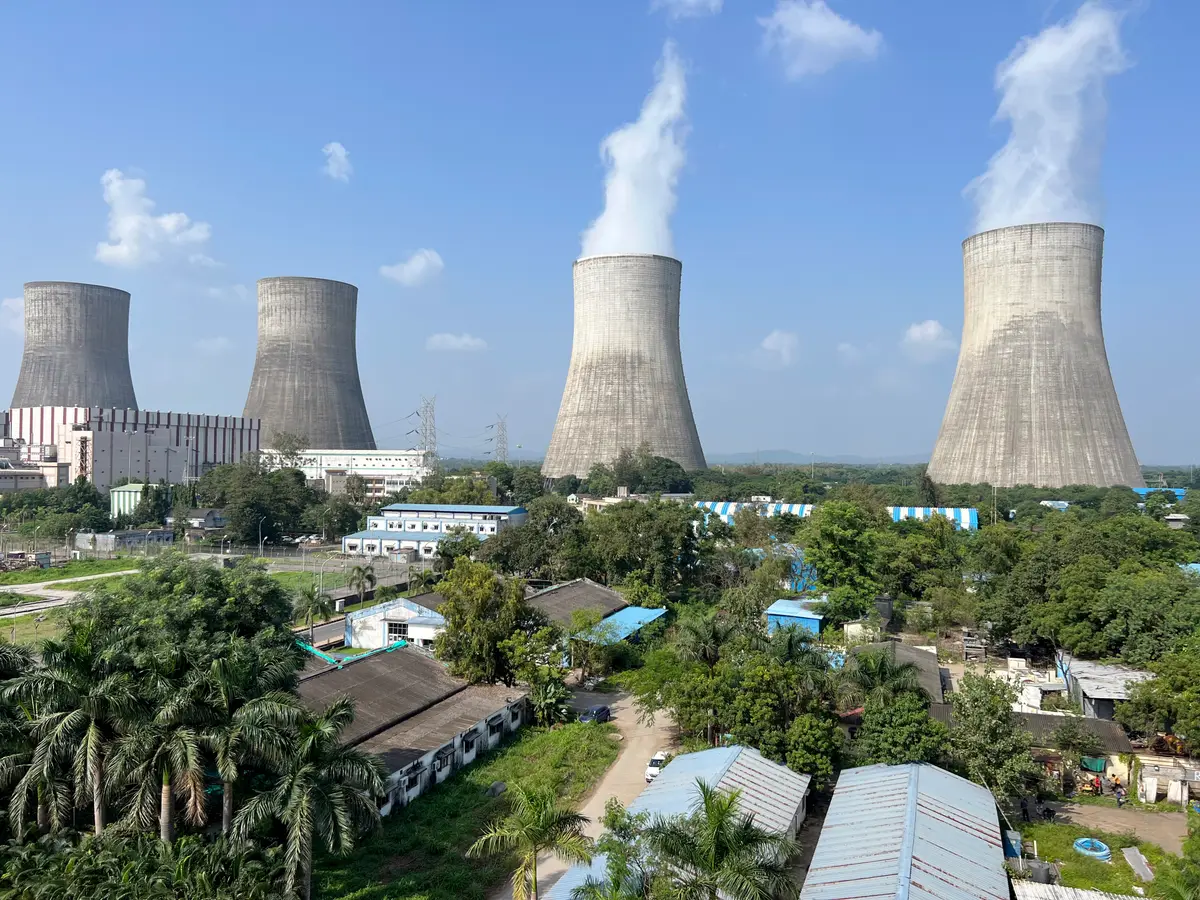
In a definitive triumph for the nation’s scientific community, India has officially crossed the threshold into a new era of energy self-reliance. On April 6, 2026, at 08:25 PM, the 500 MWe Prototype Fast Breeder Reactor (PFBR) located at the Kalpakkam Nuclear Complex in Tamil Nadu successfully attained its first criticality. This milestone signifies the start of a sustained and controlled nuclear fission chain reaction, effectively marking India’s formal entry into the second stage of its ambitious three-stage nuclear power program. Developed indigenously by the Indira Gandhi Centre for Atomic Research (IGCAR) and constructed by BHAVINI (Bharatiya Nabhikiya Vidyut Nigam Limited), this achievement places India in an elite global bracket. With the PFBR now entering its operational phase, India becomes only the second country in the world, after Russia, to possess a commercial-scale fast breeder reactor capable of producing more fuel than it consumes.
The Mechanism: How the Fast Breeder Reactor Operates
The Prototype Fast Breeder Reactor is a technological marvel that differs fundamentally from the conventional Pressurized Heavy Water Reactors (PHWRs) currently powering most of India’s nuclear grid. To understand the mechanism, one must first look at the fuel and neutron economy. The PFBR utilizes Uranium-Plutonium Mixed Oxide (MOX) fuel. In the reactor core, the fission of Plutonium-239 releases high-energy, “fast” neutrons. Unlike thermal reactors that use a moderator like heavy water to slow these neutrons down, the PFBR maintains a “fast” neutron spectrum. This is critical because fast neutrons are significantly more efficient at converting non-fissile (fertile) material into fissile fuel.
The reactor operates on a “pool-type” design, where the entire primary heat transport system—including the core, primary pumps, and intermediate heat exchangers—is submerged in a large pool of liquid sodium. Liquid sodium is chosen as the coolant because of its excellent heat transfer properties and the fact that it does not slow down neutrons. The core is surrounded by a “fertile blanket” of Uranium-238. As fast neutrons escape the core, they are absorbed by this blanket, which undergoes a transmutation process to become Plutonium-239. This is the “breeding” process: the reactor generates more plutonium in the blanket than the amount of fuel it burns in the core.
Heat generated by the fission process in the core is absorbed by the primary sodium. This heat is then transferred to a secondary sodium loop via intermediate heat exchangers. This secondary loop, which remains non-radioactive, carries the thermal energy to the Steam Generators. Here, water is converted into high-pressure steam, which then drives the turbines to generate 500 MWe of electricity. The use of a closed fuel cycle ensures that spent fuel is reprocessed to recover plutonium, which is then fed back into the reactor, dramatically reducing nuclear waste and maximizing the energy extracted from natural uranium.
Strategic Significance and the Path to Thorium
The successful criticality of the PFBR is the “bridge” to India’s third stage of nuclear development. Because India possesses limited uranium but one of the world’s largest reserves of thorium, the strategy has always been to use fast breeder reactors to eventually blanket the core with Thorium-232. Through the same fast-neutron absorption process, Thorium-232 will transmute into Uranium-233, a fissile isotope that will power the third generation of Indian reactors. This breakthrough ensures that India can theoretically generate clean, carbon-free electricity for centuries without relying on imported uranium.
The engineering feat involved in the PFBR cannot be overstated. Managing liquid sodium requires extreme precision, as the metal is highly reactive with air and water. The reactor incorporates third-generation safety features, including passive decay heat removal systems that can cool the core without the need for external power, and dual independent “SCRAM” systems to shut down the reaction instantly if any anomaly is detected. Over 200 Indian industries, including numerous MSMEs, contributed to the manufacturing of high-precision components, reinforcing the Atmanirbhar Bharat (Self-Reliant India) mission.
Statements from the Scientific Leadership
The atmosphere at the Kalpakkam control room was one of profound relief and jubilation as the monitors confirmed the stable neutron flux indicating criticality. “Today, India takes a defining step in its civil nuclear journey,” remarked Prime Minister Narendra Modi in a statement following the event. “The PFBR reflects the depth of our scientific capability and the strength of our engineering enterprise. It is a decisive step towards harnessing our vast thorium reserves in the third stage of the programme. A proud moment for India.”
Dr. Ajit Kumar Mohanty, Secretary of the Department of Atomic Energy (DAE) and Chairman of the Atomic Energy Commission, who was present during the criticality process, emphasized the long-term vision: “This unique capability significantly enhances the utilization of nuclear fuel resources and enables the country to extract far greater energy from its limited uranium reserves while also preparing for large-scale use of thorium in the future.” He noted that the attainment of criticality follows the rigorous safety reviews and clearances granted by the Atomic Energy Regulatory Board (AERB).
Former scientists also weighed in on the persistence required for this victory. “The analysis of the reactor core on paper have all been done over the years, but they need to be confirmed experimentally through this sustained chain reaction,” noted a senior scientist from IGCAR. “We are now moving steadily from design to delivery. The knowledge and infrastructure developed through this programme will support future reactor designs and next-generation nuclear technologies.”
Looking Ahead: Grid Integration and Expansion
While attaining criticality is a monumental “first breath” for the reactor, it is the beginning of a multi-month commissioning process. In the coming weeks, the PFBR will undergo low-power physics experiments to validate its safety parameters and core performance. Once these tests are completed and the secondary systems are fully synchronized, the reactor will be connected to the southern regional power grid.
The success of the 500 MWe unit has already cleared the path for the DAE to plan two additional Fast Breeder Reactors at the same site, which will incorporate even more advanced materials and streamlined construction techniques. As India aims for Net Zero by 2070 and seeks to triple its nuclear capacity by 2031, the fast breeder technology stands as the cornerstone of its sustainable energy architecture. The “Indian Leap” in nuclear technology is no longer a future goal—it is a present reality, secured through decades of indigenous perseverance.