
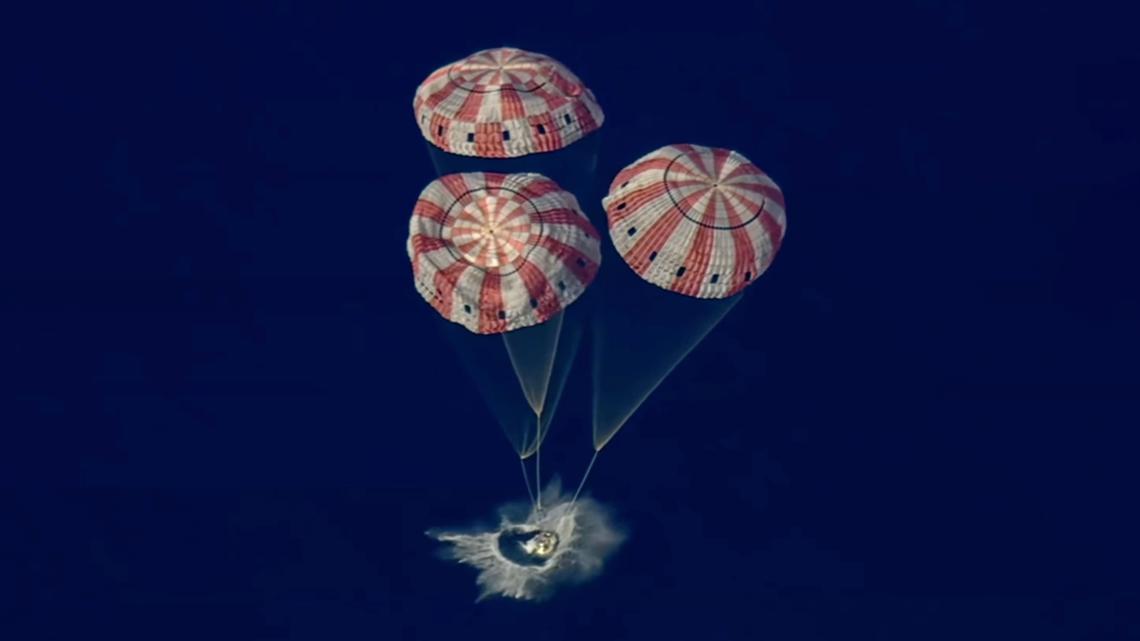
During the Artemis II mission, the crew performed a historic flyby, reaching a record-breaking distance of 252,756 miles from Earth. While they did not land, their proximity allowed for the calibration of advanced sensors that will guide future mining prospects. Mission specialist Christina Koch noted the stark reality of the lunar landscape, stating, “What struck me wasn’t necessarily just Earth. It was all the blackness around it,” emphasizing the isolation and the untapped frontier that the Moon represents. Scientists believe that the South Pole, the target for the upcoming Artemis III landing in 2027, may contain even more accessible deposits of scandium and lanthanum embedded in the lunar regolith.
The strategic importance of these metals cannot be overstated. Currently, Earth’s supply of rare earth metals is dominated by a few nations, leading to supply chain vulnerabilities. Lunar mining offers a potential “Plan B” for a technology-dependent civilization. “The Artemis II mission is a turning point where once-implausible scenarios, such as permanent lunar settlements and mining operations, will likely materialize,” noted experts at the Brookings Institution following the splashdown. The presence of helium-3, though not a rare earth metal, is often discussed alongside REEs as a potential fuel for future fusion reactors, making the Moon a “filling station” for the next century of human energy needs.
However, the path from flyby to factory is complex. Extracting these metals requires infrastructure that does not yet exist. Future missions will need to deploy autonomous rovers capable of sifting through tons of lunar regolith to extract even small amounts of REEs. Commander Reid Wiseman, reflecting on the mission’s success at a recent press event, shared, “Being 200,000 miles away from home… it is a special thing to be a human, and it is a special thing to be part of the earth.” This sentiment highlights the dual nature of the Artemis program: a deep appreciation for our home planet, coupled with the necessity to look outward for the resources required to sustain our technological future.
At present, NASA is already pivoting toward the data gathered during the 10-day journey. The crew’s observations of two new lunar craters—provisionally named Carroll and Integrity—serve as a reminder that the Moon is a dynamic, changing world. For the global economy, the metals locked within those craters and the surrounding plains represent trillions of dollars in potential value. With Artemis II complete, the era of lunar prospecting has officially moved from science fiction to a logistical reality, setting the stage for a sustainable human presence on the lunar surface by the end of the decade.