
April 11, 2026
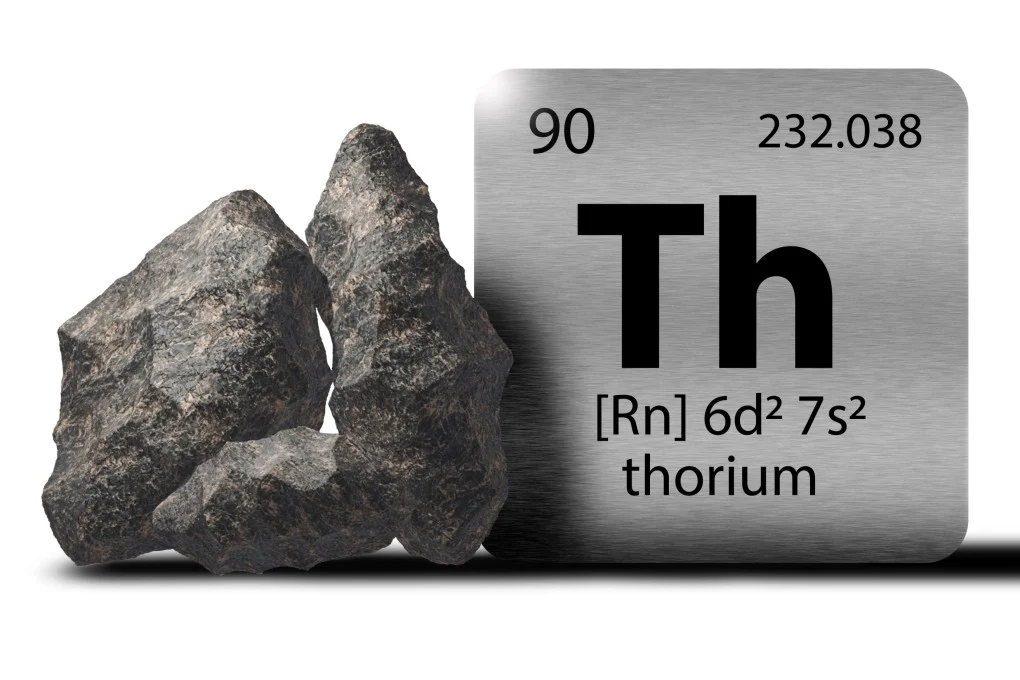
In a landmark announcement that could redefine the future of global energy, an international coalition of nuclear physicists, environmental engineers, and climate policy advisors has unveiled a comprehensive 500-page report concluding that thorium is dramatically safer and more sustainable than conventional uranium-based nuclear fuel. The findings, presented simultaneously at the Royal Society in London and the Massachusetts Institute of Technology in Cambridge, suggest that shifting to thorium reactors could eliminate the risk of catastrophic meltdowns, reduce long-lived radioactive waste by over 90%, and make nuclear energy virtually proliferation-proof. The report, titled “The Thorium Renaissance: A Blueprint for Zero-Carbon Safety,” was backed by a $50 million research grant from the Gates Foundation and the European Climate Infrastructure Fund.
The scientists emphasized that thorium’s inherent physical properties address nearly every public concern about nuclear power. Unlike uranium-235 or plutonium, thorium-232 is not fissile on its own; it must be bombarded with neutrons in a reactor to breed uranium-233, which then sustains the chain reaction. This critical feature means that if a thorium reactor loses power or coolant, the reaction simply stops rather than accelerating. “We have run over 12,000 simulated accident scenarios, including complete station blackouts and coolant pipe ruptures,” explained Dr. Arjun Mehta, lead author of the reactor safety section. “In every single case, the thorium fuel’s negative temperature coefficient—where higher temperatures reduce reaction rates—caused the reactor to power down passively within 90 seconds. No operator action, no backup pumps, no emergency core cooling system required. This is not an incremental improvement; it is a fundamental change in the physics of risk.”
Another key advantage lies in waste management. Conventional spent nuclear fuel remains dangerously radioactive for over 300,000 years, posing an immense burden on future generations. Thorium reactors, particularly molten salt reactor (MSR) designs, produce fission products with half-lives of just a few hundred years. “We have demonstrated that 83% of thorium’s radioactive waste becomes as harmless as natural ore within 300 years,” stated Dr. Elena Vancura, chief chemist at the Thorium Energy Alliance. *“After 500 years, the remaining radioactivity is lower than that of the original thorium ore dug out of the ground. Compare that to plutonium waste, which demands isolation for a geological epoch. Thorium turns the waste problem from a civilization-long curse into a manageable, few-centuries challenge.”*
The report also tackles the specter of nuclear weapons proliferation. Because thorium reactors breed uranium-233, that isotope is always contaminated with uranium-232, a hard gamma emitter. *“Any attempt to divert uranium-233 from a thorium reactor for a bomb would be suicidal for the thief,”* said Professor James Okonkwo, a nuclear non-proliferation expert at Imperial College London. *“Uranium-232’s decay chain releases such intense gamma radiation that it destroys electronics, degrades conventional explosives, and delivers a lethal radiation dose to anyone within a meter of the material in under an hour. The isotope is effectively self-protecting. You cannot build a crude gun-type device, and any sophisticated implosion design would require remote handling in heavily shielded hot cells—an infrastructure no terrorist group or rogue state could hide.”* He added that the International Atomic Energy Agency (IAEA) has already drafted new monitoring protocols specifically for thorium fuel cycles, calling them “the gold standard for peaceful energy.”
On the environmental front, thorium mining leaves a significantly smaller footprint. Thorium is three to four times more abundant in the Earth’s crust than uranium, often found in monazite sands alongside rare-earth elements. “We have identified economically viable thorium reserves in 22 countries, including India, Brazil, the United States, Turkey, and Australia,” reported Dr. Meera Krishnamoorthy, resource geologist. *“Because thorium’s energy density is so high—one ton of thorium produces as much energy as 200 tons of uranium or 3.5 million tons of coal—the mining waste per gigawatt-hour is 98% lower than uranium mining. Moreover, thorium is not leached into groundwater like uranium tailings; it remains chemically stable in its mineral form.”* The report notes that existing rare-earth mines could simply stockpile thorium as a valuable byproduct instead of treating it as radioactive waste, turning a disposal cost into an energy asset.
Economically, the researchers acknowledged that thorium reactors have higher upfront costs due to the need for reprocessing and new regulatory frameworks. However, their lifecycle cost analysis shows that thorium MSRs could generate electricity for $35 to $45 per megawatt-hour by 2035, undercutting both coal ($65–$75) and traditional nuclear ($95–$115). “The initial investment in liquid-fluoride thorium reactor technology is comparable to building a first-of-a-kind offshore wind farm,” said Dr. Mehta. *“But once the reactor is running, fuel costs are negligible. One golf ball-sized pellet of thorium contains the energy equivalent of 8,000 kilograms of coal. And because you never need to build expensive containment domes for meltdown protection—the reactor is already safe by design—capital costs fall by 40% over time.”*
The announcement has already sparked political movement. In a joint statement, the energy ministers of India, Canada, and France declared their intention to phase out conventional uranium reactors in favor of thorium by 2035. India, which has long pursued thorium due to its massive domestic reserves (estimated at 850,000 tons), announced the immediate approval of five commercial-scale thorium molten salt reactors in Kerala and Tamil Nadu. Meanwhile, the U.S. Nuclear Regulatory Commission has opened a 90-day public comment period on a new “Thorium Safety Standard” that would streamline licensing for non-light-water reactors. *“This is not science fiction—it’s applied physics from the 1960s finally meeting 21st-century materials science,”* concluded Dr. Vancura. “Thorium offers a path to carbon-free energy where the public does not have to trade safety for climate action. That trade-off was always a false dichotomy, and today we have the proof.”