The natural world remains a vast, uncharted frontier, harboring secrets that continue to baffle the scientific community. While we have mapped the surface of Mars and charted the depths of the stars, several of Earth’s most enigmatic inhabitants remain shrouded in a veil of near-total obscurity. These are the “ghosts” of our ecosystems—creatures so rare that sightings are often separated by decades, and so elusive that their basic behaviors remain a matter of theory rather than observation.
From the “Asian Unicorn” navigating the fog-drenched peaks of the Annamite Mountains to the tiny “sand-swimmers” of the Argentine plains, these five animals represent the pinnacle of biological mystery. Their existence challenges our understanding of survival, often thriving in extreme niches or specialized environments that defy human intrusion. Many are known to us only through grainy camera-trap footage, ancient local folklore, or the tragic evidence of their remains. Exploring their stories is not just a lesson in zoology; it is a humbling reminder of the limits of human knowledge. As climate change and habitat loss accelerate, these elusive species exist in a precarious state, often disappearing into the shadows before we have the chance to truly meet them.
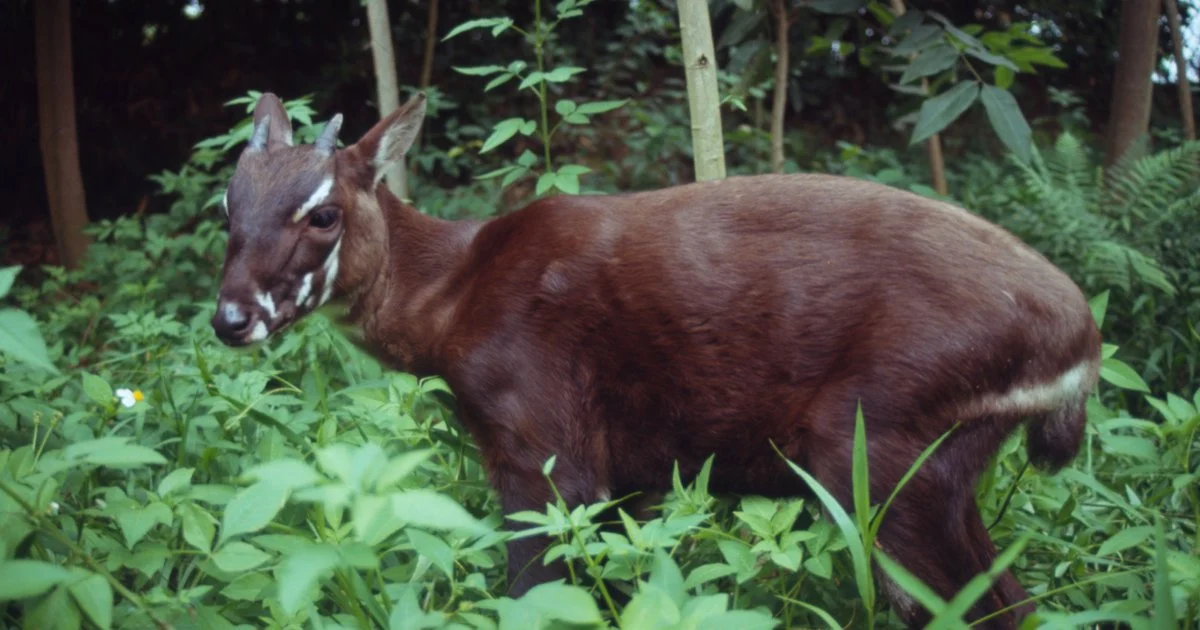
1. The Saola (The Asian Unicorn)
Discovered only in 1992, the Saola is so elusive that it has been dubbed the “Asian Unicorn,” despite having two horns. Native to the dense Annamite Mountains of Vietnam and Laos, this forest-dwelling bovid remained hidden from the scientific world for centuries, known only to local tribes through rare skulls kept as trophies. Its most striking features are its long, parallel horns and the large, musk-secreting maxillary glands on its muzzle, which are among the largest of any mammal. The Saola’s mystery is compounded by its inability to survive in captivity; every individual ever captured has died within weeks, suggesting a highly specialized diet or an extreme physiological sensitivity to stress. Biologists have only captured clear footage of a living Saola a handful of times, most recently in 2013, leaving its current population and behavioral patterns largely a matter of educated guesswork.
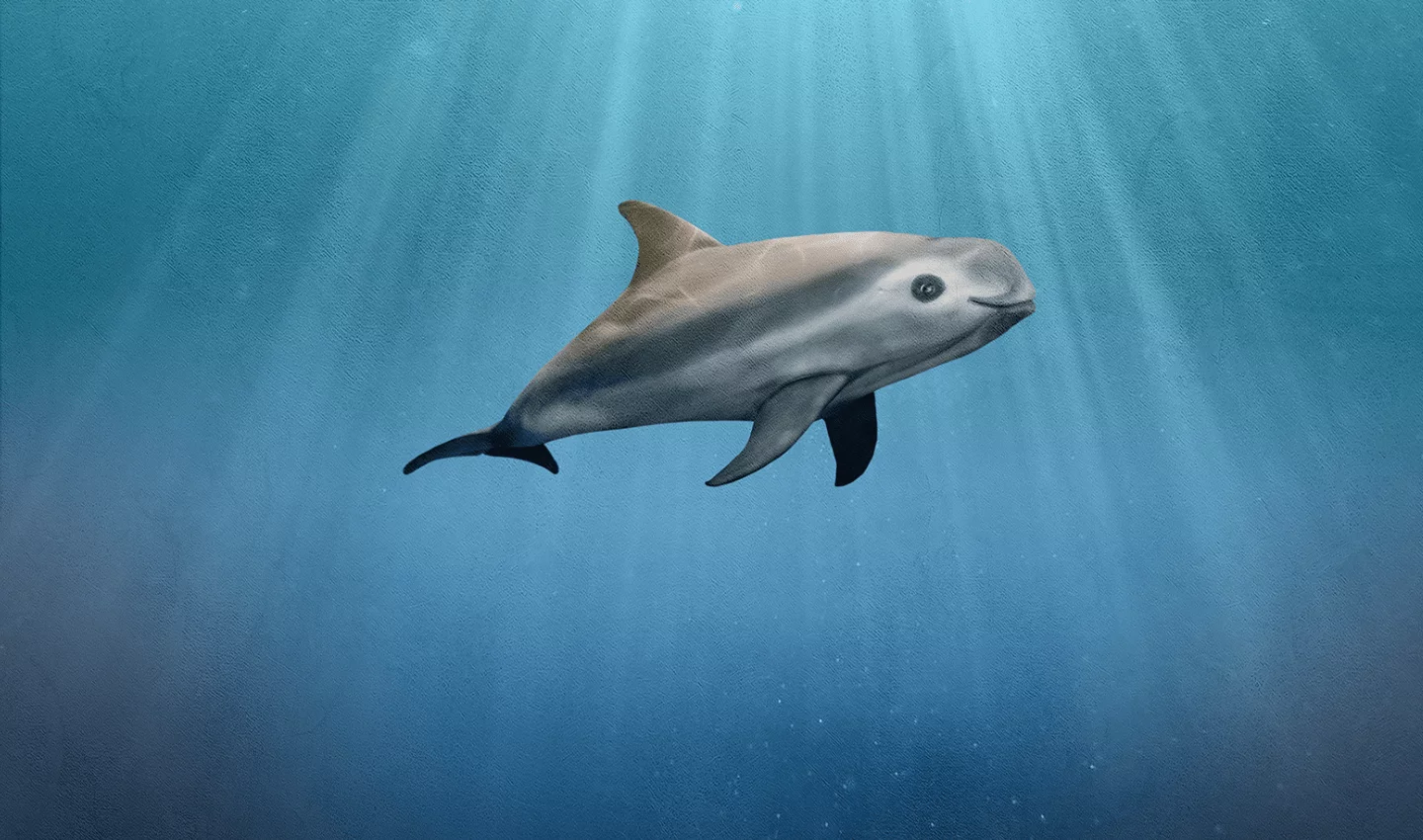
2. The Vaquita
The Vaquita holds the somber title of the world’s rarest marine mammal, with a population teetering on the edge of double digits in the northern Gulf of California. This tiny porpoise, recognized by the dark rings around its eyes and lips that give it a “panda-like” appearance, was first identified only in 1958. Unlike many other cetaceans, the Vaquita is incredibly shy, avoiding boats and rarely surfacing for more than a second to breathe. Its mystery is largely a result of its restricted range—the smallest of any whale or dolphin—and the fact that it is almost never seen alive in the wild. Its decline is driven by illegal “gillnets” meant for the totoaba fish, which accidentally entangle and drown the Vaquita. Today, it exists more as a ghost of the Sea of Cortez than a visible species, monitored mostly through underwater acoustic sensors rather than sight.
3. The Ili Pika
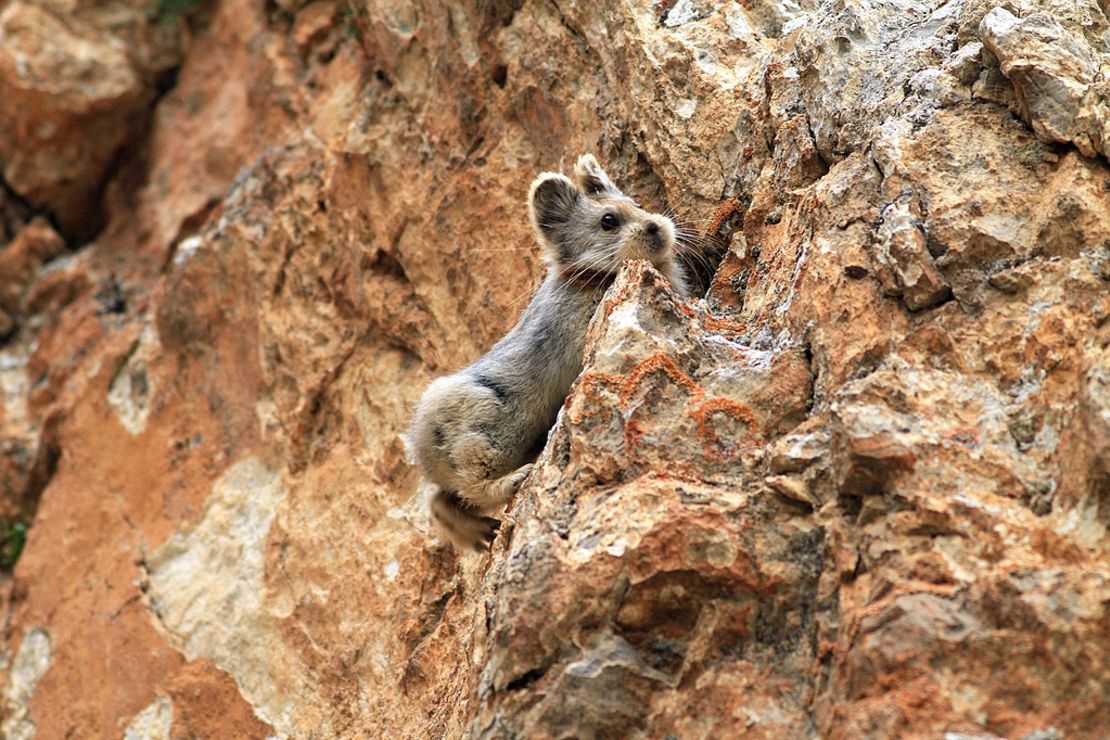
Hidden high in the Tian Shan mountains of northwest China, the Ili Pika is a tiny, teddy-bear-faced relative of rabbits that went unseen for over 20 years. First discovered in 1983, it was not photographed again until 2014, when a lucky researcher spotted one peeking from a rocky crevice. These “magic bunnies” live at extreme altitudes between 2,800 and 4,100 meters, surviving on mountain grasses and herbs. They are solitary and exceptionally quiet, unlike other pika species that use loud whistles to communicate. Their primary mystery lies in their rapid disappearance; their population has plummeted by an estimated 70% since their discovery, likely due to climate change pushing them higher into the peaks where food is scarce. Because they are so rare and live in such inaccessible terrain, almost nothing is known about their mating habits, social structure, or lifespan.
4. The Giant Squid (Architeuthis dux)
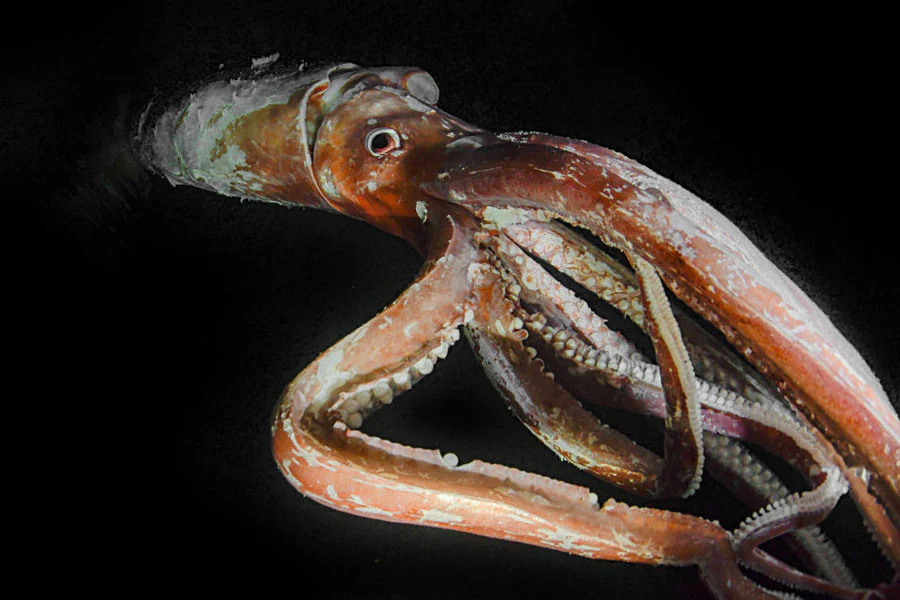
For centuries, the Giant Squid was a creature of myth, the “Kraken” that dragged ships to their doom. Even today, it remains one of the most mysterious predators on the planet because it inhabits the “twilight zone” of the deep ocean, thousands of feet below the surface. Growing up to 13 meters long with eyes the size of dinner plates to detect bioluminescence, this massive invertebrate was only filmed alive in its natural habitat for the first time in 2012. Most of our knowledge comes from dead specimens washed ashore or remains found in the stomachs of sperm whales. We know they possess a donut-shaped brain with an esophagus running through the center, but we still don’t know how they hunt, how they find mates in the pitch-black abyss, or exactly how large they can truly grow in the deep-sea trenches where humans cannot follow.
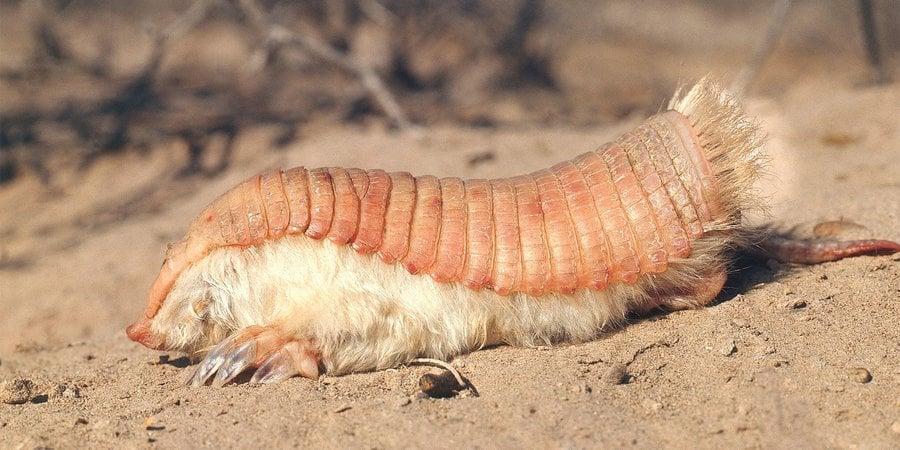
5. The Pink Fairy Armadillo
The Pink Fairy Armadillo is the smallest and arguably the strangest armadillo in existence, a subterranean “sand-swimmer” from the plains of central Argentina. Measuring only about 10 centimeters, its shell is a delicate pink hue caused by blood vessels used for thermoregulation, and it is the only armadillo species whose shell is not fully attached to its body. This tiny creature spends nearly its entire life underground, surfacing only briefly at night or after heavy rains to prevent its burrows from flooding. It is so sensitive to its environment that it almost instantly dies of stress if handled by humans, making it nearly impossible to study in a lab or keep in a zoo. Because of its elusive, fossorial lifestyle, no one knows how many exist, and sightings are so rare that local residents may go their entire lives without seeing a single one.