February 16, 2026
In a bold stride toward making space accessible to civilians, Chinese space tourism startup Beijing Interstellor Human Spaceflight Technology Co., Ltd. has firmly set its sights on 2028 for the nation’s first commercial crewed mission. The company, which brands itself as “InterstellOr,” has not only announced an ambitious technical roadmap but has also secured a roster of high-profile passengers, including a famous actor, signaling the dawn of a new era in China’s commercial space sector. The development marks a significant shift as the country’s space industry moves beyond state-led programs to embrace private, consumer-facing ventures .
The company’s formal announcement, made in late January 2026, revealed that it has already sold more than 20 tickets for its planned suborbital flights, priced at 3 million yuan (approximately $430,000) per seat . A 10% deposit is required to secure a reservation, locking in a place for what could be the first Chinese private spacecraft to cross the boundary of space. Among the most attention-grabbing revelations was the confirmation that Chinese actor Johnny Huang Jingyu has signed on as the “009号” (No. 009) space tourist. In a video message released by the company, Huang expressed his excitement, stating he looks forward to “riding a Chinese spacecraft to personally reach that sea of stars” . His inclusion in the passenger list has catapulted the project into the mainstream, generating significant buzz on social media platforms .
The passenger manifest for the 2028 mission reads like a cross-section of China’s innovative and cultural elite, underscoring the broad appeal of space tourism. The list includes not only celebrities like Huang Jingyu but also leading figures from technology and science. Among them is Li Licheng, an academician of the Chinese Academy of Engineering, whose participation lends significant scientific credibility to the venture . Other confirmed passengers include Qiu Heng, the Chief Marketing Officer of robotics startup AgiBot; Wang Jing, founder of outdoor brand Toread; Xie Meng, CEO of Guangzhou’s Grandview Group; and several entrepreneurs, artists, and poets . In a quirky nod to the future, the passenger list even includes a humanoid robot, the PM01 from EngineAI, symbolizing the fusion of space travel with cutting-edge technology .
The spacecraft at the heart of these ambitious plans is the “InterstellOr One” (CYZ-1), described as China’s first reusable commercial crewed spacecraft . The company has already made significant technical progress, having unveiled a full-scale test cabin and, in January 2026, successfully completed a critical test of its landing attenuation system. During this trial, a roughly 5-tonne test cabin was dropped from a height of over three meters to simulate a parachute-assisted descent, validating the proprietary “Yungand Landing” buffer technology . InterstellOr aims to complete its first uncrewed test flights by 2027 before attempting the crewed mission in 2028 . The CYZ-1 is designed to carry up to seven passengers on a journey that will take them to the Kármán line, 100 kilometers above Earth—the internationally recognized boundary of space—where they will experience three to six minutes of weightlessness .
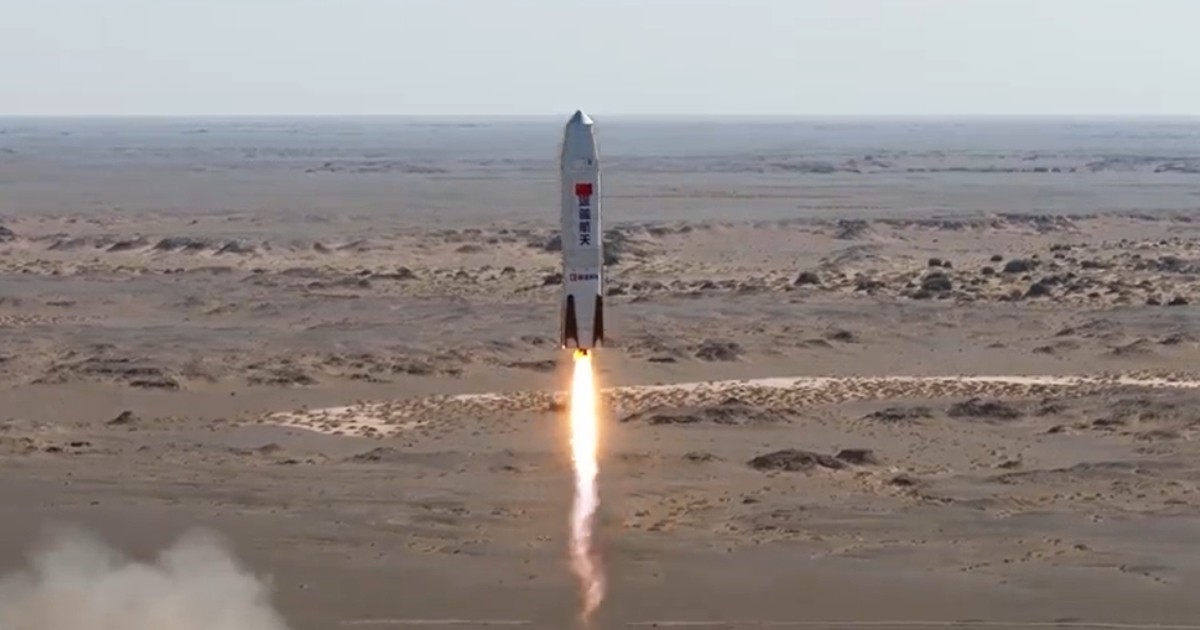
Industry experts acknowledge the technical feasibility of the project but stress the immense challenge of ensuring safety. “Suborbital space tourism is technically less demanding than orbital human spaceflight, which requires speeds of 7.8 kilometers per second,” explained Yang Yuguang, Chair of the Space Transportation Committee at the International Astronautical Federation . “Suborbital only needs to reach about 1 kilometer per second. But the key point is how we can do that at a very safe level. We must have certain verification processes and maybe several unmanned launch attempts, and only when all these are very successful can we give the approval” . This rigorous safety-first approach will be paramount as InterstellOr and other Chinese startups like Deep Blue Aerospace, which is targeting a 2027 flight, race to be the first to offer commercial trips .
Behind the technical milestones is the vision of InterstellOr’s founder and CEO, Lei Shiqing. A young entrepreneur who has navigated the immense challenges of the aerospace industry, Lei has spoken openly about the difficulties of building a startup in such a capital-intensive and technically demanding field. “The road to跨界 (crossing boundaries) into space is far more difficult than imagined,” she recounted in an interview, describing early struggles with funding and moments of self-doubt . Her strategy involves not just rocketry but a deep focus on the customer experience, shifting the design philosophy from “people adapting to machines” to “machines adapting to people” . The company has raised millions of yuan in funding and holds several key patents, positioning itself at the forefront of China’s commercial space race .
With a target price reduction roadmap aiming to eventually bring tickets down to as low as 300,000 yuan in the future, InterstellOr is betting on reusability to make space travel more accessible . As the world watches Blue Origin and Virgin Galactic continue their flights, China’s private sector is now positioning itself to compete in this new high-tech frontier. The selection of its first astronauts—a diverse group of civilians—has turned a distant dream into a tangible reality for many, with the world now waiting to see if the 2028 target will truly launch Asia into the age of space tourism .