
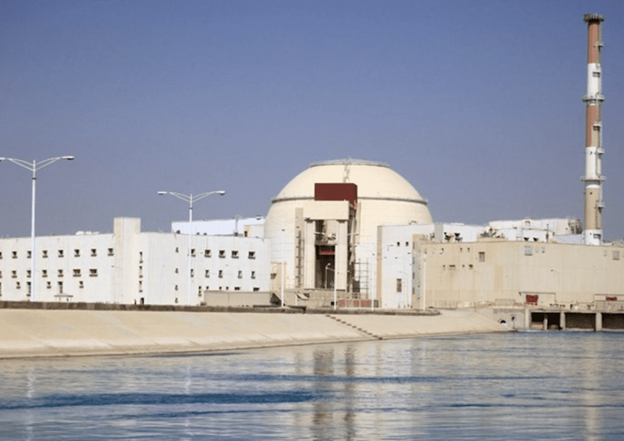
The evolution of Iran’s nuclear program represents one of the most complex geopolitical challenges of the 21st century, shifting from a Western-backed energy initiative to a flashpoint for global conflict. Originating in the 1950s under the “Atoms for Peace” program, the infrastructure was intended to modernize the Pahlavi state. However, the 1979 Islamic Revolution and the subsequent Iran-Iraq War transformed the program’s purpose into a pursuit of strategic autonomy and regional deterrence. Over decades, this ambition triggered a cycle of clandestine advancements, international sanctions, and high-stakes diplomacy, most notably the 2015 Joint Comprehensive Plan of Action (JCPOA).
The collapse of diplomatic frameworks in the late 2010s accelerated Tehran’s enrichment capabilities, bringing the nation to the threshold of nuclear weapons status. By 2026, the long-standing “shadow war” between Israel and Iran has escalated into a direct, kinetic military confrontation. As of March 23, 2026, the landscape is defined by the aftermath of major aerial campaigns—Operation Rising Lion and Operation Epic Fury—which targeted Iran’s hardened nuclear facilities. This essay examines the historical trajectory of Iran’s nuclear development, its persistent resilience against sabotage, and the current status of its capabilities amidst a state of total regional war.
Here is a brief description of historical development of Iran’s nuclear capabilities,
The Pahlavi Era: Foundations and the “Atoms for Peace”
The trajectory of Iran’s nuclear program began not as a clandestine pursuit of weaponry, but as a centerpiece of the Pahlavi dynasty’s modernization efforts. In 1957, under the Eisenhower administration’s “Atoms for Peace” program, the United States and Iran signed a civil nuclear cooperation agreement. This partnership provided the initial technical framework, and by 1967, the Tehran Nuclear Research Center (TNRC) was established. Equipped with a 5-megawatt research reactor supplied by the U.S., the facility initially ran on highly enriched uranium. During this period, Iran was a committed member of the international community regarding non-proliferation, signing the Treaty on the Non-Proliferation of Nuclear Weapons (NPT) in 1968 and ratifying it in 1970.
By the mid-1970s, Shah Mohammad Reza Pahlavi envisioned a massive nuclear infrastructure to reduce reliance on oil for domestic energy. He established the Atomic Energy Organization of Iran (AEOI) in 1974 with the ambitious goal of generating 23,000 megawatts of electricity through a network of 23 power plants. Substantial contracts were signed with Western firms, including West Germany’s Siemens for the Bushehr plant and France’s Framatome. While the Shah publicly maintained that the program was peaceful, he occasionally hinted at the necessity of a “deterrent force,” suggesting that the dual-use nature of nuclear technology was already a factor in Iranian strategic thinking.
Post-Revolutionary Stagnation and the Impact of the Iran-Iraq War
The 1979 Islamic Revolution brought a sudden and ideological halt to nuclear development. The new leadership, led by Ayatollah Ruhollah Khomeini, initially viewed nuclear technology as a “Western imposition” and a vestige of the Shah’s “satanic” excesses. Many international contracts were canceled, and Western technicians fled the country. However, this stance shifted dramatically during the Iran-Iraq War (1980–1988). As Iraq utilized chemical weapons and targeted the unfinished Bushehr reactor with repeated airstrikes, the Iranian leadership re-evaluated the need for a strategic deterrent. In the late 1980s, Iran quietly revived its program, seeking assistance from non-Western partners. Agreements were struck with China and Argentina, but the most significant partnership emerged with Russia in the 1990s to complete the Bushehr plant. Concurrently, a clandestine procurement network, largely facilitated by Pakistan’s A.Q. Khan, provided Iran with the centrifuge technology necessary for uranium enrichment. This “black market” period laid the groundwork for the facilities at Natanz and Arak, which remained hidden from the world for over a decade.
The Revelation of Secret Sites and the Era of Sanctions
The international landscape changed irrevocably in August 2002, when an Iranian opposition group revealed the existence of a massive underground enrichment facility at Natanz and a heavy-water facility at Arak. These revelations suggested a dual-track approach: one focused on enriched uranium and the other on plutonium. The International Atomic Energy Agency (IAEA) subsequently found Iran in non-compliance with its safeguards agreement, leading the UN Security Council to impose a series of increasingly crippling economic sanctions starting in 2006. For the next decade, a “cat-and-mouse” game ensued. Iran continued to install advanced centrifuges and increase enrichment levels, while the West—specifically the U.S. and Israel—engaged in sabotage. This period saw the deployment of the Stuxnet malware in 2009, which physically destroyed nearly a thousand centrifuges at Natanz, and a series of targeted assassinations of high-level Iranian nuclear scientists. Despite these setbacks, Iran achieved “nuclear latency,” possessing all the components and knowledge necessary to build a weapon, even if it had not yet made the political decision to do so.
The JCPOA: From Diplomatic Breakthrough to Collapse
The 2015 Joint Comprehensive Plan of Action (JCPOA) represented a historic attempt to resolve the crisis through diplomacy. Iran agreed to strictly limit its uranium enrichment to 3.67%, reduce its centrifuge count, and allow unprecedented IAEA inspections in exchange for sanctions relief. For several years, the agreement successfully extended Iran’s “breakout time” (the time needed to produce enough fissile material for one bomb) from a few months to over a year. However, the 2018 unilateral withdrawal by the United States under the Trump administration collapsed this framework. Washington’s “maximum pressure” campaign sought to force Iran back to the table for a broader deal, but Tehran responded by incrementally breaching the JCPOA’s limits. By 2021, Iran had begun enriching uranium to 60% purity—a technical hair’s breadth from the 90% required for weapons-grade material. The “shadow war” also intensified, with further sabotage at Natanz and the assassination of top nuclear scientist Mohsen Fakhrizadeh in late 2020.
The 2025–2026 War: Direct Confrontation and Nuclear Targets
As of early 2026, the long-standing proxy conflict has transitioned into a devastating direct war between Israel and Iran, with significant United States involvement. Tensions reached a breaking point in late 2024 and early 2025, following massive direct missile exchanges. In June 2025, Israel launched Operation Rising Lion, the first full-scale military campaign specifically designed to decapitate Iran’s nuclear infrastructure. This was followed by a more expansive joint U.S.-Israeli offensive on February 28, 2026, known as Operation Epic Fury.
These recent strikes targeted the core of Iran’s nuclear capabilities:
-
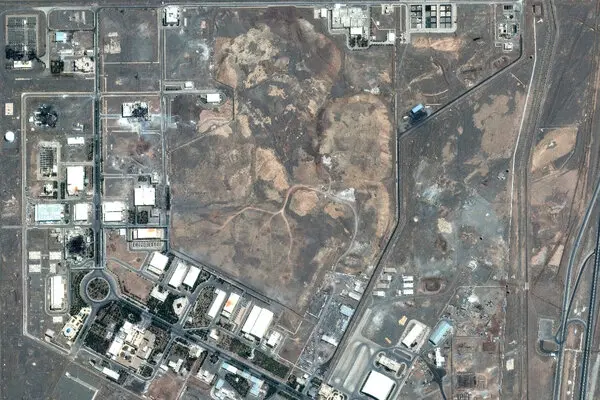
Natanz and Fordow: These hardened, underground enrichment sites were hit with “Massive Ordnance Penetrator” (MOP) bunker-buster bombs. Reports indicate that the entrances have been buried and the centrifuge halls severely degraded.
-
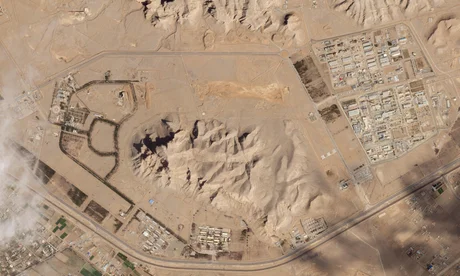
Isfahan Fuel Technology Center: Critical for converting “yellowcake” into the gas needed for enrichment, this site was reportedly rendered inoperable, breaking a vital link in the nuclear fuel cycle.
-
Arak Heavy Water Plant: The reactor infrastructure was heavily damaged, effectively closing the plutonium pathway for the foreseeable future.
Present Status: Deterrence in the Ruins
As of March 23, 2026, the status of Iran’s nuclear program is one of high-stakes ambiguity. While the 2025 and 2026 strikes caused “extensive damage” and likely set the program back by several years, the fundamental scientific knowledge and “nuclear brain trust” remain intact. Despite the reported death of several top scientists and the killing of Supreme Leader Ayatollah Ali Khamenei in the February 2026 strikes, the Iranian regime—now in a state of chaotic transition—maintains that it can “reconstruct everything.”
The humanitarian and geopolitical fallout is immense. Iran’s economy is in a state of collapse, and nationwide anti-government protests have been met with brutal suppression. Internationally, the UN has “snapped back” all pre-2015 sanctions, and the JCPOA is officially dead. While the IAEA has lost total visibility into several sites, recent intelligence assessments suggest that Iran is no longer a “threshold state” capable of a two-week breakout. However, the risk of a “covert breakout” from hidden, smaller facilities remains the primary concern for Western intelligence.
The history of Iran’s nuclear program has come full circle—from a U.S.-sponsored energy project to a target of U.S. and Israeli bunker-busters. The current war has shifted the objective from “containment” to “dismantlement,” yet history suggests that military strikes rarely eliminate the underlying motivation for a nuclear deterrent. As Iran navigates a leadership crisis and a decimated infrastructure, the international community remains divided on whether these strikes have permanently ended the nuclear threat or merely ensured that the next phase of Iranian development will be even more clandestine and desperate.