March 24, 2026
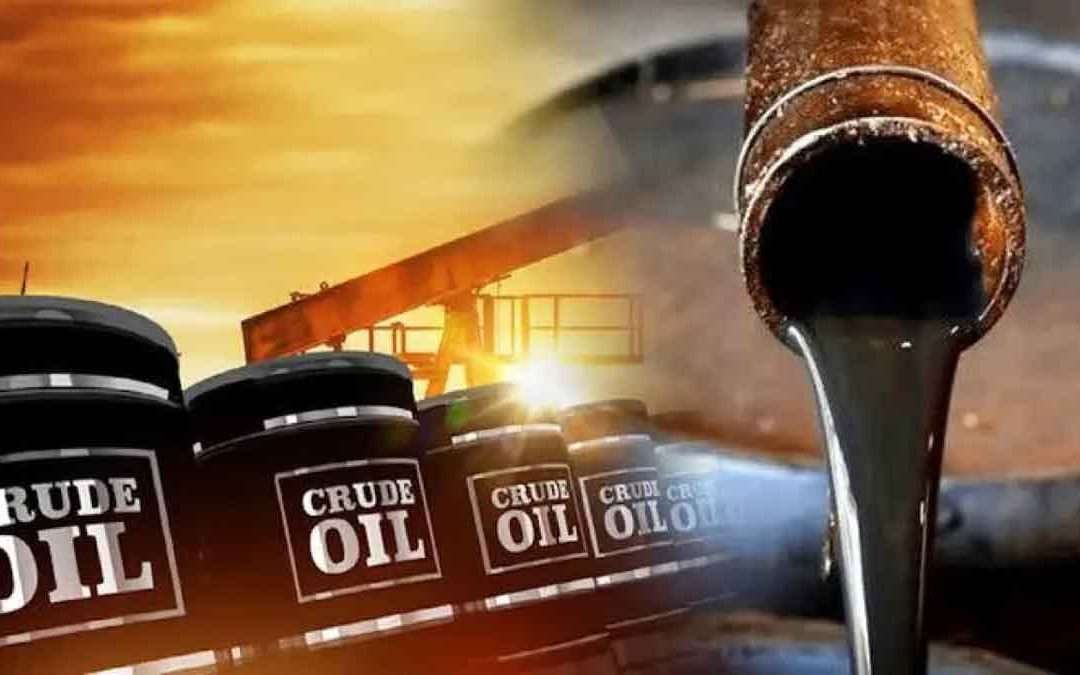
The global crude oil supply chain is currently navigating its most volatile period in modern history. As of late March 2026, the architecture of energy movement—from the wellhead to the refinery—is being fundamentally redrawn by a “perfect storm” of geopolitical conflict, technological upheaval, and a stuttering energy transition. While the early 2020s were defined by pandemic recovery and the initial shocks of the Russia-Ukraine war, 2026 has introduced a Strait of Hormuz crisis that has rendered traditional supply chain models obsolete. This analysis explores the critical nodes of the current system, the fragility of global maritime chokepoints, and the aggressive shift toward AI-driven logistics as a survival mechanism for both national economies and private energy titans.
The Great Supply Disruption of 2026
The defining feature of the global supply chain today is the massive physical shortage triggered by military escalations in the Middle East. Since late February 2026, the Strait of Hormuz, a waterway responsible for nearly 20% of global oil flows, has seen transit reduced to a “trickle.” This blockade is not merely a production shortage; it is a logistics paralysis. Unlike previous crises where spare capacity in other regions could be ramped up to meet demand, the current bottleneck is geographical. Even if Saudi Arabia or Kuwait maintain high production levels, the inability to move that crude through the Persian Gulf has created a “phantom surplus”—oil that exists but cannot reach the Atlantic or Pacific basins.
“The war in the Middle East is creating the largest supply disruption in the history of the global oil market,” notes the International Energy Agency (IEA) in its March 12, 2026, assessment. “With crude and oil product flows through the Strait of Hormuz plunging from 20 million barrels per day (mb/d) to near zero, and limited capacity available to bypass the waterway, global supply is projected to plunge by 8 mb/d this month alone.” This staggering figure represents a fundamental departure from historical patterns, where supply shocks typically averaged 4–5 mb/d.
Geopolitical Realignment and the “Dark Fleet”
The supply chain is no longer a transparent, unified global market. Instead, it has fractured into two distinct tiers: the Sanctioned Supply Chain and the Regulated Market. Russia, Iran, and Venezuela continue to serve as the anchors of the sanctioned world, utilizing an increasingly sophisticated “dark trading ecosystem.” In 2026, tanker tracking data reveals that while Indian and Chinese imports of Russian crude have fluctuated due to price cap pressures, the reliance on shadow tankers—vessels with opaque ownership and aging hulls—has hit an all-time high.
Sanctioned crude now accounts for a significant portion of “oil on water,” with floating storage reaching a three-year high of 123 million barrels. This inefficient system increases the “geopolitical risk premium,” making oil more expensive even when the physical balance suggests a surplus. “The security of sanctioned barrels is going to weaken this year,” states a senior analyst at Kpler. “Sanctions are succeeding in deepening discounts, which are here to stay—approaching $8/bbl for Urals into India—but the dark ecosystem is becoming more expansive and dangerous to sustain.”
The “Wildcard” of Western Hemisphere Production
As Middle Eastern supplies remain trapped behind blockades, the focus of the global supply chain has shifted violently toward the Americas. The United States, Brazil, Guyana, and Argentina have emerged as the primary “swing producers” of 2026. Non-OPEC+ output growth is currently the only factor preventing a total global energy collapse. The U.S. Permian Basin and the offshore fields of Guyana are being pushed to their absolute limits to fill the void left by Persian Gulf producers.
However, this shift introduces its own set of logistical challenges. U.S. Gulf Coast export infrastructure is nearing its maximum throughput capacity. The supply chain for Very Large Crude Carriers (VLCCs) is being reshuffled, with ships being diverted from traditional Middle East–Asia routes to longer, more expensive Atlantic Basin–Asia voyages. This “rerouting” adds 10 to 14 days to transit times, significantly increasing freight costs and insurance surcharges. Strategic Petroleum Reserves (SPR) are also being deployed at record rates, with IEA members authorizing the release of 400 million barrels in March 2026 to stabilize the market.
AI and Digital Twins: The New Infrastructure
Faced with extreme volatility, the “midstream” sector—pipelines, storage, and shipping—has undergone a digital revolution. In 2026, Artificial Intelligence (AI) and Digital Twin technology are no longer experimental; they are the primary tools for ensuring supply chain resilience. Companies are now using virtual replicas of their entire physical networks to simulate “what-if” scenarios, such as the sudden closure of a pipeline or a drone attack on a terminal.
AI-driven predictive maintenance has reduced unplanned refinery shutdowns by 25%, a critical margin when global refining capacity is already strained by Middle Eastern outages. “Digital transformation is fundamental to survival,” according to industry reports from early 2026. “The firms that extract more value from their data—using AI to optimize dynamic freight routing and pinpoint drilling locations—will have a significant edge in this high-risk environment.” For the first time, geospatial intelligence is being integrated with real-time environmental metrics to help tankers navigate around conflict zones or extreme weather events, which have also disrupted North American operations this year.
Economic Fallout: The Stagflation Dilemma
The critical analysis of the current supply chain cannot ignore the macroeconomic transmission mechanisms. Crude oil is the primary industrial input for almost every global manufacturing sector. The 10% reduction in global supply seen in March 2026 is cascading through the economy, fueling “stagflation”—a combination of stagnant growth and high inflation.
With Brent crude prices surging past $120/bbl (peaking briefly at $126) and Dubai crude hitting record highs, central banks are in a bind. “Sustained oil prices at $100 per barrel could reduce global GDP growth by 0.2 percentage points while pushing inflation higher by 0.7 points,” warn economists at Barclays. In India, the surge in crude costs is exerting immense pressure on the fiscal deficit, forcing a rapid acceleration of the National Green Hydrogen Mission and ethanol blending programs to reduce import dependency.
The Energy Transition Paradox
Perhaps the most striking irony of 2026 is that the fossil fuel supply chain remains the single most important factor for global stability, even as the “energy transition” gathers pace. While investment in renewables is at an all-time high, the current crisis proves that the world is still “oil-dependent.” In fact, the instability of 2026 is forcing a strategic retreat for some nations, who are reopening coal plants or extending the life of older oil fields to ensure “energy security” over “decarbonization.”
“The macroeconomic relevance of energy in 2026 is no longer defined by commodity prices alone,” argues a policy brief from the World Bank. “It is defined by the capacity of energy systems—grids, supply chains, and investment frameworks—to absorb shocks.” In India, the 2026 Energy Week in Goa highlighted this shift, focusing on “energy equity” and the need for a diversified approach that treats natural gas (LNG) and biofuels as essential bridges during the transition.
The global crude oil supply chain in March 2026 is a system under siege. The Strait of Hormuz blockade has exposed the extreme fragility of maritime chokepoints, while the rise of the shadow fleet has created a fragmented, dangerous market. However, the crisis is also acting as a catalyst for technological maturity, as AI and digital twins provide the only viable way to manage such high-dimensional risk.