May 12, 2026
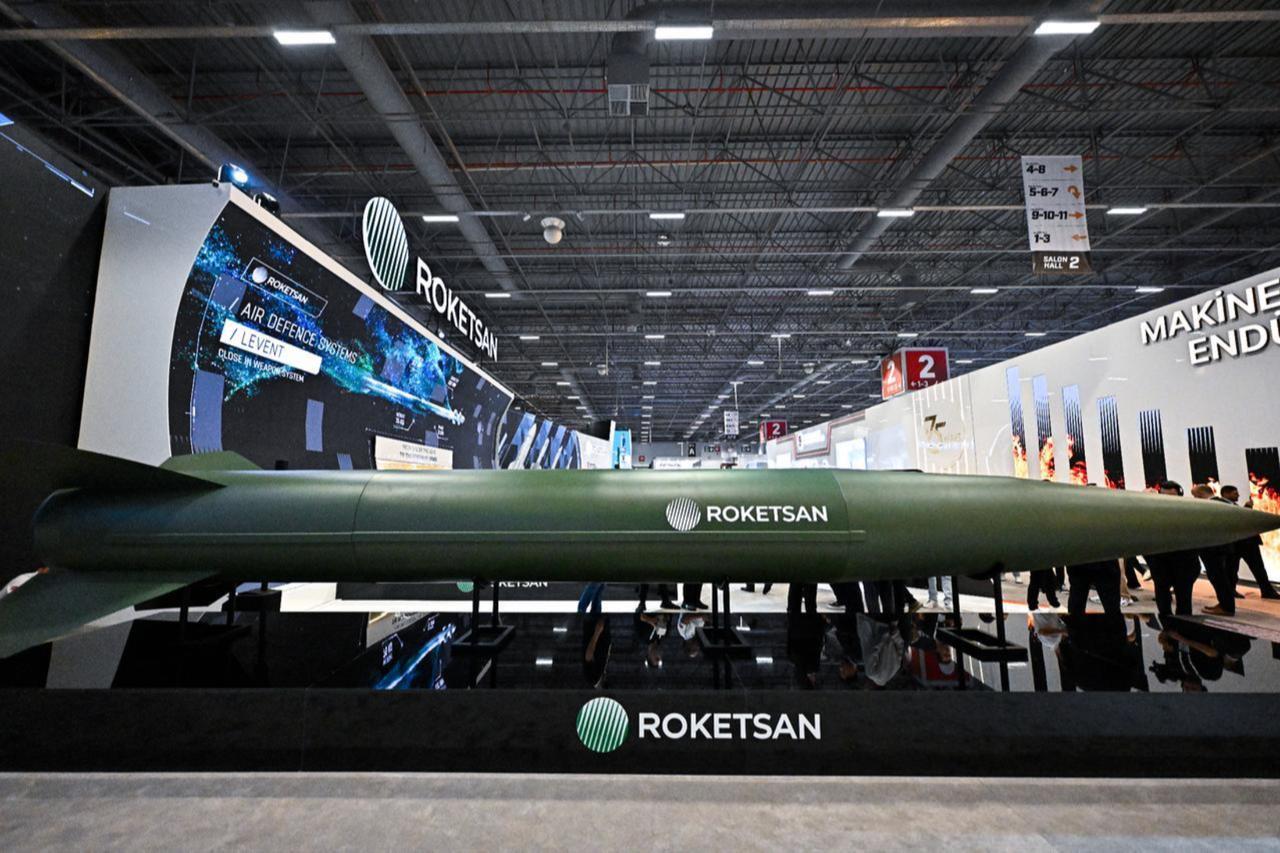
In a sweeping live broadcast from the sprawling desert test range near Karapınar, Turkey today unveiled its most ambitious indigenous weapon system to date, the Tayfun-2 hypersonic missile, a strategic asset poised to reshape regional military dynamics. President Recep Tayyip Erdoğan, speaking via video link from the presidency’s new digital command center, hailed the moment as the nation’s “entry into the exclusive club of hypersonic powers.” The missile, developed entirely under the auspices of Roketsan in partnership with the Scientific and Technological Research Council of Turkey (TÜBİTAK) , was officially designated the Tayfun-2, succeeding the short-range Tayfun ballistic missile first tested in 2022.
The new system, however, bears little resemblance to its predecessor. Measured at 22 meters in length and 1.5 meters in diameter, the Tayfun-2 is a two-stage, solid-fueled hypersonic glide vehicle (HGV) that, according to telemetry data released during the test, achieved a range of over 3,000 kilometers while flying at a staggering Mach 12 – nearly 15,000 kilometers per hour. Unlike traditional ballistic missiles that follow a predictable parabolic arc, the Tayfun-2’s payload—an unpowered glide vehicle—detached from the booster at 100 kilometers altitude and then executed a series of erratic, “unpredictable S-curve maneuvers,” as described by the on-site announcer, staying within the atmosphere to evade any known ballistic missile defense system.
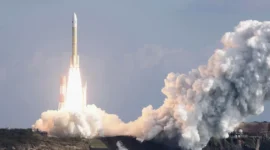
The live demonstration, which was streamed with a ten-second delay for security reasons, showed the missile roaring out of a canisterized launch vehicle—a heavily modified eight-axle Tatra truck, capable of firing on the move. Within 90 seconds of launch, the first stage separated, and the second-stage sustainer motor propelled the system to the edge of space. Then came the critical moment: the wedge-shaped glide vehicle, coated in a shiny, ablative thermal protection layer of a new ceramic matrix composite, separated and began its “skip-glide” trajectory. On thermal cameras, the vehicle appeared as a brilliant white streak against the dark blue upper atmosphere, descending and ascending like a stone skipping across a pond.
The impact point was a floating target barge positioned 2,950 kilometers downrange in the central Indian Ocean, a location that implicitly signals the missile can reach any target from southern Europe to the western borders of India, including all of Iran, Egypt, and the Caucasus region. Defense analysts present noted that the Tayfun-2’s circular error probable (CEP) was stated to be under 10 meters, a precision level typically reserved for cruise missiles, achieved through a combination of terrain contour matching (TERCOM), satellite navigation, and a novel quantum-based inertial navigation unit that cannot be jammed.
The scientific community immediately reacted with a mix of awe and geopolitical caution. Dr. Elif Yılmaz, chief propulsion engineer at TÜBİTAK’s Space Technologies Laboratory, explained the breakthrough: “The true innovation is not just speed but survivability. The glide vehicle’s leading edge endures surface temperatures exceeding 2,500 degrees Celsius for over twelve minutes. We developed a new hafnium carbide coating, ten times more heat-resistant than conventional carbon-carbon composites. Without it, the vehicle would disintegrate like a meteor.” She added that the missile’s AI-driven flight computer recalculates its trajectory 50,000 times per second, adapting to air density changes and counter-fire in real time.
Meanwhile, Professor Ahmet Kemal, head of the Department of Hypersonic Aerodynamics at Istanbul Technical University, emphasized the strategic breakthrough. *“What Turkey has demonstrated is not a scaled-up Scud missile. It is a weapon that renders the entire Patriot, Aegis Ashore, and even S-400 architecture obsolete. By gliding between 40 and 60 kilometers altitude, it flies too low for space-based interceptors and too high and fast for terminal phase systems. The Tayfun-2 changes the calculus of deterrence in the Aegean, the Levant, and the Black Sea.”*
Military officials in the control bunker disclosed that the Tayfun-2 is not nuclear-capable by design—a deliberate choice to maintain compliance with the Nuclear Non-Proliferation Treaty, which Turkey has signed. Instead, it carries a 1,200-kilogram conventional fragmentation or penetrating warhead designed to destroy hardened underground bunkers, airfields, and command centers. Each missile is estimated to cost $23 million at initial production, with Roketsan planning to deliver 12 operational launchers by late 2027. However, the announcement already triggered immediate reactions abroad. NATO spokesman Rear Admiral James Cartwright offered curt praise: “We are aware of Turkey’s development as a NATO ally. Interoperability is key.
We will analyze the system’s compatibility with alliance missile defense frameworks.” In contrast, Greek Defense Minister Nikos Dendias, in an emergency parliamentary session, called the test “a direct violation of the spirit of détente,” noting that Athens would request an emergency NATO Article 4 consultation. Russia’s Deputy Foreign Minister Sergei Ryabkov tersely warned that “introducing offensive hypersonic systems in the volatile eastern Mediterranean is a recipe for an arms race.” Iran, for its part, state media said only that “regional states do not require such destabilizing toys.”
The test footage, which concluded with the glide vehicle slamming into the ocean target at a 45-degree angle, produced a fireball twice the size of the barge—visible on satellite imagery released an hour later by a private US firm. Turkey’s Defense Industries President, Professor Haluk Görgün, then took the podium to announce production details. “Serial production has already commenced in a subterranean facility near Kırıkkale,” he said, holding a scaled model of the missile. “The Tayfun-2 will be complemented by a naval variant, the Deniz-Tayfun, launched from Istanbul-class frigates via a new vertical launch cell, expected by 2028.” He further noted that the missile’s guidance system is fully autonomous after launch, with no data link that could be severed by electronic warfare, making it immune to jamming. “Once the button is pressed, the mission is inevitable,” Görgün said, drawing applause from the roughly 300 executives and foreign attachés present.
The event concluded with a sobering statistic: the Tayfun-2, from decision to launch, requires only 47 seconds of preparation—including navigation alignment and raising the canister. This “three-minute warning” capability, combined with its hypersonic speed, means that from a launch site near the Syrian border, the missile could hit Tel Aviv in under eight minutes, and Bucharest in six. While Turkish officials emphasized the missile’s role as a “pure deterrent against existential threats,” the message was unmistakable. Ankara has not only closed the hypersonic gap with China, Russia, and the United States—it has arguably surpassed some of them in affordability and producibility. As the sun set over the Karapınar range, the silhouette of the second Tayfun-2 prototype being rolled out for readiness trials hinted at the new reality: the Middle East’s hypersonic age had begun, and Turkey held the keys.