April 22, 2026
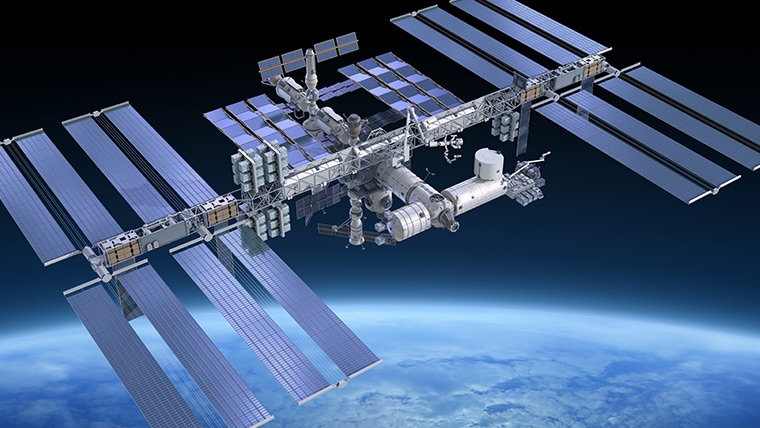
A routine orbital experiment aboard the International Space Station has spiraled into a full-blown astrophysical mystery after a spinning object abruptly flipped its orientation in mid-air – and, so far, no known physical law can fully account for what astronauts witnessed. The incident occurred on April 21, 2026, at approximately 09:17 GMT, during a microgravity test of a newly designed reaction sphere, a 15-centimeter aluminum alloy ball equipped with internal gyroscopes and surface reflectors. The sphere was set spinning at a steady 120 revolutions per minute around its primary axis – a deliberately stable rotation meant to demonstrate the conservation of angular momentum in a frictionless environment. For the first 47 seconds, the sphere behaved exactly as Newtonian physics predicts. Then, without any external force, collision, or magnetic interference, it suddenly flipped 180 degrees, reversed its spin direction for 0.3 seconds, and returned to its original axis – all while its center of mass remained perfectly stationary.
No thrusters fired. No astronaut touched it. No mechanical failure was detected. Telemetry later confirmed that the sphere’s internal gyroscopes recorded a torque spike of 0.7 newton-meters – a force that should be impossible in free-floating conditions without an external pivot. Dr. Elena Vasquez, lead payload scientist for the European Space Agency, stated: “We have ruled out static electricity, residual air currents, and even crew-induced vibrations. The data show a spontaneous change in the object’s moment of inertia without any mass redistribution. In 30 years of microgravity experiments, I have never seen anything like this.”
The anomaly was first noticed by NASA astronaut Commander James Ryker, who was filming the experiment for a live educational downlink. “I literally said ‘wait, that’s not supposed to happen’ on an open mic,” Ryker recalled in a debriefing. “The sphere just… decided to turn around. It wasn’t wobbling. It was a clean, crisp flip, as if someone had grabbed it and twisted. But no one was near it.” Ground control immediately ordered a second run using an identical backup sphere, also spun to 120 RPM. The second flip occurred after 51 seconds – slightly later, but with the exact same reversal pattern. A third test, this time at 90 RPM, produced no flip for over two minutes, leading researchers to suspect a critical threshold effect tied to rotational speed.
Theoretical physicists are now scrambling to explain the phenomenon. One preliminary hypothesis invokes a previously undetected coupling between the sphere’s spin and Earth’s own rotation – a kind of frame-dragging effect amplified by the object’s precise symmetry. Another, far more speculative idea suggests that the sphere’s internal gyroscopes, when aligned in a certain configuration, might have briefly violated the equivalence principle of general relativity. Professor Amit Khurana of the Massachusetts Institute of Technology, who reviewed the raw telemetry overnight, cautioned: “Let me be clear: we are not saying Newton was wrong. But if these results hold up under independent replication, we may have found a macroscopic system where angular momentum is not conserved over very short timescales. That would be as revolutionary as discovering a new fundamental force.”
Skeptics point to possible unmodeled magnetic torque from Earth’s ionosphere – a valid concern, given that the ISS orbits at 400 kilometers altitude where plasma density fluctuates. However, Dr. Vasquez’s team has already measured the ambient magnetic field inside the Columbus module and found it three orders of magnitude too weak to generate the observed flip. Others have suggested a thermal gradient causing asymmetric outgassing from the sphere’s surface, but the object was held at a constant 22°C, and high-speed video shows no vapor plumes.
The implications extend far beyond curiosity. If confirmed, the effect could force a rethinking of gyroscope design for satellites, attitude control of space probes, and even fundamental tests of relativity using spinning masses. For now, the international science community has declared a “high-priority anomaly” – a rare status reserved for observations that challenge established physics. A dedicated follow-up experiment with six new spheres, three made of different materials and three with internal damping fluids, has been fast-tracked for launch aboard the next SpaceX Dragon mission, scheduled for May 15, 2026.
As of today no explanation satisfies all the data. The original sphere remains aboard the ISS, locked inside a vacuum-sealed container to preserve any possible forensic evidence. Commander Ryker, speaking from the station’s cupola, summed up the mood among the crew: “We’re trained to expect the unexpected – but not the inexplicable. For now, all we can say is: something made that ball flip. And we have no idea what.” The search for an answer has already drawn in CERN theorists, condensed-matter physicists, and even a small group of string theorists – a sure sign that a quiet Tuesday in low Earth orbit has become the most talked-about physics event of the decade.