Israel’s journey from a water-scarce nation to a global leader in water management is one of the most significant technological and sociological transformations of the 21st century. Geographically, more than 60% of Israel’s land is desert, and the country has historically relied on a single freshwater lake, the Sea of Galilee, and a few vulnerable aquifers. For decades, the nation lived under the shadow of the “Red Line,” a hydrological threshold below which pumping water would cause irreversible ecological damage. However, Israel has not only solved its own drinking water problem but has become a net exporter of water and water-related technology. This success is built on a “Holistic Water Strategy” that integrates five key pillars: Seawater Desalination, Wastewater Reclamation, Advanced Irrigation, National Infrastructure, and Public Conservation.
The Desalination Revolution
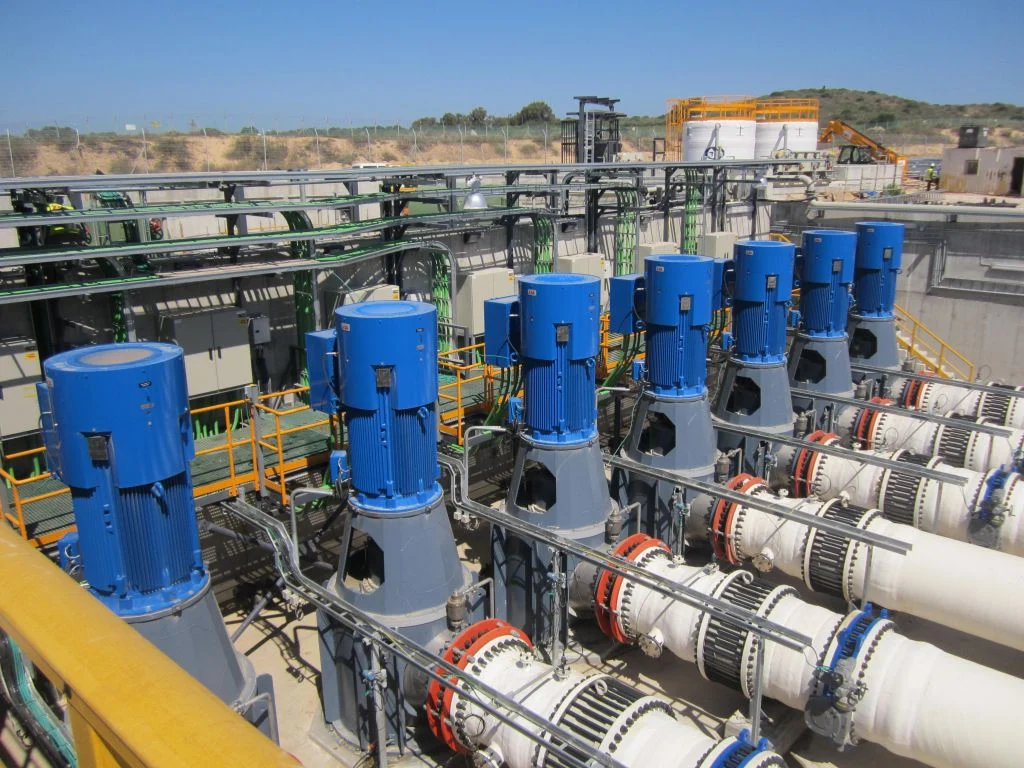
The cornerstone of Israel’s modern water security is its massive investment in Seawater Reverse Osmosis (SWRO) technology. Beginning in the early 2000s, the government shifted from relying on rain to “manufacturing” water. Today, Israel operates several of the world’s largest and most efficient desalination plants, including facilities at Ashkelon, Hadera, Sorek, Palmachim, and Ashdod. As of 2026, these plants provide approximately 80% of the country’s domestic and industrial water.
The Sorek plant, in particular, represents a pinnacle of engineering, using 16-inch membranes instead of the standard 8-inch ones, which significantly reduces the energy footprint and land use. “In 2004, if you wanted to drink seawater in Israel, you had to be a fish; today, we have decoupled our water supply from the caprices of the weather,” notes Dr. Noam Weisbrod, a prominent hydrologist. The efficiency of these plants has driven the cost of desalinated water down to roughly $0.50 per cubic meter, making it one of the most cost-effective solutions in the world.
The World’s Highest Wastewater Recycling Rate
While desalination addresses the drinking water needs, Israel solved its agricultural water crisis through a revolutionary circular economy. Israel currently recycles nearly 90% of its wastewater, a rate that is unmatched globally (the next closest nation, Spain, recycles roughly 25%). This treated effluent, known as reclaimed water, is channeled primarily to the Negev Desert to sustain intensive agriculture.
The Shafdan wastewater treatment plant is the heart of this system, treating the sewage of the Tel Aviv metropolitan area and infiltrating it into the groundwater for natural filtration before it is pumped to farms. This process ensures that freshwater is reserved for drinking, while “second-class” water fuels the economy. Experts emphasize the sustainability of this model; as Tomer Efrat, Chief Technical Officer at IDE Technologies, stated: “By treating water as a reusable commodity rather than a disposable waste product, we have created a resilient loop that survives even the most severe multi-year droughts.”
Drip Irrigation and Agricultural Efficiency
Israel’s solution was not just about finding more water, but also about using significantly less of it. The invention of Drip Irrigation by Simcha Blass in the 1960s changed the face of global agriculture. Instead of flooding fields—where much of the water evaporates or runs off—Israeli technology delivers precise amounts of water and nutrients directly to the root of the plant.
By 2026, this has evolved into AI-powered precision irrigation. Modern Israeli farms use sensors to monitor soil moisture and satellite data to predict evapotranspiration, allowing for “smart” watering schedules. Statistics show that drip irrigation increases crop yields by up to 50% while using 40% less water than traditional methods. This efficiency allowed the desert to bloom without depleting the drinking water supply.
The New National Water Carrier: Reversing Nature
Historically, Israel’s National Water Carrier moved water from the northern Sea of Galilee to the arid south. However, the rise of desalination necessitated a massive infrastructure overhaul. In a world-first feat of engineering completed recently, Israel successfully reversed the flow of the National Water Carrier. Instead of drawing water from the lake, the system now pumps surplus desalinated water from the Mediterranean coast inland and northward into the Sea of Galilee. This “refilling” of the lake serves as a strategic reservoir for dry periods and helps maintain the lake’s ecological health. “We are essentially using the Sea of Galilee as a giant battery for water, ensuring that our natural treasures are preserved even as we consume more than nature provides,” explains a spokesperson for Mekorot, the national water company.
Public Policy and the “Water Culture”
A technological solution is only as good as the policy supporting it. Israel implemented a centralized water management system where the government owns all water resources—including the rain that falls on private property. This allowed for the implementation of realistic water pricing, which incentivizes conservation. The “Water Authority” was created to manage the sector as a closed-loop financial system, where water tariffs cover the costs of production and infrastructure without requiring government subsidies. Furthermore, decades of public awareness campaigns (such as the famous “Israel is Drying Up” ads) have ingrained a “water-saving DNA” in the population. Even with the current surplus, the average Israeli consumes significantly less water per capita than residents of other developed nations.
Geopolitical Impact: Water for Peace
Israel’s water abundance has become a powerful tool for regional stability. Under the “Green-Blue” deal and other treaties, Israel provides millions of cubic meters of water to the Kingdom of Jordan and the Palestinian Authority. Plans are underway to double the water supply to Jordan in exchange for solar energy. “Water is no longer a source of conflict in our region; it has become a bridge for cooperation,” stated former Environmental Protection Minister Tamar Zandberg. This “hydro-diplomacy” proves that solving a drinking water problem can have benefits far beyond the tap.
Summary of Key Solutions
| Strategy | Impact / Result |
| Seawater Desalination | Provides 80% of domestic drinking water. |
| Wastewater Reuse | 90% of sewage is treated and used for agriculture. |
| Drip Irrigation | Reduces water waste by 40-70% compared to flood irrigation. |
| Reverse Flow Carrier | Pumps desalinated water back into natural lakes to prevent depletion. |
| Smart Pricing | Ensures the water sector is self-funding and discourages waste. |
Israel’s success is defined by the transition from scarcity to management. By combining the “hard” technology of desalination and “soft” solutions like public education and smart policy, the country has insulated itself from the devastating effects of climate change. For a world facing increasing water stress, the Israeli model serves as a definitive proof that with enough political will and scientific innovation, even the most arid regions can achieve total water security.