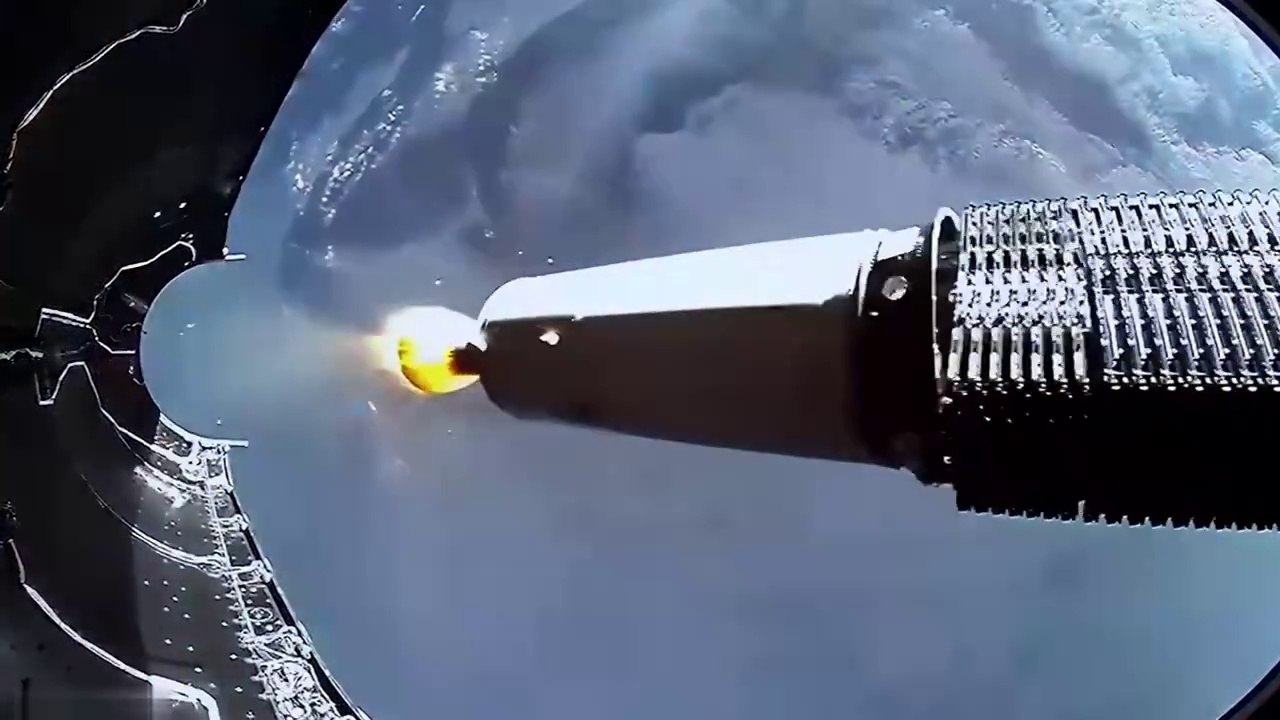
On March 14, 2026, the shores of Cape Canaveral Space Force Station were illuminated by the thunderous ascent of a SpaceX Falcon 9 rocket, marking another milestone in the rapid expansion of global satellite internet. The mission, designated Starlink 10-48, successfully lifted off from Space Launch Complex 40 (SLC-40) at exactly 8:37:10 a.m. EDT (1237:10 UTC). While the primary objective was the deployment of 29 Starlink V2 Mini Optimized satellites into low Earth orbit, the mission captured the public’s imagination through spectacular high-definition footage. In a display of technical transparency, the webcast featured live camera feeds mounted on both fairing halves, providing a rare, symmetrical view of the payload’s departure and the subsequent descent of the protective “shells” back toward the Atlantic Ocean.
The launch occurred under a patchwork of morning clouds, which required the 45th Weather Squadron to monitor conditions closely until the final moments of the countdown. Despite the overcast sky, the Falcon 9 first-stage booster (B1095), making its sixth flight, performed flawlessly. Approximately 8.5 minutes after liftoff, the booster performed a precision landing on the autonomous drone ship, ‘Just Read the Instructions,’ which was stationed hundreds of miles downrange. This landing represented the 584th successful booster recovery for SpaceX, underscoring the company’s dominance in orbital reusability. A spokesperson for the launch team noted the importance of the visual data, stating that “the telemetry and visual confirmation from the fairing-mounted cameras are vital for refining our recovery hardware and ensuring the integrity of the payload environment during high-velocity separation.”
The footage from the fairing halves was particularly significant because it showcased the simultaneous deployment and the cold-gas thruster maneuvers used to orient the fairings for their return trip. Unlike the boosters, which land vertically, these fairing halves utilize steerable parachutes to splash down gently in the ocean, where they are retrieved by recovery vessels for refurbishment and reuse. “By capturing synchronized footage from both halves, we gain an unprecedented perspective on the aerodynamic stresses and thermal loads experienced during reentry,” explained a lead recovery engineer. These components, which cost several million dollars per flight, are critical to SpaceX’s goal of reducing the cost of access to space.
Following the successful separation of the stages and the fairing jettison, the Falcon 9 second stage continued its journey to deliver the 29 satellites to their targeted orbital plane. At 9:49 a.m. EDT, SpaceX confirmed the nominal deployment of all satellites, bringing the total number of Starlink units in orbit to record-breaking levels. This mission was part of a larger “doubleheader” effort by the company, which has been launching at a pace of nearly one rocket every two and a half days throughout early 2026. The consistent use of onboard camera technology has not only aided engineers in troubleshooting but has also turned routine satellite deployments into a global spectator event, bridging the gap between complex aerospace engineering and public engagement.
As the Starlink 10-48 satellites began their automated checkout procedures in orbit, the recovery teams in the Atlantic successfully secured both fairing halves and the first-stage booster. The data harvested from the March 14 launch is already being integrated into the preparations for upcoming missions, including the highly anticipated Artemis 2 moon launch scheduled for early April. Reflecting on the mission’s success, a senior mission manager remarked, “Every frame of footage we record from these fairings helps us build a more resilient and sustainable bridge to the stars, making spaceflight more routine and less of an exceptional event.”