April 6, 2026
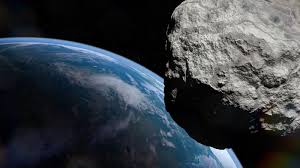
Today an asteroid larger than the Eiffel Tower is set to make a close approach to Earth, prompting significant interest from astronomers and planetary defense experts who are closely monitoring the event to determine if it poses any danger to the planet. The exact time of closest approach is projected for approximately 14:00 UTC (10:00 AM EDT), when the massive space rock will sail past at a distance that, while considered “close” in astronomical terms, remains a safe margin. To answer the critical question immediately: No, the asteroid will not hit Earth.
This conclusion has been reached through rigorous orbital analysis conducted by NASA’s Center for Near-Earth Object Studies (CNEOS) and the European Space Agency’s Near-Earth Object Coordination Centre (NEOCC). These organizations have been tracking the object’s trajectory for years, and their models consistently show no risk of impact during this passage or for the foreseeable future. Dr. Kelly Fast, acting planetary defense officer at NASA, explained the nature of such events, stating, “This is exactly what keeps me up at night—not because we are in danger from this particular asteroid, but because events like this remind us that we need to track all of them. The small stuff hits us all the time, and the massive ones we already know about. It’s the ones in between that could do regional damage, and we don’t always know where they are.”
The asteroid, provisionally designated 2023 RM45 by the Minor Planet Center, is estimated to measure between 300 and 680 meters (approximately 984 to 2,230 feet) in diameter. For context, the Eiffel Tower stands 330 meters tall, meaning this celestial visitor dwarfs the iconic Parisian landmark in size . Because of its dimensions and its trajectory bringing it within 0.05 astronomical units (about 7.5 million kilometers or 19.5 lunar distances) of Earth, it is officially classified as a Potentially Hazardous Asteroid (PHA). This technical classification, however, does not indicate an imminent threat. Instead, it is a designation used by astronomers to prioritize objects for observation, focusing on any asteroid larger than 140 meters that comes within that defined threshold .
During its flyby on April 6, the asteroid will travel at a staggering relative velocity of approximately 15 kilometers per second (over 33,000 miles per hour). While this speed is immense, the closest approach distance is calculated to be over 4.5 million kilometers (roughly 2.8 million miles) away from Earth’s surface. To put that into perspective, that distance is more than 11 times farther away than the Moon, which orbits at an average of 384,400 kilometers (239,000 miles) . Even though there is no chance of an impact, this event remains highly significant for the scientific community. It provides a valuable opportunity to study a large asteroid up close using radar and optical telescopes, allowing scientists to refine their understanding of its orbit, size, shape, and rotational period.
This data is crucial for improving planetary defense models. Dr. Nancy Chabot, a planetary scientist who helmed NASA’s DART mission, emphasized the importance of preparedness, telling USA Today, “You can’t do anything about the asteroids if you don’t know where they are.” The success of the DART mission in 2022, which successfully nudged an asteroid off course, demonstrates that humanity has the technological capability to deflect a threatening object, provided we have enough warning time. While the April 6, 2026, asteroid poses no danger, astronomers remain vigilant. Estimates suggest that only about 40% of “city-killer” sized asteroids (140 meters or larger) have been catalogued, leaving thousands yet to be discovered. NASA’s upcoming NEO Surveyor space telescope, scheduled to launch later this decade, is specifically designed to hunt down these hidden threats in infrared light, ensuring that future close approaches are met with even greater certainty and warning. For now, the public can rest assured that the Eiffel Tower-sized asteroid on April 6, 2026, will be a spectacular target for telescopes, not an existential threat to the planet .