April 8, 2026
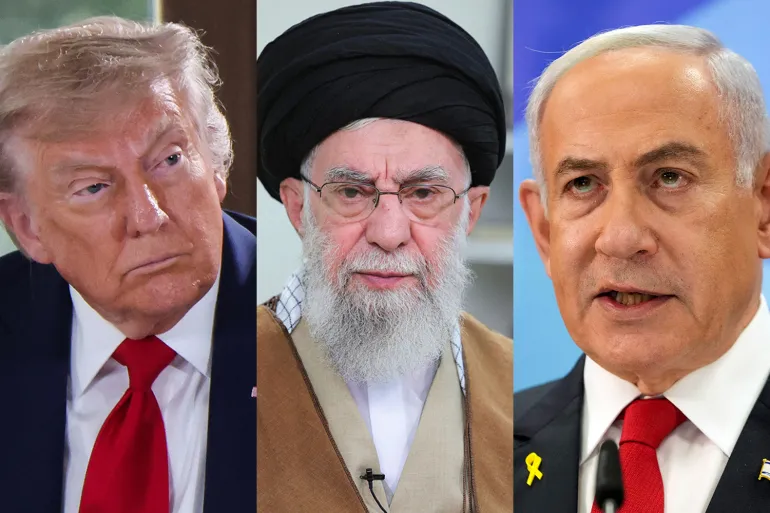
In a stunning reversal of the aggressive rhetoric that defined the opening days of April, the geopolitical landscape of the Middle East shifted dramatically on Wednesday as the United States, Iran, and Israel agreed to a two-week ceasefire, a deal that international mediators are calling “Trump’s ultimate surrender.” The announcement, which came via a flurry of early morning statements on April 8, 2026, effectively halts the 40-day conflict that erupted after the U.S. joined Israeli operations against the Islamic Republic. President Donald Trump took to his Truth Social platform to confirm the suspension of hostilities, stating that the U.S. had “met and exceeded all military objectives” and that Iran’s 10-point proposal was now a “workable basis” for negotiation . However, beneath the official declarations of peace, the details of the agreement reveal a complex and fragile truce, with Israel explicitly refusing to extend the ceasefire to the Lebanese front . As global oil prices plummeted and Asian markets rallied following the news, the world watched closely to see if this pause would lead to lasting peace or merely serve as a tactical timeout for rearmament and espionage .
The specific conditions of the ceasefire highlight a significant tactical victory for Tehran. According to reports —Trump agreed to the pause on the condition that Iran immediately reopen the Strait of Hormuz . This narrow waterway, through which roughly 20% of the world’s petroleum passes, had been sealed by Iran as a weapon of war, sending global fuel prices soaring above $110 per barrel just days ago . While the White House frames the reopening of the strait as a concession by Iran, media outlets in Pakistan and the Middle East have painted the outcome very differently. American news networks declared the moment an “ultimate surrender” by the president, noting that Trump had been forced to back down after failing to break the Iranian will to resist . Iran’s Supreme National Security Council issued a triumphant statement, declaring a “historic and crushing defeat” for the United States and the Israeli regime, claiming that Washington had been compelled to accept a permanent ceasefire, the lifting of all sanctions, and the withdrawal of U.S. combat forces from the region as part of the ongoing negotiations .
The reaction from Israel has injected immediate uncertainty into the agreement. While the White House confirmed that Israel had agreed to join the two-week halt in strikes against Iran, Prime Minister Benjamin Netanyahu’s office was quick to clarify a major caveat: the ceasefire “does not include Lebanon” . This distinction is critical, as it means that while the guns may fall silent in the Persian Gulf and along the Israeli-Iranian front, the war between Israel and Hezbollah continues to rage. Netanyahu’s office issued a statement in the early hours of April 8 supporting Trump’s decision to pause the Iranian campaign, but offered no quarter to the militant group in Lebanon, where the humanitarian toll has already surpassed 1,500 dead . This fracture in the alliance suggests a divergence in strategic goals; while Trump seeks a rapid de-escalation to stabilize energy markets and claim a diplomatic win, Netanyahu appears determined to continue the northern campaign regardless of the détente with Tehran. Compounding the chaos, confusion reigned along the Lebanese border as displaced civilians began packing their belongings to return south, only to be warned by Lebanon’s Crisis Management Unit to stay put, as the “ceasefire” did not guarantee their safety from Israeli strikes .
In the scientific and strategic communities, the announcement has been met with deep skepticism. Analysts warn that the “double-sided ceasefire” may actually be a sophisticated intelligence trap. “A two-week pause is the perfect incubation period for the next war,” stated Dr. Elena Volkov, a geopolitical analyst at the International Crisis Group. “When the guns go quiet, the spy games get loud. Both sides will use these fourteen days not just to negotiate, but to map communication networks, reposition missile batteries, and conduct electronic surveillance that is impossible during active firefights. This is a diagnostic test for the next phase of conflict, not a cure” . This sentiment was echoed in analysis from the region, with commentators warning that the U.S. and Israel might be using the negotiation window as a “Trojan Horse” to deconstruct the command and control infrastructure of the Iranian Revolutionary Guard Corps .
While the military jets may be grounded for the next fortnight, the economic engines of the world have already roared back to life in response to the news. Global oil prices collapsed dramatically on Wednesday morning, with benchmark U.S. crude sinking over 13% to settle near $96 a barrel, while Brent crude dropped below the $95 threshold . The spike in energy prices that had threatened to plunge the global economy into a recession receded almost as quickly as it had appeared, following Trump’s promise to “help with the traffic buildup in the Strait of Hormuz.” Asian stock markets surged in relief, with Japan, Australia, South Korea, and China all posting significant gains as the immediate threat of a wider conflagration diminished . President Trump, framing the deal as a personal victory, predicted a new “Golden Age” for the Middle East, writing: “Big money will be made. Iran can start the reconstruction process. We’ll be loading up with supplies of all kinds, and just ‘hangin’ around’ in order to make sure that everything goes well” .
However, the shadow of past failures looms large over the Islamabad negotiations scheduled to begin Friday. The agreement nearly collapsed before it was even signed, as Trump reportedly vacillated wildly in the hours leading up to the truce. Early on April 8, mere moments before the deadline, Trump issued a chilling ultimatum to Iran, warning that “a whole civilization will die tonight, never to be brought back again” if Tehran failed to make a deal . Furthermore, U.S. intelligence sources indicate that Trump initially accepted a 10-point plan from Iran as “workable,” only to later publicly call the same plan “fraudulent” without providing evidence, suggesting deep internal chaos within the White House decision-making process . Meanwhile, the situation in Gaza remains a separate powder keg. The “Board of Peace,” a transitional administration backed by the U.S. to rebuild Gaza, has issued an ultimatum to Hamas to disarm by the end of this week, a demand the militant group has dismissed as an “overt attempt to continue the genocide” . As the world breathes a tentative sigh of relief on April 8, 2026, the next 336 hours will determine whether this ceasefire marks the end of the “Trump War” or merely the intermission before an even bloodier second act.