On the morning of July 16, 1945, in the desolate Jornada del Muerto desert of New Mexico, a small group of physicists and military personnel prepared to witness history’s first atomic explosion. The device, nicknamed “Gadget,” was the culmination of nearly three years of secret, frenetic work under the Manhattan Project. Yet, as the countdown clock ticked toward 5:29 a.m., a chilling question lingered in the minds of several key scientists—a question that had first been raised more than three years earlier, in 1942: Could the nuclear test ignite Earth’s atmosphere, setting off an uncontrollable chain reaction of fusion that would consume the planet’s nitrogen and oxygen, turning the world into a miniature, dying star?
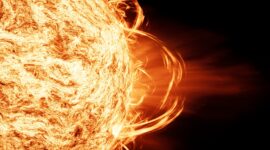
That apocalyptic fear was not born from science fiction, but from rigorous theoretical physics. In 1942, before the Manhattan Project was fully underway, physicist Edward Teller—later known as the “father of the hydrogen bomb”—raised a disturbing possibility. During the fission of a uranium or plutonium atom, immense heat is released. If a fission bomb were detonated, the temperatures would reach tens of millions of degrees, comparable to the core of the Sun. At such temperatures, Teller reasoned, the nuclei of nitrogen atoms in the air might fuse together in a thermonuclear reaction. The Earth’s atmosphere is roughly 78% nitrogen. If a self-sustaining fusion chain reaction began, it could theoretically spread from the fireball outward, converting atmospheric nitrogen into heavier elements and releasing enormous energy in the process. The result would be the incineration of all life on Earth—oceans boiling, continents melting, the entire surface turning into a plasma fire.
This was not a fringe idea. The young physicist Emil Konopinski was tasked with studying the problem in detail. Together with Teller and others, he examined three possible catastrophic pathways: 1) Ignition of the entire atmosphere via nitrogen fusion; 2) Ignition of the oceans via hydrogen fusion (since water contains hydrogen, the fuel for fusion); 3) Ignition of the Earth’s crust via deuterium reactions. The most plausible, though still extremely unlikely, was the nitrogen reaction. In a confidential report titled “Ignition of the Atmosphere with Nuclear Bombs” (1946, though based on 1942 calculations), Konopinski and his colleagues concluded that the conditions required for atmospheric ignition—such as much higher temperatures and densities than any fission bomb could produce—were not met. However, their calculations contained uncertainties. They admitted that the theoretical models of nuclear cross-sections (probabilities of reactions) at extreme temperatures were incomplete. The margin of safety was narrow; a few unknown factors could tilt the outcome toward catastrophe.
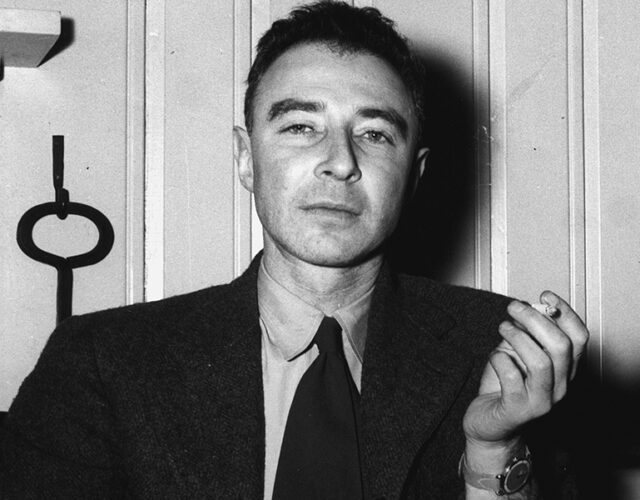
As the Trinity test approached, the question resurfaced. J. Robert Oppenheimer, the scientific director of the Manhattan Project, took the threat seriously. In the spring of 1945, he discussed it with senior colleagues including Enrico Fermi and Hans Bethe. Fermi, known for his brilliant intuition and sometimes mischievous style, famously offered to take bets on whether the bomb would ignite the atmosphere—or merely destroy only New Mexico. According to multiple accounts, Fermi gave odds of 10% to 20% that the test would set the air on fire. Other scientists, including Hans Bethe—who had won the Nobel Prize for his work on stellar nucleosynthesis (the very fusion reactions inside stars)—reassured Oppenheimer that the calculations showed safety. Bethe later wrote: “The possibility that the explosion would set fire to the atmosphere was a theoretical possibility that had to be taken seriously. But detailed calculations showed that the temperatures and densities achieved in the bomb were far too low to sustain a fusion reaction in the air.”
Oppenheimer, a man of deep intellectual and moral complexity, weighed the risk. He was not a gambler by nature, but he understood that the project’s momentum was unstoppable. In a private conversation with General Leslie Groves, the military head of the project, Oppenheimer acknowledged the remote but nonzero chance of destroying the world. Groves, impatient and focused on ending the war with Japan, later recalled that he consulted other physicists who dismissed the risk as “negligible.” Oppenheimer ultimately gave the go-ahead for the test, but he did so with profound unease. On the night before the explosion, he famously recalled a line from the Hindu scripture, the Bhagavad Gita: “If the radiance of a thousand suns were to burst at once into the sky, that would be like the splendor of the mighty one.” He would later say that another verse came to his mind: “Now I am become Death, the destroyer of worlds.”
During the final hours before the Trinity test, the anxiety among the scientists was palpable. Victor Weisskopf, a physicist who worked at Los Alamos, later wrote: “We were all terrified. Not of failure, but of success beyond our control. The question was not whether the bomb would work—it was whether it would end the world.” Edward Teller, who had first raised the alarm, was so nervous that he put on sunscreen for the test—not to protect against ultraviolet light, but because he feared the thermal radiation from a possible atmospheric fire would be far more intense. Hans Bethe remained publicly confident but privately double-checked his calculations. Enrico Fermi joked darkly as he walked to the control bunker: “If the reaction spreads, we will know immediately, because the first sign will be that everything turns white—and then we won’t have to worry about anything else.”
At 5:29:45 a.m. Mountain War Time, the Gadget exploded with a yield of approximately 25 kilotons of TNT—far more powerful than anyone had predicted. The desert sand was fused into a greenish glassy mineral, later named trinitite. A mushroom cloud rose over 12 kilometers into the atmosphere. The heat was so intense that it melted the steel tower supporting the bomb. Oppenheimer watched in silence, his face illuminated by the flash. He later recalled that his first words were from the Bhagavad Gita, but witnesses said his immediate reaction was quieter: “It worked.” Then, as the shockwave passed, he added: “I am reminded of the words of Vishnu… ‘I am become Death.’”
The immediate relief that the world had not ended was overwhelming. But the fear of atmospheric ignition did not disappear after Trinity. In the days following the test, Hans Bethe and others recalculated using the actual temperatures and neutron fluxes measured from the explosion. Their new results confirmed the original safety margin: the bomb was at least 10,000 times too small to ignite the atmosphere. However, they also noted a chilling fact: if a nuclear weapon had been just 10 times larger (i.e., a 250-kiloton device), or if a different isotope of nitrogen had a slightly higher fusion cross-section than measured, the results could have been catastrophic. In a 1979 interview, Bethe stated: “It is a terrible thing that we even had to consider such a possibility. But the science was honest: we did not know everything. We calculated the odds as best we could, and we decided to proceed. That decision, I sometimes think, was the most irresponsible thing we ever did.”
The question of atmospheric ignition haunted the 1954 Castle Bravo hydrogen bomb test as well. That test, with a yield of 15 megatons (1,000 times larger than Trinity), once again raised fears of atmospheric fusion. Calculations before the test showed that the hydrogen bomb’s fusion stage could create a fireball even hotter than the Sun’s core. But again, physicists concluded that the fireball would cool too rapidly for self-sustaining fusion in nitrogen. Castle Bravo did not ignite the atmosphere, but it did produce an unexpectedly large radioactive fallout cloud that contaminated Pacific islands and a Japanese fishing boat, causing radiation sickness and one death. The incident reinforced the sobering lesson: even if you do not destroy the planet, you can still cause immense, unintended harm.
In the decades since, the “atmospheric ignition” fear has become a staple of nuclear lore—often exaggerated or mischaracterized. Some popular accounts claim that scientists were certain the bomb would not ignite the air, but historical documents show otherwise. The 1946 Konopinski report was classified for years, and when declassified, it revealed that the scientists had indeed calculated a “non-zero” probability. In modern nuclear weapons design, the possibility is routinely dismissed because of precise knowledge of fusion cross-sections and atmospheric composition. But the margin of error has not changed the moral lesson: humanity once possessed a weapon whose use required a small statistical gamble with the entire planet’s existence. As Oppenheimer reflected in a 1965 television interview: “You know, we did the calculation. We said it’s almost impossible. But almost is not zero. And we pressed the button anyway. That is the burden we carry.”
The significance of April 11, 2026—the date in your query—lies not in a new test, but in historical memory. No nuclear test has occurred on that date. However, April 11, 2026 marks the 81st anniversary of the final pre-Trinity calculations that confirmed the atmospheric ignition risk. It is a symbolic reminder that scientific knowledge is never absolute, that the greatest discoveries carry the potential for ultimate destruction, and that the same intellect that unlocked the atom’s power also glimpsed the possibility of ending all life by accident. In a world still bristling with over 12,000 nuclear warheads—many hundreds of times more powerful than Trinity—the question asked by Fermi, Teller, and Oppenheimer remains relevant: What odds are we willing to accept when the stakes are the survival of the planet?
Today, nuclear weapons are designed with multiple fail-safes, and no responsible physicist believes that a modern test could ignite the atmosphere. The minimum required energy for self-sustaining nitrogen fusion is calculated to be around 10^33 ergs—roughly the energy of a small star, or 10 billion times larger than the largest hydrogen bomb ever detonated (the 50-megaton Tsar Bomba). In other words, the Earth’s atmosphere is safe from nuclear ignition—unless one builds a bomb the size of a small moon. Yet the psychological scar remains. Oppenheimer’s fear was not purely physical; it was existential. He and his colleagues had opened a door to a force that could, in theory, consume the world—not through malice, but through an unknown quirk of physics. That they chose to walk through the door anyway is a testament to human ambition, wartime pressure, and the terrifying power of calculated risk.
In the final analysis, the story of the nuclear test that scientists feared might ignite Earth’s atmosphere is a parable about the limits of prediction. It shows that even the greatest minds—Oppenheimer, Fermi, Bethe, Teller—can be haunted by the ghost of a possibility they cannot fully disprove. Their statements, preserved in archives and interviews, reveal men who were simultaneously brilliant and terrified. “We were like children playing with a fire that we did not fully understand,” Hans Bethe once said. “And the only thing that saved us was that the fire was smaller than we feared—not that we were wiser.” J. Robert Oppenheimer, who led the scientific effort that created the world’s first atomic bomb, spent the rest of his life advocating for international control of nuclear weapons, as if trying to close the door he had helped open. On April 11, 2026, as the world remembers that narrow escape, the lesson endures: science without humility is a gamble with existence itself.