April 13, 2026
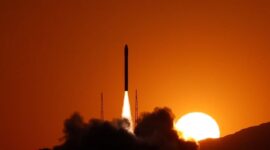
In a landmark achievement for the commercial space sector, a Chinese aerospace startup has successfully concluded a comprehensive series of in-orbit tests for a highly flexible robotic arm designed for autonomous on-orbit servicing. This mission, which culminated in a final phase of verification today, marks a significant leap forward in the ability to maintain, repair, and refuel satellites, effectively transitioning from the era of “disposable” spacecraft to a new paradigm of orbital sustainability. The technology, which utilizes a unique “elephant trunk” design, was tested aboard the Yuxing-3 06 satellite (also known as Xiyuan-0), which was launched in mid-March from the Jiuquan Satellite Launch Center.
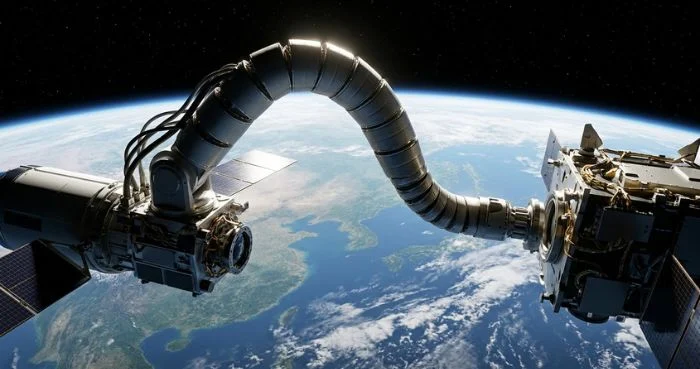
The core of this breakthrough lies in the flexible continuum manipulator, a departure from the rigid, joint-based robotic arms typically used on the International Space Station or previous Chinese missions. Developed by Suzhou Sanyuan Aerospace Technology in collaboration with Tsinghua University’s Shenzhen International Graduate School, the arm features a hollow, cable-driven structure that allows it to twist, curl, and coil around obstacles. This flexibility is essential for the confined spaces and delicate hardware found on modern satellites, where a traditional rigid arm might cause accidental damage during docking or repair maneuvers.
Throughout the testing window, the startup demonstrated four critical operational modes that prove the arm’s readiness for commercial deployment. The first was autonomous programmed refueling, where the arm moved from its stowed position to a docking port without human intervention. This was followed by ground-controlled remote operation, allowing engineers on Earth to guide the manipulator in real-time. The third phase involved vision-guided servo docking, using high-definition cameras and AI-driven spatial recognition to align the arm with a millimetric precision. Finally, a force-compliant manipulation test was conducted, where the arm performed “drawing” tasks to prove it could apply exact, gentle pressure—a vital skill for unscrewing components or handling fragile fuel lines.
Reflecting on the importance of this milestone, Professor Wang Xueqian, the lead researcher from Tsinghua University, emphasized the long-term vision for the project. “When a car breaks down, you can take it to a service center for repair, but what do you do when a spacecraft breaks down in space?” Wang noted. “Space robots can perform extravehicular operations, and even refuel and repair spacecraft as well as clear space debris. Our goal is to create a ‘mobile service station’ that can extend the lifespan of high-value assets by years, if not decades.” His statement underscores a growing global priority: the mitigation of space debris and the reduction of the massive costs associated with launching replacement satellites.
The implications for the global space economy are profound. By successfully demonstrating in-orbit refueling, the Chinese startup has shown that satellites no longer need to be decommissioned simply because they have exhausted their propellant. This capability is expected to drastically lower the total cost of ownership for telecommunications and Earth-observation constellations. Furthermore, the arm’s ability to perform force-compliant tasks suggests it could eventually be used for on-orbit manufacturing, assembling large structures like space telescopes or solar power stations that are too large to be launched in a single piece.
The success of the Yuxing-3 06 mission also highlights the rapid rise of China’s private space industry. While the country’s national space agency (CNSA) has tested similar technologies on the Shijian series of satellites, this is the first time a commercial entity has taken the lead on such a complex robotic demonstration. The use of the Kuaizhou-11 rocket for the initial launch further underscores the integration of commercial launch vehicles with advanced orbital services, creating a streamlined pipeline for future servicing missions.
Technically, the arm’s cable-drive transmission system is a marvel of engineering, as it houses the heavy motors inside the satellite body, keeping the arm itself lightweight and nimble. This design also helps manage the thermal fluctuations of space, which can cause materials to expand or contract. During the mission, engineers monitored the arm’s response to extreme temperature shifts, confirming that the advanced control algorithms could compensate for any material warping, ensuring stable and jitter-free movement.
Industry experts believe this test will trigger a “space race” in the servicing sector. As orbits become increasingly crowded, the ability to actively remove debris or move a “dead” satellite into a graveyard orbit becomes a matter of international safety. “The success of this flexible manipulator proves that we are no longer limited by rigid geometries,” stated a lead engineer at Sanyuan Aerospace. “We can now interact with satellites that were never designed to be serviced, providing a ‘rescue’ capability that was previously impossible.”