April 19, 2026
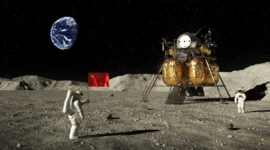
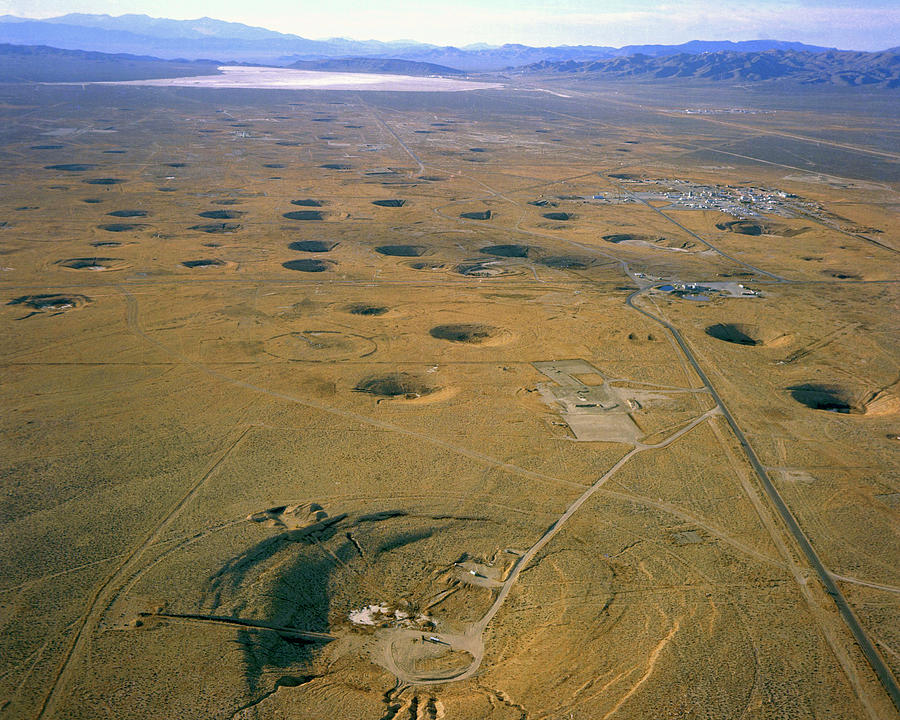
In a move that reads like the script of a science fiction thriller but is rooted in stark scientific necessity, NASA has confirmed that its astronauts are currently conducting intensive training exercises inside a nuclear bomb crater located at the Nevada National Security Sites (NNSS). This surreal preparation comes as the agency races toward a lunar landing scheduled for 2027, specifically under the Artemis III mission—the first crewed return to the Moon in over half a century . The location, specifically a landmark known as Schooner crater, is no ordinary hole in the ground; it is a scar left by a Cold War-era nuclear detonation. As the world watches the Artemis program, few realize that the key to walking on the Moon involves navigating the radioactive rubble of our own planet. The decision to utilize this dangerous environment underscores a critical reality: rehearsing for the moon means finding an analog on Earth that mimics the lunar surface’s chaos, and nothing does that better than a blast zone .
The training course, formally known as the Lunar Surface Operations Course, is being run through a partnership between NASA and the NNSS, which was historically known as the Nevada Test Site . For four grueling days, astronauts slated for future surface missions are trekking across fields of fractured volcanic rock, navigating steep crater rims, and conducting “boots-on-the-ground” sample collection in an environment that is visually and geologically similar to the Maria basins on the Moon. The lunar surface is notoriously unforgiving, covered in sharp, pulverized regolith created by billions of years of meteorite impacts—a texture eerily similar to the breccia and fused glass created by a nuclear fireball. Scientists leading the course explained that the comparison is more than just visual. “The energy released during a high-yield nuclear test displaces the earth in a way that mimics a large meteor impact,” said Kevin Ruewer, an NNSS scientist leading the geology training. “We are teaching astronauts to read the stratigraphy—the layers of debris. On the moon, that debris tells the story of the solar system’s history. Here, it tells the story of high-energy physics, but the mechanics of how you approach, sample, and traverse that terrain are identical” .
The irony of preparing for the peaceful exploration of space inside a hole dug for war is not lost on the astronauts involved. Before setting foot on the dusty, gray plains of the lunar South Pole, crews are walking in the literal footsteps of Apollo-era pioneers who trained at the same Nevada site decades ago . The new training goes further, introducing night-time extravehicular activities (EVAs) . In the pitch black of the Nevada desert, with only helmet lamps to guide them, astronauts are navigating the jagged rims of subsidence craters. This simulation is designed to replicate the lighting conditions at the lunar South Pole, where the sun sits low on the horizon, casting deep, confusing shadows that can disorient a traveler. The craters left by nuclear tests provide the necessary scale and hazard. “We took the students out and gave them remote sensing data sets and let them plan and traverse,” Ruewer added. “They got to see everything from the classroom module to the field execution—including hitting all the stops that Apollo did and the stops that we expect the Artemis astronauts to hit” .
This specific training initiative, which came to light in early 2025, takes on a new strategic urgency as of April 2026. Recent announcements from NASA leadership indicate a massive pivot in space strategy. The agency is reportedly planning to spend $20 billion on a permanent moon base and is simultaneously testing a nuclear-powered spacecraft, named Space Reactor 1 Freedom, intended for Mars . However, this ambitious agenda is running parallel to a geopolitical race; NASA Administrator Jared Isaacman recently noted that the US is pushing to return astronauts to the moon before a potential Chinese landing around 2030 . Consequently, the “nuclear crater” training is not merely academic—it is operational. By learning to deploy seismic sensors and radiation-hardened equipment in a contaminated environment on Earth, astronauts are learning to live off the land in the most hostile of conditions.
While some crew members, like NASA Astronaut Anil Menon, are currently preparing for a June 2026 launch to the International Space Station (Expedition 75) rather than the moon, the training at NNSS is specifically tailored for the Artemis generation . The University of Nevada, Las Vegas (UNLV) has been integral to this process, sending students to beta-test the 13-module course and provide feedback on the equipment and navigation protocols . As the date for the Artemis lunar landing approaches, the image of an American astronaut standing on the edge of a nuclear crater in Nevada serves as a stark reminder: to reach the tranquility of the Sea of Tranquility, humanity must first learn to survive the hellscape it created in its own backyard. The lessons learned in the radioactive dust of Schooner crater will directly dictate the safety protocols for the first woman and the next man to walk on the Moon.