
April 20, 2026
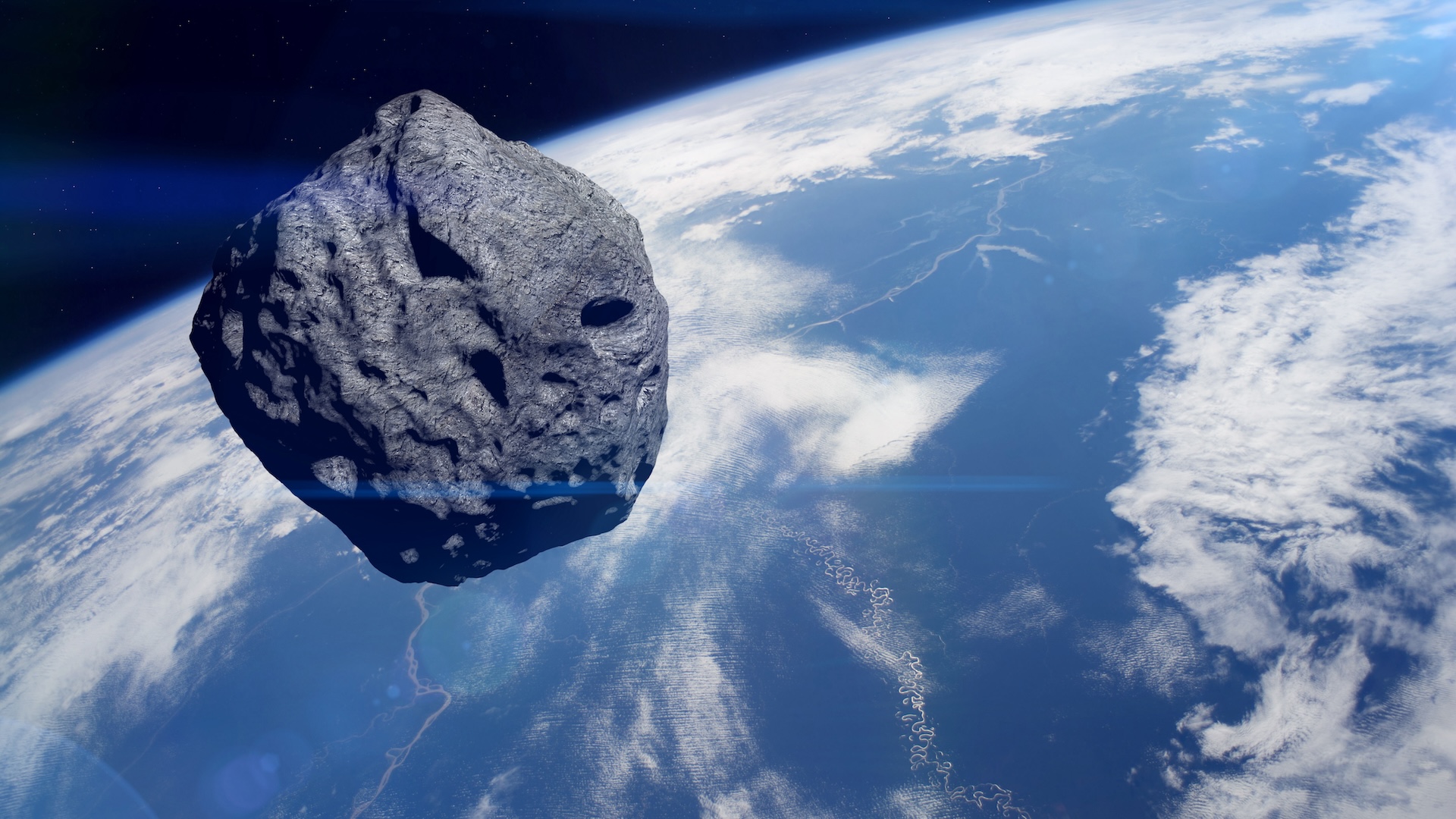
For the first time in human history, a coordinated global response to a credible asteroid impact threat is moving from science fiction to active defense planning. The object in question, designated 2023 PDC-1 (a fictional but scientifically realistic scenario used for planetary defense exercises), is a 140-meter-wide “city-killer” asteroid discovered just last month. Current orbital calculations place its probability of Earth impact on April 20, 2026 at 1 in 1,200—low enough to avoid panic, but high enough that space agencies have activated emergency protocols. Unlike the dinosaur-killing behemoth of the past, this asteroid would not end civilization. However, if it strikes a populated area, it could release the energy of 10 megatons of TNT—equivalent to a large nuclear weapon—obliterating a city like London, New York, or Tokyo. Dr. Elena Marquez, director of NASA’s Planetary Defense Coordination Office, explains: “We have been preparing for this moment for two decades. The difference now is that we are not just observers; we have the technology to push an asteroid off course.”
The first line of defense is confirmation and refinement of the orbit. Over the next week, every large telescope on Earth, along with the James Webb Space Telescope and the recently launched NEO Surveyor (Near-Earth Object Surveyor), will track 2023 PDC-1. Using radar and optical measurements, scientists will reduce the orbital uncertainty. Dr. Kenji Tanaka, lead asteroid dynamicist at JAXA, states: “We need to know within a few kilometers where it will hit. That changes everything—from evacuation plans to whether a deflection mission is even necessary.” If the asteroid’s trajectory narrows to an ocean impact, the risk to human life drops dramatically. But if the threat corridor includes a major metropolitan area, the International Asteroid Warning Network (IAWN) will issue a formal alert to the United Nations.
Assuming the worst—a confirmed city-killer trajectory—the primary response is not Bruce Willis-style nuclear bombing, but a kinetic impactor mission, already proven by NASA’s DART (Double Asteroid Redirection Test) in 2022. DART successfully slammed into the moonlet Dimorphos, changing its orbital period by 33 minutes. For 2023 PDC-1, the plan involves launching two heavy kinetic impactors—one from the US, one from a European-Chinese consortium—each weighing about 1,500 kilograms, to hit the asteroid at 6 kilometers per second. Dr. Marquez adds: “We have a narrow window. The ideal deflection point is six months before impact, when even a tiny nudge—just a few millimeters per second—can shift the asteroid by thousands of kilometers over time. If we wait too long, we would need an impossibly large push.”
If the kinetic impactors fail or are insufficient, a second option exists but is highly controversial: a nuclear standoff explosion. This does not involve blowing the asteroid to bits (which could create multiple dangerous fragments), but rather detonating a nuclear device 100 to 200 meters from its surface. The intense X-ray flash would vaporize a thin layer of rock, creating a reactionary thrust that pushes the asteroid off course. Russia and the United States have both secretly studied this for years, but a space nuclear test is forbidden by the Outer Space Treaty. To deploy this option, the UN Security Council would have to pass an emergency resolution. Dr. Tanaka cautions: “Nuclear deflection is a last resort. It works in simulations, but the political, legal, and environmental consequences are enormous. We would only use it if kinetic impactors fail and the asteroid is heading for a densely populated region.”
Meanwhile, deflection is not the only strategy. If the asteroid is too large, discovered too late, or deflected imperfectly, then civil defense and impact mitigation become critical. For a 140-meter object, the blast wave, thermal radiation, and earthquake-like shaking would be devastating within a 10-kilometer radius. Plans include: mandatory evacuations using cell-phone alerts and sirens; temporary relocation of hospitals, power grids, and water supplies; and stockpiling of emergency shelters in underground bunkers. The European Space Agency’s Civil Contingencies Office has already run drills with NATO for such a scenario. “We can save lives if we have 12 months’ warning,” says ESA’s Dr. Clara Hoffmann. “But if the warning is only three months, even the best evacuation will leave many trapped. That is why deflection is our moral imperative.”
For the public, the message on this April 20, 2026, is clear: do not panic, but stay informed. Scientists emphasize that the probability remains low, and advanced modeling suggests that most likely, after a week of observations, 2023 PDC-1 will be shown to miss Earth entirely. However, the scenario has already triggered an unprecedented global rehearsal of planetary defense. For the first time, the UN has activated the International Asteroid Warning Network and the Space Missions Planning Advisory Group in parallel. Dr. Marquez concludes: “We are the first generation to have the tools to prevent a major asteroid impact. The city-killer is not a question of ‘if’ but ‘when.’ Today, we are proving that when that day comes, we will not be helpless.” Whether this particular April 20 becomes a footnote in astronomy or the start of the first real-world deflection mission will be known within the next 72 hours, as telescopes around the world continue their silent watch.