
April 27, 2026
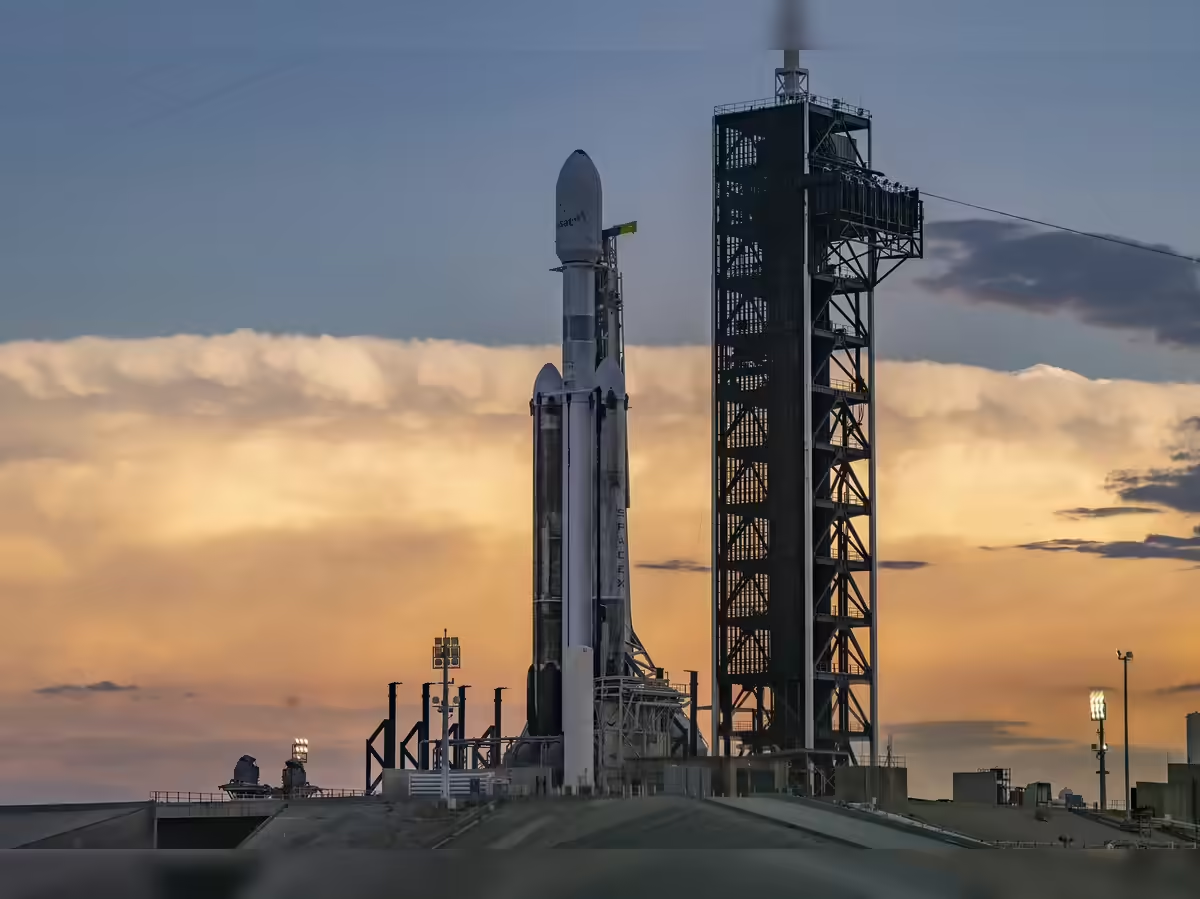
The space coast of Florida stood in silent anticipation as SpaceX prepared to ignite the engines of its Falcon Heavy rocket for the first time in over 18 months. The mission, tasked with carrying the massive ViaSat-3 F3 communications satellite into orbit, was intended to be a triumphant return for the triple-booster heavy lifter. However, nature had other plans. At 10:21 a.m. EDT (1421 UTC), the countdown was abruptly halted. Despite the rocket being fully fueled and the launch team at “Go” status, unfavorable weather conditions—specifically violations of the cumulus cloud and surface electric fields rules—forced a scrub just minutes before liftoff. SpaceX officials confirmed that while the vehicle remained healthy, the risk of lightning or atmospheric interference was too high to proceed.
The delay is particularly poignant given the long hiatus for the Falcon Heavy. The vehicle’s last flight occurred in October 2024, when it successfully dispatched NASA’s Europa Clipper on a journey to Jupiter’s icy moon. Since then, SpaceX’s workhorse, the Falcon 9, has dominated the manifest, completing its 50th launch of 2026 just days ago. The Falcon Heavy, which consists of three modified Falcon 9 first-stage cores strapped together, remains a niche but vital part of the fleet for payloads that are too heavy for a single-core rocket. “It’s kind of the end of an era. We’ve been working this program for over 10 years now. So that’s a good chunk of life that’s gone by over the course of the program,” said Dave Abrahamian, Viasat’s vice president of Satellite Systems, reflecting on the decade-long journey to complete this specific satellite constellation.
The payload, the ViaSat-3 F3, is a technological marvel weighing approximately six metric tons. It is designed to provide more than 1 Terabit per second (Tbps) of network capacity over the Asia-Pacific region, completing a global broadband network that aims to bridge the digital divide in remote areas. Because of its immense weight and the high-energy Geosynchronous Transfer Orbit (GTO) required, the Falcon Heavy is the only operational commercial rocket capable of the task while still attempting to recover portions of the vehicle. For this mission, SpaceX intended to land the two side boosters simultaneously at Landing Zones 2 and 40 at Cape Canaveral Space Force Station, a maneuver that famously produces a double sonic boom across the Florida coast.
Technical specifications for this flight reveal a mix of flight-proven hardware and new components. The two side boosters, tail numbers 1072 and 1075, are veterans of previous missions, with one having completed an impressive 18 Starlink flights prior to being converted for this heavy-lift role. In contrast, the center core (B1098) is a brand-new stage making its debut flight. Unlike the side boosters, the center core will be expended, meaning it will not be recovered, as it must use its remaining fuel to push the satellite into a more precise orbit. This strategy highlights the trade-off SpaceX must occasionally make between full reusability and maximum performance for heavy payloads.
Following the scrub on April 27, SpaceX initially looked toward a backup window on April 28. However, after assessing the persistent weather front and coordinating with the Eastern Range, the team has shifted the target liftoff to Wednesday, April 29, 2026, at 10:13 a.m. EDT (1403 GMT). The range coordination is complex, as technicians are also managing the movement of the Space Launch System (SLS) core stage on the Pegasus barge nearby, requiring a carefully choreographed dance of logistics at the Kennedy Space Center. Meteorologists from the 45th Weather Squadron remain cautious, noting that the seasonal humidity in Florida continues to pose a challenge for the launch window.
The scientific and commercial community is watching closely, as this launch marks the beginning of a busy 2026 manifest for the Falcon Heavy. Following this mission, the rocket is scheduled to launch Astrobotic’s Griffin-1 lunar lander in July and the prestigious Nancy Grace Roman Space Telescope as early as September. Each of these missions relies on the Heavy’s unique ability to generate over five million pounds of thrust at liftoff. “It’s a different world now than when we started the program. Back then, we had a handful of satellites in orbit… now it’s a totally different feeling, and it’s pretty cool to have been part of it all,” Abrahamian added, emphasizing how the industry has shifted toward these massive, high-capacity orbital assets.