
April 30, 2026
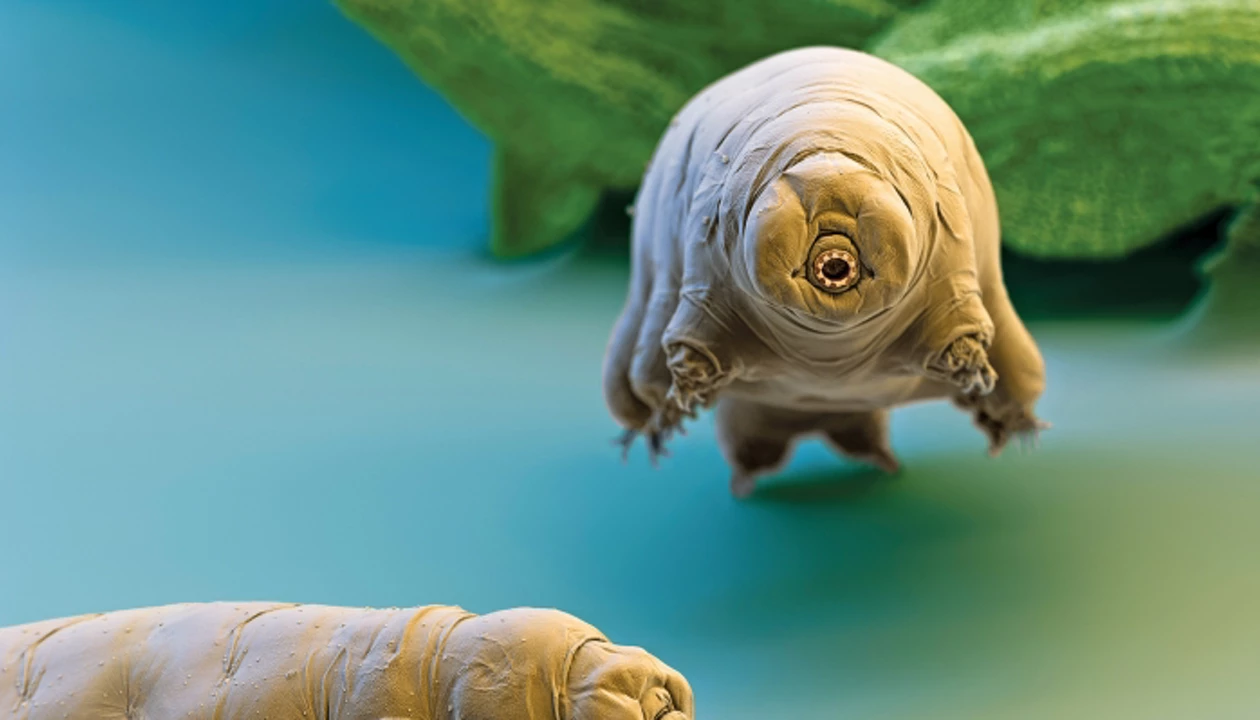
In a groundbreaking revelation that has sent shockwaves through the global scientific community, researchers have confirmed the terrifying and awe-inspiring resilience of the Tardigrade, commonly known as the “Water Bear.” Recent experiments concluded this week have pushed these microscopic organisms to their absolute biological limits. Scientists at the Global Institute of Extremophilic Research have successfully subjected these creatures to freezing temperatures, boiling water, and lethal doses of radiation, only to find that the animals not only survived but remained biologically viable. The discovery marks a pivotal moment in our understanding of cryptobiosis, a state where an organism’s metabolism comes to a complete standstill, allowing it to bypass the traditional rules of life and death.
The Experiments
The series of high-stakes trials began earlier this month, aimed at testing the anhydrobiosis capabilities of the Ramazzottius varieornatus species. Researchers first submerged the tardigrades in liquid nitrogen, reaching temperatures as low as -272°C, nearly absolute zero. In this state, the water bears shriveled into a “tun”—a dry, glass-like ball. Upon being rehydrated forty-eight hours later, they unfurled their eight legs and began feeding as if nothing had occurred.
Following the deep freeze, the team moved to the opposite extreme. The organisms were placed in pressurized boiling water at temperatures exceeding 150°C. Most known life forms see their cellular proteins unravel and “cook” instantly at these levels. However, the tardigrade’s unique Damage Suppressor (Dsup) proteins acted as a molecular shield, preventing the heat from tearing apart their DNA. “We were expecting to see total cellular collapse,” stated Dr. Elena Vance, lead biophysicist on the project. “Instead, we witnessed a biological masterclass in structural integrity. To see a complex multicellular animal survive a literal pressure cooker is nothing short of miraculous.”
Surviving the Invisible Killer
The most harrowing phase of the study involved high-intensity ionizing radiation. The researchers exposed a colony of tardigrades to 5,000 Gy (Grays) of gamma radiation—a dose roughly 1,000 times higher than what would be fatal to a human being. Radiation typically works by shattering the double-helix structure of DNA, leading to immediate cell death or catastrophic mutations.
The results, finalized on April 28, 2026, showed that the tardigrades’ Dsup protein physically binds to the DNA, wrapping it in a protective cloud that deflects radiation particles. “It is as if they have an internal lead vest built into their very genetic code,” Dr. Vance remarked during the press briefing. “Even when their DNA is slightly nicked, their repair mechanisms are so efficient that they can stitch their entire genome back together in a matter of hours.”
The “Zombie” Revival from the Permafrost
While these laboratory tests were ongoing, a parallel discovery in Siberia provided real-world evidence of this “indestructibility.” A team of paleobiologists announced they had successfully revived a microscopic rotifer (a relative in resilience to the tardigrade) that had been frozen in the permafrost for 24,000 years. This creature, dating back to the Late Pleistocene, was extracted from the Yedoma formation and began to reproduce asexually almost immediately after thawing.
This confirms that the “frozen” state is not just a temporary pause, but a long-term storage solution that can last for millennia. “Our report is the hardest proof as of today that multicellular animals could withstand tens of thousands of years in cryptobiosis,” said researcher Stas Malavin. “The takeaway is that a multicellular organism can be frozen and stored as such for thousands of years and then return back to life – a dream of many fiction writers.”
Implications for Humanity and Space Travel
The ability of an animal to be frozen, boiled, and radiated without dying has massive implications for the future of Deep Space Exploration. If human cells could be engineered to express the tardigrade’s Dsup proteins, astronauts might one day be protected from the relentless cosmic radiation of long-haul missions to Mars and beyond.
Furthermore, the study of how these animals survive extreme dehydration is being looked at by the medical industry to revolutionize organ transplant storage. Currently, human organs only last a few hours outside the body; using tardigrade-inspired vitrification techniques, we could potentially “glassify” organs for long-term transport without the need for traditional, damaging freezing methods.
The Limits of Immortality
Despite their reputation as “indestructible,” scientists were quick to point out that tardigrades are not immortal in the traditional sense. They can still be eaten by predators, and they do eventually die of old age if they remain in their active, hydrated state. Their “superpowers” are strictly defensive, triggered only when their environment becomes hostile.
“They aren’t winning a fight against a predator,” Dr. Vance joked, “but they will certainly outlive the volcano, the ice age, or the nuclear fallout that kills the predator.” As of today, April 30, 2026, the tardigrade remains the reigning champion of survival on Earth, a tiny, eight-legged reminder that life, in its most stubborn forms, is nearly impossible to extinguish.