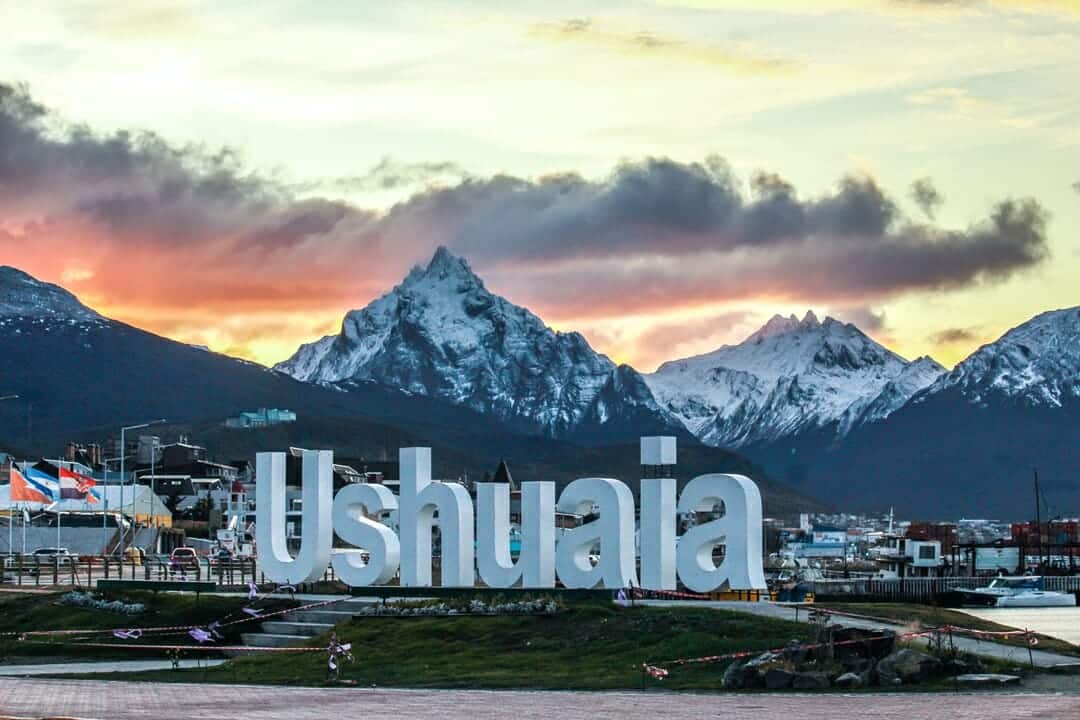
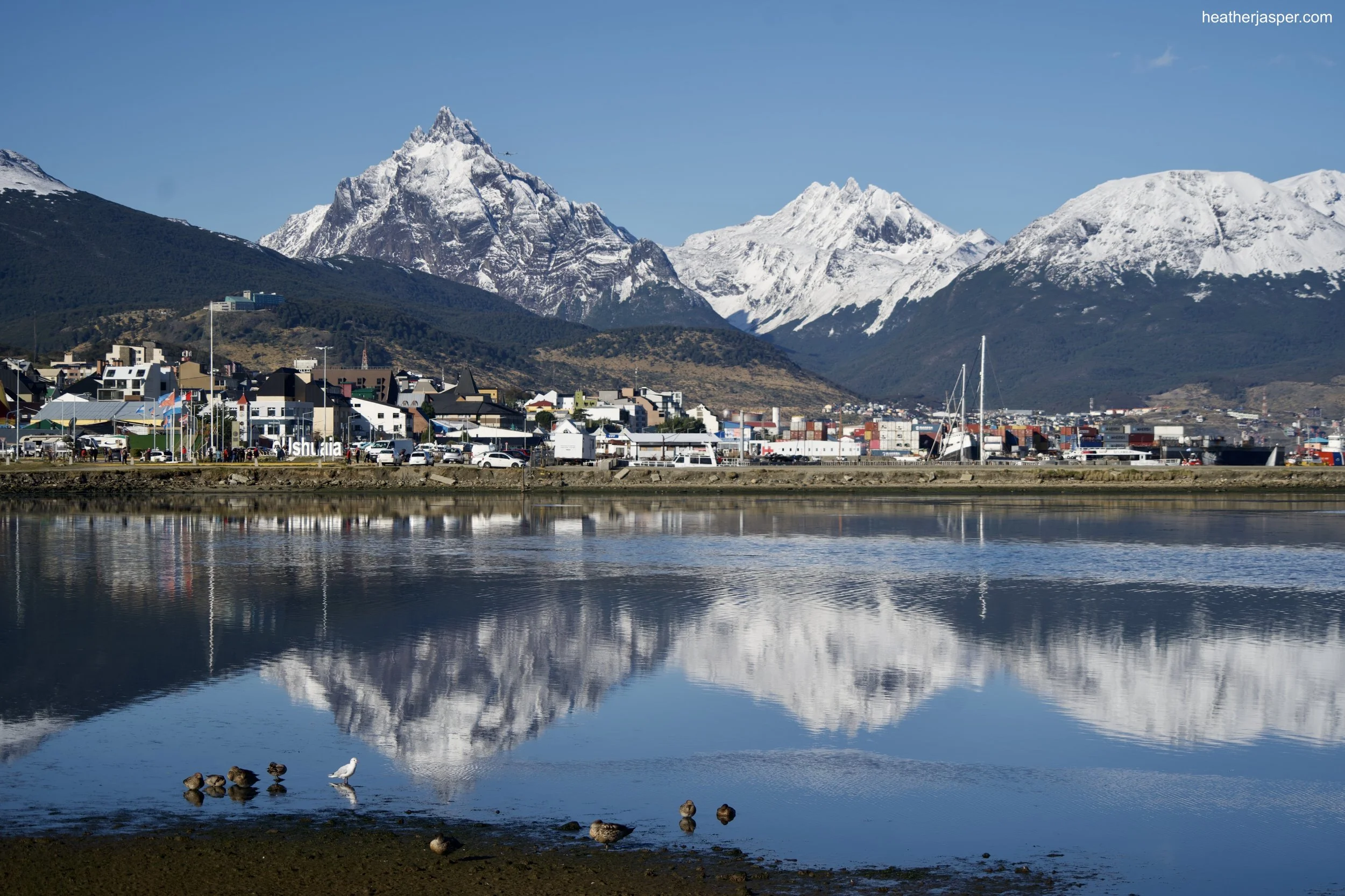
Of course. The concept of a place called the “end of the world” has captivated explorers, writers, and dreamers for centuries. While many might imagine a mythical or fictional location, there is indeed a real, inhabited city that has earned this dramatic nickname. Ushuaia, Argentina, proudly and poignantly known as the “end of the world,” sits on the southernmost tip of South America, in the archipelago of Tierra del Fuego. This city, cradled by the rugged Martial Mountains and lapped by the icy waters of the Beagle Channel, serves as the primary gateway to Antarctica, a mere 1,000 kilometers (about 620 miles) across the infamous Drake Passage. Its remote location, stunning subpolar landscapes, and unique history have solidified its legendary status as the ultimate frontier of human habitation before the vast emptiness of the Southern Ocean and the white continent beyond.
The story of Ushuaia begins long before the arrival of European explorers. For thousands of years, the indigenous Yaghan (also known as Yámana) people called this harsh yet bountiful land home. They navigated the frigid waters in bark canoes, surviving on sea lions, fish, and birds, and developing a culture intimately adapted to the region’s unforgiving climate. The name “Ushuaia” itself comes from the Yaghan language, meaning “deep bay” or “bay towards the end.” This pre-existing name prophetically described its geographical position. The city’s modern nickname, “Fin del Mundo” (End of the World), was popularized much later, but the indigenous people long understood their unique position at the bottom of the hemisphere. The first European to sight the area was Ferdinand Magellan in 1520, who named the strait after himself and called the land “Tierra del Fuego” (Land of Fire) after seeing the Yaghan’s campfires from his ship. However, it wasn’t until the 19th century that serious interest in the region began.
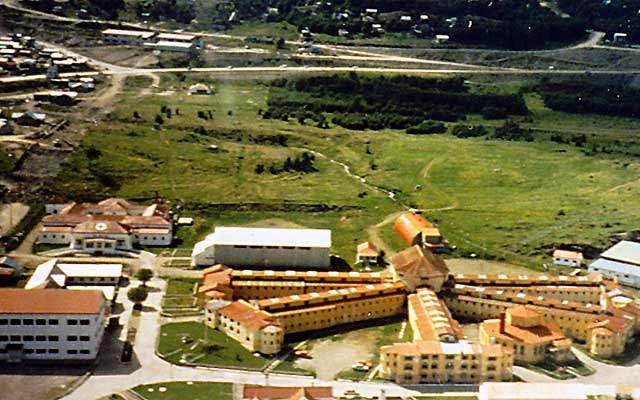
Ushuaia’s modern foundation is surprisingly recent. The Argentine government, seeking to establish a permanent presence in Tierra del Fuego to assert sovereignty and create a penal colony similar to the British in Australia, officially founded the city on October 12, 1884. The Ushuaia Prison, often called the “Presidio of Ushuaia,” became the city’s central institution for over half a century. This was no ordinary prison; it was Argentina’s equivalent of Alcatraz or Devil’s Island. The inmates, many of them repeat offenders and political prisoners, were sent to the literal end of the world, from which escape was virtually impossible due to the freezing waters, treacherous mountains, and immense distances from civilization. Remarkably, the prisoners were instrumental in building the very city that confined them—they constructed the prison buildings, the first railway, and much of the early infrastructure. The Tren del Fin del Mundo (Train of the End of the World) , now a popular tourist attraction, was originally a prisoner train that carried logs for construction and fuel. Today, visitors ride this steam locomotive through the stunning valleys, hearing the haunting stories of the convicts who helped shape Ushuaia against all odds.
What transformed Ushuaia from a remote penal colony into a thriving modern city was a combination of strategic and economic factors. In the 20th century, the Argentine Navy established a base here, recognizing the port’s strategic importance for patrolling the South Atlantic and the approaches to Antarctica. Later, in the 1970s, the Argentine government created a free trade zone in Tierra del Fuego, offering significant tax breaks to manufacturers. This policy triggered a population boom—from just a few thousand residents to over 80,000 today. Electronics assembly plants, particularly for televisions, smartphones, and air conditioners, now dominate the local economy alongside tourism. Visitors are often surprised to find that the rugged “end of the world” is also home to modern shopping malls selling tax-free goods. This economic miracle, however, has brought challenges, including logistical difficulties (almost all goods must be shipped or flown in from the north) and environmental concerns about waste and energy use in such a fragile ecosystem.
But Ushuaia’s most famous role today is as the primary jumping-off point for Antarctica. Some 90% of all Antarctic cruises depart from its port. The journey across the Drake Passage, known as one of the roughest seas on Earth, takes about 48 hours from Ushuaia. For the thousands of scientists, tourists, and support staff who pass through each summer (November to March), Ushuaia represents the last taste of city comfort: the last restaurant meal, the last cell phone signal, the last hardware store, and the last streetlight before entering the white silence of the seventh continent. The city’s airport, Malvinas Argentinas International Airport, is the southernmost commercial airport in the world, a distinction that fuels its nickname. Consequently, Ushuaia is filled with adventure gear shops, travel agencies offering last-minute Antarctic deals, and a cosmopolitan atmosphere of international travelers all sharing a singular, southward-focused purpose.
The natural setting of Ushuaia is nothing short of spectacular, and it powerfully reinforces its “end of the world” identity. Tierra del Fuego National Park, located just a few kilometers west of the city, protects a pristine landscape of subantarctic forest, peat bogs, glaciers, and fjords. Hikers can walk along coastal paths where the Andes mountains dramatically plunge into the Beagle Channel. One of the park’s most famous landmarks is Ruta Nacional 3, the southern terminus of the Pan-American Highway, which begins in Alaska. A sign at the road’s end reads: “Aquí comienza la Patagonia” (Here begins Patagonia), or unofficially, “End of the World.” Visitors can also take boat tours to see colonies of sea lions, cormorants, and the iconic Magellanic penguins on nearby islands. A particularly poignant attraction is the Les Eclaireurs Lighthouse, often mistakenly called the “Lighthouse at the End of the World” (a confusion with Jules Verne’s novel of the same name), which stands on a rocky islet, guiding ships through the channel’s treacherous waters.
Life in Ushuaia is defined by extremes. Summer brings nearly 17 hours of daylight (from around 5 AM to 10 PM), with long, lingering sunsets that paint the snow-capped peaks in hues of pink and orange. The city buzzes with energy as tourists and researchers arrive. Winter, in stark contrast, offers barely 7 hours of weak daylight, with average temperatures hovering around freezing and frequent snowstorms. Yet, this is also the time when the city transforms into a world-class ski destination. The Cerro Castor ski resort, just 26 kilometers from downtown, boasts the longest ski season in South America (from June to October) because of its southern latitude. The residents, known as Ushuaicenses, have developed a distinctive resilience—a blend of pioneer toughness, working-class realism from the prison days, and a frontier mentality that embraces isolation as a point of pride. To live “at the end of the world” is to accept power outages during fierce williwaw winds, delayed shipments, and a cost of living far higher than in Buenos Aires.
The city is also a hub of scientific activity, particularly related to climate change and subantarctic ecology. The CADIC (Centro Austral de Investigaciones Científicas) , a research center of Argentina’s national science council, studies everything from the melting glaciers of the Martial Range to the unique marine ecosystems of the Beagle Channel. Scientists warn that Ushuaia is on the front lines of global warming. The surrounding glaciers have been visibly retreating for decades—the Glaciar Martial once reached the edge of the city, but now visitors must hike or take a chairlift for nearly an hour to reach its diminished tongue. Shifts in water temperature and acidity are affecting the rich beds of kelp and the fish and crustaceans that depend on them. For the people of Ushuaia, climate change is not an abstract future threat but a daily observation visible from their windows.
On a darker but historically crucial note, Ushuaia’s location near Antarctica has made it a key site for geopolitical tensions. The Beagle Channel dispute between Argentina and Chile lasted over a century, flaring up dangerously in 1978 when both nations nearly went to war over three small islands at the channel’s eastern mouth. The Pope eventually mediated a peace treaty, signed in 1984, which secured Ushuaia’s status as the Argentine port to Antarctica but left lingering national pride and occasional friction. Similarly, Argentina’s claim to the Falkland Islands (Islas Malvinas) is ever-present in Ushuaia. The city’s airport is named “Malvinas Argentinas,” and a prominent monument in the harbor honors the soldiers who fought in the 1982 war. From the port, on a clear day, one can gaze eastward toward the South Atlantic and the contested islands—a reminder that the “end of the world” is also a strategic and emotional borderland.
Tourism has become Ushuaia’s lifeblood, but it walks a delicate line. Over a million visitors now pass through each year, a staggering number for a city of 80,000. This influx strains infrastructure—wastewater treatment, electricity, and fresh water supplies—and threatens the very wilderness that draws people. The Argentine government and local operators have implemented some measures, such as limiting the number of daily visitors to certain parts of Tierra del Fuego National Park and enforcing strict waste disposal rules on Antarctic-bound ships. However, critics argue that the growth of cruise ship tourism, with its massive vessels burning heavy fuel oil, directly contradicts the region’s pristine image. A single large cruise ship can emit as much particulate matter as a million cars. Ushuaia thus embodies a familiar 21st-century dilemma: how to be a sustainable gateway to the most fragile wilderness on Earth.
Culturally, Ushuaia has embraced its title to an extent that might seem kitschy but is undeniably charming. You can buy a passport stamp at the tourism office that says “Fin del Mundo.” The city’s main street, Avenida San Martín, is lined with souvenir shops selling everything from penguin-shaped keychains to wool sweaters made from the wool of “Fuegian” sheep. There’s a Museo del Fin del Mundo (Museum of the End of the World) which houses artifacts from the Yaghan people, the prison era, and early maritime exploration. A newer attraction is the Paseo del Centenario, a waterfront promenade featuring life-sized bronze statues of famous explorers like Darwin and FitzRoy. Each evening, the sun sets over those statues, over the moored fishing boats and tourist schooners, over the distant white peaks—a daily ritual that feels like a curtain call on the world’s southernmost stage.
For anyone who makes the journey, standing on the waterfront of Ushuaia is an emotional experience. The sheer vertical drop of the Andes into the dark, cold Beagle Channel creates a palpable sense of limit. There is nothing behind you but the spine of a continent. In front of you, there is nothing but 600 miles of rough sea and then a continent of ice that has no permanent human habitation. The famous Argentine writer Sylvia Iparraguirre captured it perfectly: “Ushuaia is not a city where things end; it is a city where things begin—the beginning of the great silence, the beginning of the purest horizon.” To walk its streets is to hear the echoes of prisoners, of Yaghan paddlers, of sealers and missionaries and scientists—all drawn to this edge. So, did you know there is a city called the end of the world? Ushuaia is real. It is not a metaphor or a myth. It is a breathing, bustling, conflicted, and breathtakingly beautiful city that sits, quite literally, at the bottom of the planet, a last outpost of human noise before the vast, white whispering of Antarctica.