May 11, 2026
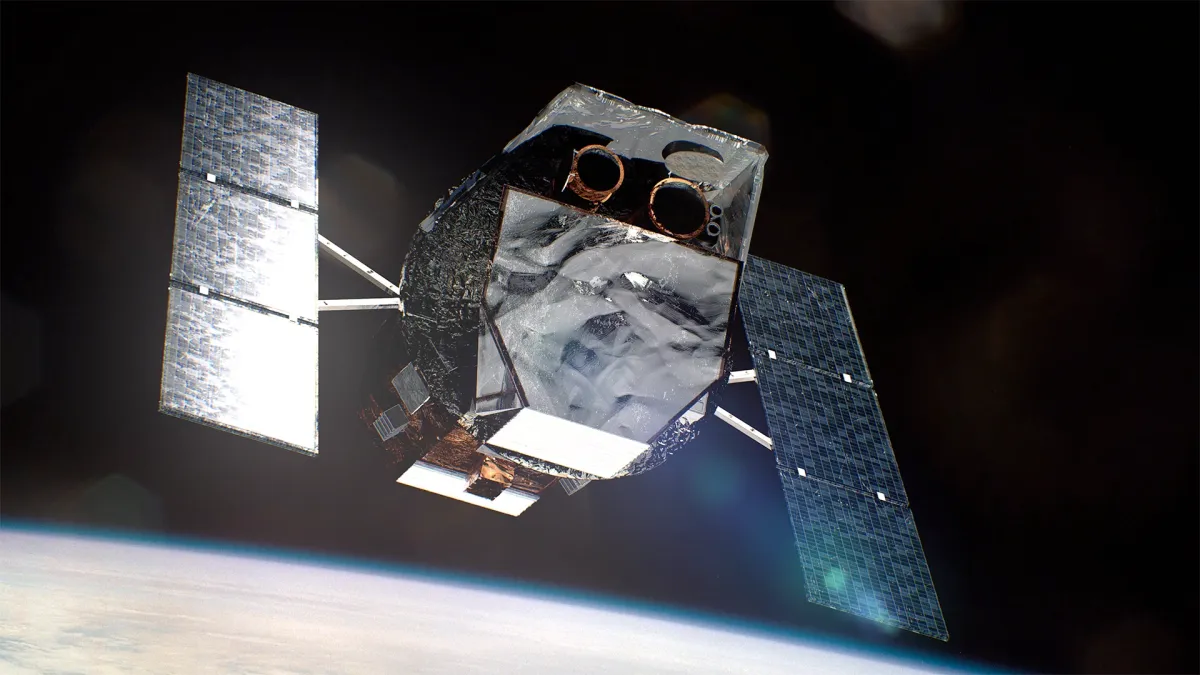
The global aerospace and astrophysics communities are celebrating a monumental achievement in satellite servicing. NASA and Katalyst Space Technologies have officially announced that the LINK robotic servicer has successfully completed its grueling environmental testing phase at the Goddard Space Flight Center in Greenbelt, Maryland. This milestone is the final major hurdle before the spacecraft is cleared for a June 2026 launch, a mission that represents the first-ever commercial rescue of a NASA science satellite that was not originally designed for in-orbit servicing. The primary objective is to save the Neil Gehrels Swift Observatory, a $500 million asset that has spent over two decades serving as the world’s premier “cosmic dispatcher” for gamma-ray bursts (GRBs). Without this intervention, the observatory is predicted to make an uncontrolled and fiery re-entry into Earth’s atmosphere as early as late 2026 or early 2027.
The environmental testing suite was specifically designed to simulate the extreme conditions of launch and deep space. Over the last several weeks, the LINK spacecraft was subjected to vibration testing to ensure it could withstand the intense mechanical stresses of a Pegasus XL rocket launch. Following this, it underwent thermal vacuum (TVAC) testing in the Space Environment Simulator, where it was exposed to the vacuum of space and the radical temperature swings of the orbital environment. During these tests, engineers successfully fired the spacecraft’s three ion thrusters and deployed one of its robotic arms, confirming that the hardware is fully operational. “The Swift boost attempt is a fast, high-risk, high-reward mission,” stated John Van Eepoel, the Swift mission director at NASA Goddard. “Swift will likely re-enter the atmosphere sometime later this year if we don’t attempt to lift it to a higher altitude. Katalyst has gotten to this point in just eight months, and we’re glad they were able to use NASA’s facilities to test LINK and draw on our expertise to help tackle questions that popped up along the way.”
The urgency of this mission is driven by unprecedented solar activity. We are currently in the peak of Solar Cycle 25, a period of intense solar flares that heat the Earth’s upper atmosphere, causing it to expand or “puff” outward. This expansion has significantly increased the atmospheric drag on the Swift satellite, which lacks its own onboard propulsion. Since its launch in 2004, Swift has dropped from its original altitude of 600 kilometers to a precarious 400 kilometers. NASA scientists noted that the rate of decay has accelerated far beyond initial models, creating a “death spiral” scenario. If Swift drops below the 300-kilometer threshold, a reboost becomes physically impossible due to the density of the air. To preserve the remaining fuel for the docking maneuver, NASA took the difficult step of suspending Swift’s science operations in February 2026, temporarily silencing the Burst Alert Telescope to ensure the satellite’s orientation remains stable for the upcoming rescue.
The LINK spacecraft, built by Arizona-based Katalyst Space Technologies under a $30 million contract, is a marvel of rapid engineering. Developed in only eight months, it leverages autonomous docking technology to locate and “grab” the Swift observatory. Because Swift was never intended to be serviced, it lacks a standard docking port; therefore, LINK will utilize its robotic arms to latch onto a structural bolt or the launch adapter ring. Once secured, the servicer will use its propulsion system to push Swift back to a stable orbit of approximately 550 to 600 kilometers. This “tow truck” maneuver is expected to extend Swift’s operational life by up to 10 years, providing a massive return on investment compared to the cost of building a replacement mission.
NASA leadership views this not just as a rescue, but as a paradigm shift in how space agencies manage aging infrastructure. “Given how quickly Swift’s orbit is decaying, we are in a race against the clock, but by leveraging commercial technologies that are already in development, we are meeting this challenge head-on,” said Shawn Domagal-Goldman, acting director of the Astrophysics Division at NASA Headquarters. “This is a forward-leaning, risk-tolerant approach for NASA. But attempting an orbit boost is both more affordable than replacing Swift’s capabilities with a new mission and beneficial to the nation—expanding the use of satellite servicing to a new and broader class of spacecraft.”
With the completion of testing at Goddard, the LINK spacecraft is now being transported to Katalyst’s facilities in Colorado for final pre-launch checkouts. From there, it will move to NASA’s Wallops Flight Facility in Virginia for integration with the Northrop Grumman Pegasus XL rocket. In late June, the rocket will be carried aloft by the Stargazer L-1011 aircraft and launched from the Marshall Islands. This unique air-launch method provides the precise low-inclination orbit required to intercept Swift. If successful, this mission will set a global precedent, proving that even “non-serviceable” satellites can be given a second lease on life through commercial innovation and robotic precision. For now, the scientific community waits with bated breath as the clock ticks toward a June launch that could save one of humanity’s most vital eyes on the violent, high-energy universe.