May 18 2026.
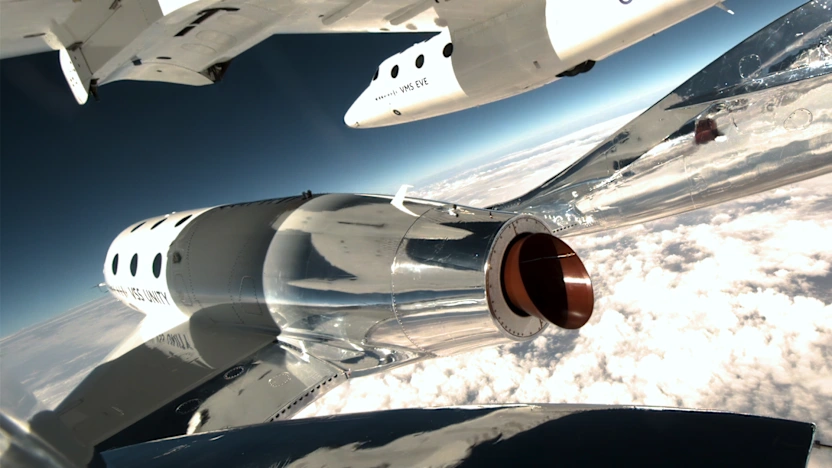
In a defining moment for the commercial space flight industry, Virgin Galactic Holdings, Inc. has officially reaffirmed its definitive timeline to launch its highly anticipated commercial spaceflight service by the end of this year. Following the recent release of its first-quarter financial results for 2026, the aerospace pioneer confirmed that it remains steadily on track to achieve two historic operational milestones: commencing manned flight testing in the third quarter of 2026 and launching its first official commercial spaceflight in the fourth quarter of 2026. This announcement has re-ignited widespread public interest and brought a renewed wave of optimism to investors, researchers, and space enthusiasts alike, signaling that the long-promised era of frequent, accessible suborbital space tourism is finally on the horizon. At the heart of this renewed push is the rollout of Virgin Galactic’s next-generation Delta-class spaceship fleet, which represents a massive technological leap forward from the company’s legacy vehicle, VSS Unity.
The company disclosed that the first of its new Delta-class SpaceShips has been successfully transferred from its main assembly hangar to its dedicated test-and-launch hangar. Ground testing for this vehicle is already aggressively underway, testing critical infrastructure, software integrations, and mechanical redundancies. Furthermore, structural assembly of a dedicated static test article is currently in progress, and the physical fabrication of a second operational Delta spaceship has officially commenced. Virgin Galactic’s strategic shift toward the Delta-class vehicles is designed to unlock true commercial viability through an optimized assembly process and a modular aerospace architecture. Unlike previous prototypes, these next-generation production models are engineered for an unprecedented rapid turnaround time, allowing for significantly higher flight frequencies and a vastly superior, industry-leading cost structure that promises to turn the pre-revenue aerospace firm into a highly profitable enterprise.
Financially, Virgin Galactic appears to be managing its transition out of its capital-intensive development phase with disciplined precision. As of March 31, 2026, the company maintained a robust cash position with $251 million in cash, cash equivalents, and marketable securities. While still operating within a pre-revenue framework—generating a modest $0.2 million in the first quarter of 2026 primarily from future astronaut access fees—the company successfully narrowed its losses. Virgin Galactic reported a reduced net loss of $65 million for the first quarter of 2026, representing a significant 23% improvement compared to the $84 million net loss reported during the same period in 2025. This reduction was driven by a sharp 26% decline in total operating expenses, which dropped to $66 million as heavy initial research and development costs begin to taper off. Furthermore, the company bolstered its financial runway during April 2026 by generating approximately $52 million in gross proceeds through an at-the-market stock offering program, leaving $87 million remaining under the current authorization to cushion final pre-revenue testing expenses.
Aerospace engineers and executive leadership have attributed this smooth operational progression to a deliberate overhaul in their vehicle validation methodologies. By moving away from the cumbersome testing frameworks used for previous suborbital models, the engineering teams have built an advanced off-ship testing infrastructure that allows for independent subsystem verification long before final vehicle assembly is completed. “We’ve made purposeful changes in our approach to ground testing versus the process that was used with our original spaceship, Unity, and the upfront investments we made in this area are now paying off,” noted an internal engineering specialist during a technical brief, highlighting that their dedicated safety and test center in Irvine, California, has been executing complex multi-system simulations for several months. Central to this testing matrix is the “Iron Bird,” an advanced ground-based test platform that enables engineers to perform full system-level evaluations of how flight control hardware and digital avionics respond under extreme flight configurations. “This computer is the heart of the digital flight control system, which translates pilot inputs into commands to move the flight control surfaces at the back of the spaceship,” the engineering team shared, verifying that the vehicle’s core fly-by-wire mechanics are meeting rigorous safety thresholds.
Beyond the thrills of elite space tourism, the upcoming commercial service is generating immense interest within the global scientific community. Virgin Galactic’s suborbital flight profile provides an invaluable platform for microgravity research, offering scientists a unique middle ground between brief drop-tower experiments and cost-prohibitive, long-duration missions on the International Space Station. “The capability to fly human-tended payloads into the upper atmosphere at a regular cadence completely changes the economics of microgravity research,” stated a prominent atmospheric physicist collaborating on an upcoming upper-atmosphere payload. “Instead of waiting years for a single automated slot on a rocket, researchers can now physically fly alongside their instruments, make real-time adjustments during those critical minutes of weightlessness, and bring their data back to Earth immediately for analysis.” The Delta-class spaceships have been structurally optimized to accommodate standard research racks alongside private passengers, making the vehicle a versatile dual-use platform for both high-net-worth space tourists and international scientific institutions seeking to study cosmic radiation, fluid dynamics, and human physiology in a transitionary gravitational state.
Looking ahead, Virgin Galactic has outlined an aggressive operational scale-up plan to satisfy its massive market demand. The company has officially reopened ticket sales at a premium price point of $750,000 per seat, aiming to capitalize on a substantial, pre-existing backlog of roughly 650 future astronauts. To clear this backlog and drive recurring profitability, the company is aiming for an unprecedented launch frequency. According to their long-term operational guidance, Virgin Galactic plans to execute 4 flights per month starting in January 2027, with a target to accelerate that cadence to 8 flights per month by the second quarter of 2027 as its second Delta-class ship completes testing and officially enters service. This high-frequency operational model is expected to sharply reduce the per-flight marginal cost, transforming suborbital space travel from an experimental luxury into a structured, highly repeatable corporate operation.
Despite the firm timeline, market analysts and aerospace watchdogs urge balanced caution, noting that the transition from rigorous ground testing to live rocket-powered flights inherently carries technical and regulatory risks. The company’s projected free cash flow for the second quarter of 2026 is expected to be a negative $87 million to $92 million, meaning that any unexpected delay in the third-quarter flight test window or a prolonged regulatory review for its commercial operating license could strain its existing cash reserves. Nonetheless, with its debt retirements tracking ahead of schedule, capital expenditures stabilizing, and physical assets progressing smoothly through validation hangars, Virgin Galactic is standing on the precipice of a historical breakthrough. If the company successfully executes its third-quarter flight tests, the final months of this year will not only see the fulfillment of a decades-long aerospace ambition but will permanently reshape humanity’s relationship with the edge of space.