May 22, 2026
What was meant to be a historic day for spaceflight ended in last-minute disappointment as SpaceX’s first Starship V3 megarocket—the most powerful launch vehicle ever built—scrubbed its highly anticipated test flight with less than 40 seconds remaining on the countdown clock. The uncrewed mission, designated Starship Flight 9, was poised to lift off from SpaceX’s sprawling Starbase facility in Boca Chica, Texas, at 8:17 AM local time.
Thousands of spectators had gathered along the Gulf Coast, while millions more watched live streams globally, including a notably disappointed Nicki Minaj, who had teased a surprise orbital performance collaboration with SpaceX—though the nature of that link remained vague, the rapper’s social media posts earlier in the week had sent fans into a frenzy. However, as the final seconds ticked down, the automatic abort sequence triggered, freezing the 150-meter-tall stainless-steel behemoth on the pad. Early telemetry indicated that three of the 35 Raptor V3 engines on the Super Heavy booster failed to reach required thrust levels during the pre-launch chill-down and spin-prime tests. “We’re standing down for the day to review the data. The vehicle and pad are safe,” a SpaceX launch commentator announced, as groans echoed across the control room and shoreline.
The Starship V3 is not merely an incremental update but a radical reengineering of SpaceX’s Mars-class vehicle. Compared to the previous V2 prototype, the V3 boasts a stretched propellant tank, upgraded Raptor engines producing 300 tons of thrust each, and a heat shield that is 40% lighter yet capable of withstanding multiple reentries. Crucially, this version is designed for orbital refueling and direct lunar missions, serving as the backbone for NASA’s Artemis IV and eventual Mars colonization plans. The May 22 test was supposed to demonstrate the V3’s ability to complete a full near-orbital loop, launching from Texas, separating stages over the Atlantic, and performing a controlled reentry and splashdown in the Pacific near Hawaii—a flight profile nearly identical to the successful V2 flight in March 2026.
Success would have validated the V3 as the most capable rocket in history, capable of lifting over 200 metric tons to low Earth orbit in fully reusable mode, more than double the Saturn V’s capacity. The scrub therefore represents not just a delay but a major symbolic setback, as SpaceX had marketed this launch as the beginning of the “V3 era.”
In the aftermath, Elon Musk took to X (formerly Twitter) to address the failure, writing: “Raptor V3 is insanely complex—we saw a [turbopump] speed anomaly on 3 engines. Will replace them and try again in ~2 weeks. No hardware damage. Sorry @NICKIMINAJ, your space debut must wait.” Musk’s apology to Minaj was a reference to the singer’s widely reported plan to perform a snippet of a new single, “Stellar,” with the song’s music video filmed partially in microgravity during a Starship coast phase—a controversial stunt that had drawn criticism from traditional astronauts but excitement from pop culture fans.
Minaj herself responded live on Instagram, flipping her pink wig and exclaiming, “Y’all, the ship said not today. But Nicki never cancels—we’ll go to Mars if we have to.” The delay, however, exposes deeper technical risks: the Raptor V3’s full-flow staged combustion cycle pushes metallurgical limits, and similar engine issues had caused a catastrophic in-flight failure during a V1 test in 2024. Engineers will now need to remove, inspect, and potentially redesign the fuel injector plates on three specific engines, a process that could take longer than two weeks if cracks are found.
Environmental and regulatory complications also loom. The scrub occurred just two days after the Federal Aviation Administration granted a revised launch license for the V3, following months of litigation over the rocket’s acoustic and debris fallout. Local environmental groups had planned protests at the launch site for May 23, arguing that the V3’s larger methane-oxygen exhaust could harm sensitive shorebird habitats. With the scrub, those protests will now coincide with the next launch window, raising the stakes.
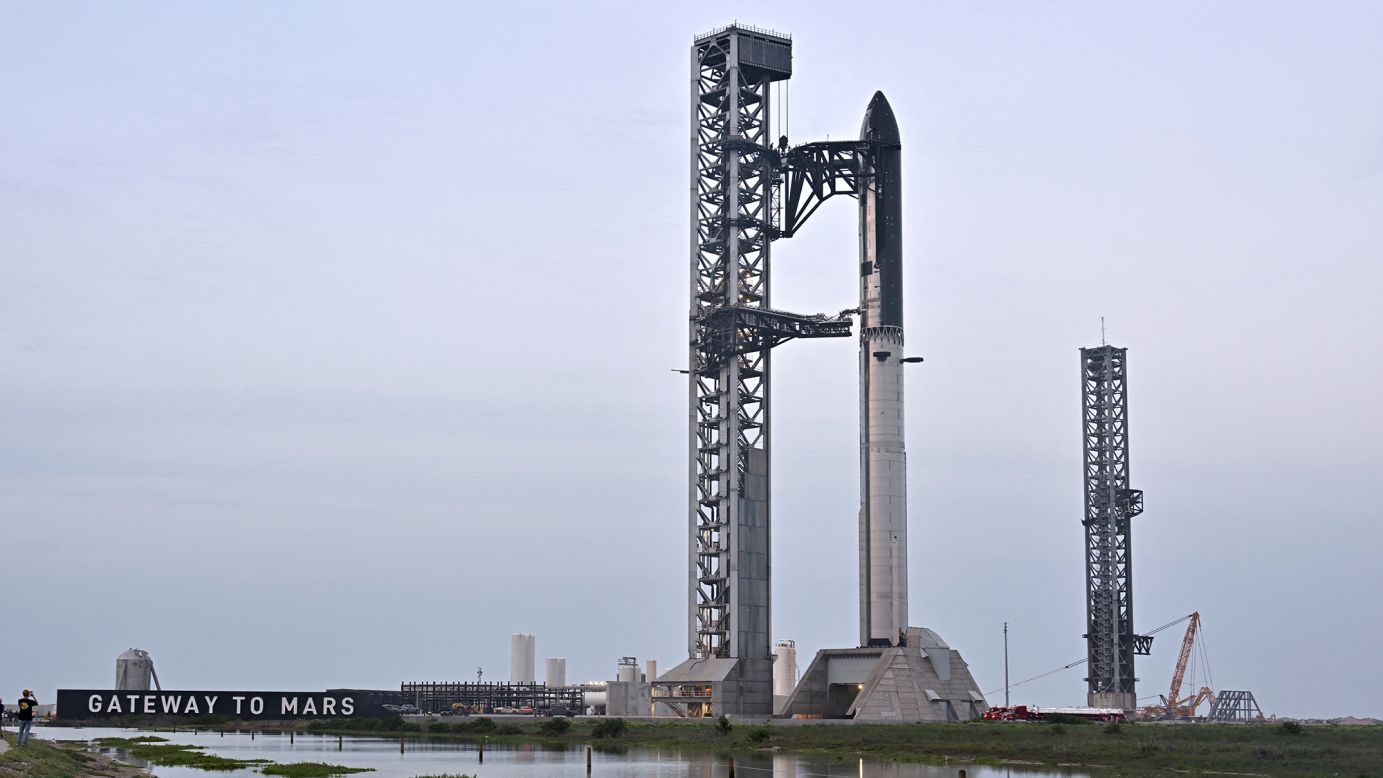
Moreover, SpaceX faces a crowded manifest: the V3 is booked for three Starlink deployment missions, two private lunar flybys, and a Department of Defense cargo test before year’s end. Any extended delay threatens a cascade of schedule slips. For now, the Super Heavy booster remains vertical on Launch Complex 1, secured in the launch tower’s mechanical arms while engineers drain propellant and initiate a full engine teardown. The Raptor V3’s complexity—machined from exotic alloys with internal cooling channels—means that even a minor discrepancy can halt the launch automatically, as designed. SpaceX prides itself on “scrubbing often to avoid exploding,” a mantra born from early Falcon 9 failures, but the V3’s size multiplies every risk.
As for Nicki Minaj, her team has already rescheduled a streaming event for the scrubbed launch day, transforming it into a virtual “Countdown to the Countdown” watch party. While disappointed fans on X joked that “Nicki’s curse” struck again—referencing her previous last-minute concert cancellations—others noted that the scrub might be a blessing in disguise, allowing SpaceX to test engine redundancy protocols without losing a vehicle.
The company confirmed that the next attempt will occur no earlier than June 5, 2026, pending engine replacements and weather. For now, the world’s largest rocket sits silent under a Texas sun, a testament to how even the most advanced engineering must bow to a handful of finicky turbopumps. And somewhere in a Beverly Hills studio, Nicki Minaj is likely rehearsing “Stellar” one more time, waiting for the day when space and pop music finally collide.