
July 12, 2026
The Indian Space Research Organisation (ISRO) announced a major achievement for its ambitious Gaganyaan mission, successfully completing three critical qualification tests of the crew module systems . These trials represent a pivotal step forward for India’s first human spaceflight program, as they rigorously validated key mechanisms designed to ensure the safety of astronauts from the moment of splashdown through the final phases of their return to Earth . The tests were designed to go beyond standard operational parameters, pushing the systems to their limits on the ground to guarantee their reliability and structural integrity during an actual mission, thereby bringing the dream of sending Indian astronauts into space significantly closer to reality .
The first and perhaps most crucial test focused on validating the Crew Module Uprighting System (CMUS) . After the module parachutes down for a landing at sea, one of the most important safety requirements is ensuring that the capsule returns to a stable, upright position . A capsule that lands inverted could make it difficult for astronauts to exit and for recovery teams to reach them. To address this, ISRO has developed a specialized stored cold-gas-based flotation system . The test involved a complete system-level setup where engineers successfully conducted inflation tests on the primary flotation module. This process saw stored gas from a high-pressure bottle released through control valves to inflate the flotation devices, demonstrating that the system can reliably deploy and function across the full range of expected operating conditions . This successful float inflation test confirmed that a critical safety feature for post-landing crew recovery is ready for the mission.
The second test examined the separation of the umbilical mechanism, a vital link between the crew module and the service module . The service module provides power and propulsion during the flight, and the umbilical serves as its connection for electrical, fluid, and communication links . This mechanism consists of two units: CSU-1, located on the crew module side, and CSU-2, on the service module side . During the module’s return to Earth, the separation sequence must be precise: after CSU-1 disconnects, the service module separates from the crew module. Shortly before the crew module re-enters the atmosphere, CSU-2 must also detach cleanly . The successful test of the umbilical separation mechanism was a key milestone. ISRO carried out the separation test of CSU-2 from a simulated crew module, and the results were flawless . The test demonstrated a clean separation of the CSU-2 unit and, crucially, confirmed the structural stability of the crew module panel and its interfaces under the stresses of separation, ensuring that this critical disconnection sequence will function without a hitch .
The third and final test validated the structural integrity of the crew module during the separation of the apex cover . The apex cover is a protective lid at the top of the capsule that shields the parachutes and their associated subsystems throughout the mission . For the parachutes to deploy and decelerate the module for a safe descent, this cover must be jettisoned at a predetermined altitude. This event is a violent one, often performed using small pyrotechnic devices, and the resulting shock and loads could potentially damage the crew module . To qualify the structure, ISRO subjected the crew module to loads significantly higher than those expected during the actual flight, applying forces up to 1.75 times the estimated maximum to a simulated module on an instrumented test rig . The test was a complete success, as the module’s structural integrity was validated, with all measured strain and deformation remaining well within design limits . This test confirmed that the crew module can withstand the violent forces of the apex cover’s separation, ensuring the parachute deployment sequence can proceed safely.
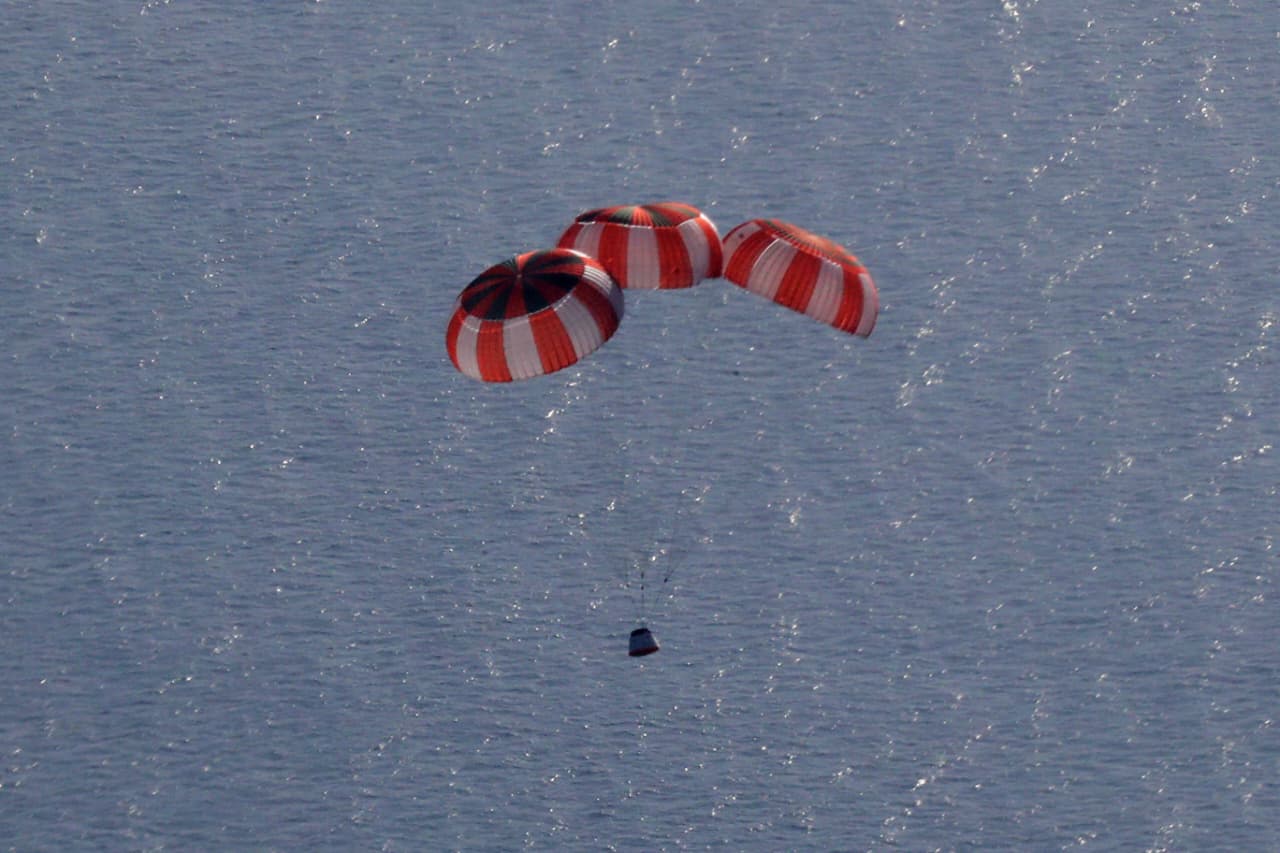
The successful completion of these three qualification tests is a testament to ISRO’s rigorous approach to ensuring the safety and success of the Gaganyaan mission . By validating the uprighting system, the umbilical separation mechanism, and the structural strength of the apex cover, ISRO has cleared three more crucial hurdles on the path to launching Indian astronauts into space . These tests, combined with other recent successful trials like the drogue and main parachute deployment tests, build a solid foundation of confidence in the crew module’s systems . They confirm that the capsule designed to carry India’s astronauts not only functions as intended but also possesses the resilience and robustness required for one of the most perilous journeys imaginable: returning from space to Earth .