
April 13, 2029
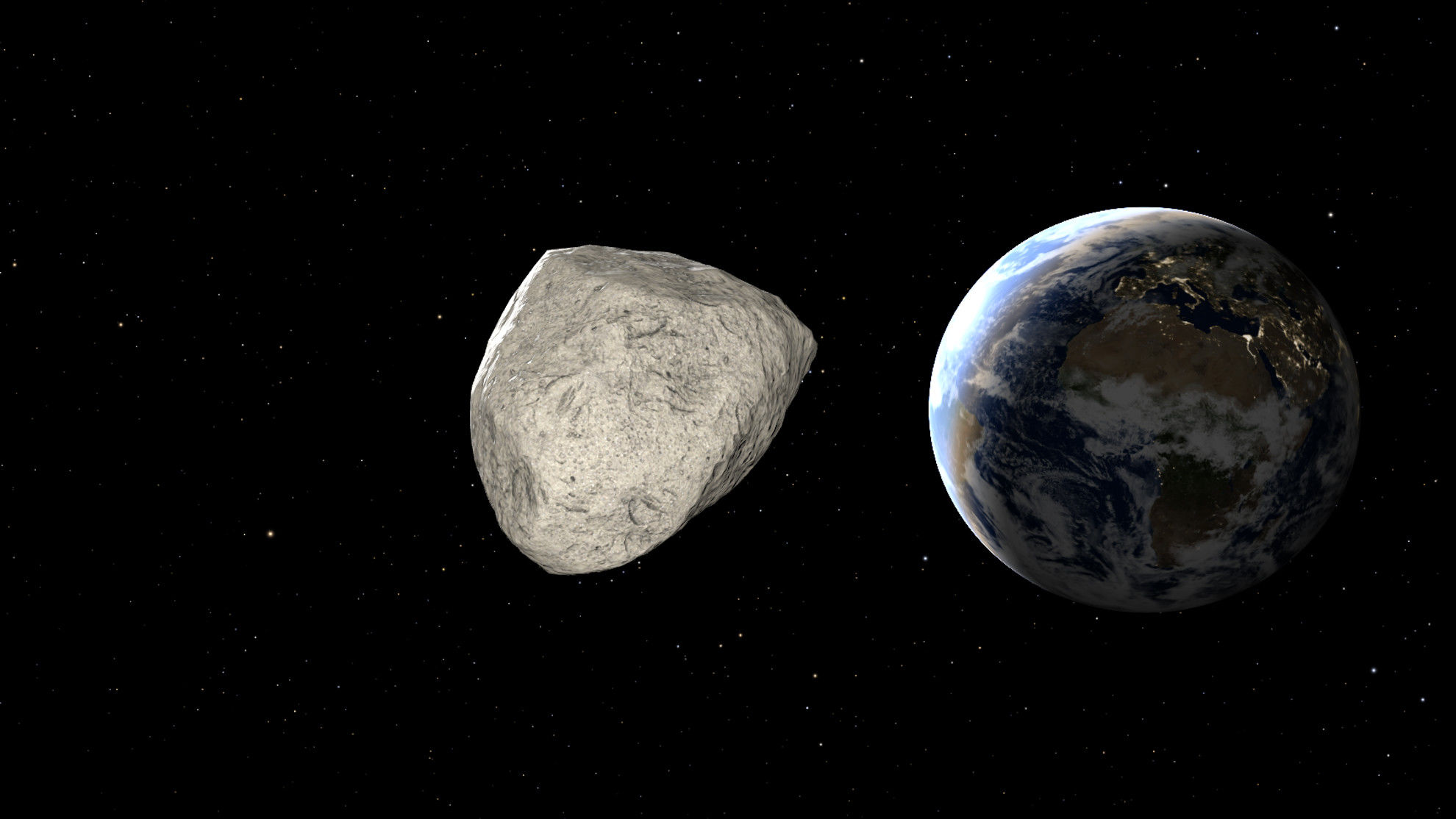
A landmark event in astronomical history will unfold as the near-Earth asteroid (99942) Apophis makes a record-setting flyby of our planet. While forecasts for July 13, 2026, show no extraordinary celestial activity, the focus of the scientific community is firmly fixed on this upcoming 2029 encounter, which promises to be the closest approach of an asteroid of this size that humanity has ever known in advance . Passing at a distance of just 32,000 kilometers from Earth’s surface, Apophis will come closer than many geostationary satellites, a proximity that is statistically estimated to occur only once every 5,000 to 10,000 years . This incredibly close shave is not only safe—with NASA having ruled out any impact risk for at least the next century—but it will also transform the asteroid into a naked-eye object visible to an estimated two billion people across parts of Europe, Africa, and Asia .
The story of Apophis began with alarm. Discovered in 2004, its initial orbit calculations briefly suggested a 2.7% chance of a catastrophic impact with Earth in 2029, a scenario that earned it the name of the ancient Egyptian god of chaos and destruction . However, continued tracking and observations have since provided a precise picture of its trajectory, revealing that its closest approach will be 38,000 kilometers from Earth’s center, and astronomers have confirmed it will safely miss the planet by a margin of just a few kilometers . This flyby will, however, be a dramatic turning point for the 340-meter-wide space rock.
Earth’s powerful gravitational pull will stretch and squeeze Apophis, a phenomenon known as tidal forces, which are predicted to trigger significant and measurable “asteroid quakes” and potentially landslides on its surface . Moreover, this gravitational interaction will fundamentally change the asteroid’s journey through the solar system. The encounter is projected to lengthen its orbit around the sun from about 0.9 Earth years to 1.2 Earth years, permanently reclassifying it from an Aten-type asteroid to an Apollo-type . Its rotation is also expected to be disrupted, with models showing its spin rate could either halve or double, and its rotational pole is likely to shift by 10 degrees or more .
This rare cosmic event is being treated as a golden opportunity for both science and planetary defense, sparking an unprecedented global effort to study the asteroid. The European Space Agency (ESA), in collaboration with JAXA, is fast-tracking the Ramses (Rapid Apophis Mission for Space Safety) mission, which is scheduled to launch in April 2028 to rendezvous with Apophis two months before its flyby . Ramses will observe the asteroid’s “before, during, and after” states, equipped with instruments like the CHANCES camera from the University of Bern and the HAMLET hyperspectral imager to search for surface changes and provide detailed insights into its composition . Following shortly after, NASA’s OSIRIS-APEX spacecraft—the repurposed OSIRIS-REx probe—will arrive to study the asteroid’s post-flyby state for 18 months .
These missions will be complemented by a global network of ground-based telescopes and radar systems. For the public, the event will be a spectacular sky show. At its peak brightness around 20:35 UTC, Apophis will appear as a small, slow-moving white dot traversing the night sky, visible to the naked eye across the Eastern Hemisphere . While observers in North America will miss this peak brightness, they may still be able to spot it with binoculars . As the asteroid makes its closest approach at 21:45 UTC, it will be a profound moment of science and spectacle, showcasing a pivotal collaboration in planetary defense and our deepening understanding of the solar system .