
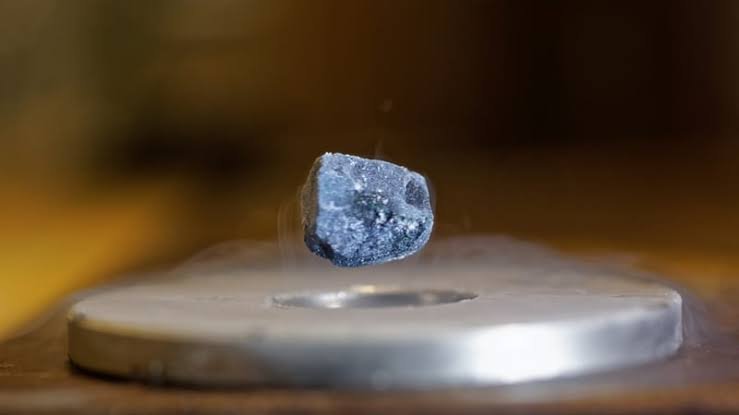
The domain of solid hydrogen is currently experiencing a paradigm shift, moving from the fringes of high-pressure physics to the forefront of a practical, commercial energy revolution. While fundamental research continues to unravel the exotic quantum behavior and material properties of solid hydrogen under extreme conditions, the most dramatic news of 2026 is the successful commercialization of solid-state hydrogen storage technologies. These innovations are overcoming the historical bottlenecks of cost, safety, and efficiency that have long plagued the hydrogen economy, marking a pivotal moment for clean energy.
For decades, the logistical challenge of storing and transporting hydrogen has been a primary obstacle to its widespread adoption. Traditional methods have largely relied on either cryogenic liquefaction at temperatures near absolute zero or high-pressure compression in heavy tanks, both of which are energy-intensive, expensive, and pose significant safety risks. The breakthrough in 2026 centers on solid-state hydrogen storage, a technology that uses materials like metal hydrides to absorb hydrogen atoms into their crystal lattice. This process, akin to a sponge soaking up water, allows hydrogen to be stored at ambient temperature and pressure, fundamentally eliminating the risks of explosion and leakage associated with high-pressure gas or cryogenic liquid. Crucially, this method achieves a volumetric storage density that is two to three times higher than 700-bar compressed hydrogen, meaning a much larger amount of energy can be packed into a smaller space.
The commercial viability of this technology has been proven by several landmark events in 2026. In a historic first for the industry, China successfully exported a large, one-ton capacity solid-state hydrogen storage device via maritime shipping in a fully charged state. The unit, which utilizes domestically developed magnesium-based storage materials, was shipped from Shanghai to Malaysia, demonstrating that this safe, low-pressure technology is ready for international trade. Industry experts highlight that this achievement has “expanded the application scenarios for hydrogen storage and transportation” and has provided a practical template for international cooperation in green technology. This follows a similar regional maritime shipment by Hydrexia, which showcased its proprietary metal hydride container (MHX) in a months-long roadshow across Asia, underscoring the growing confidence in the safety and reliability of this method for cross-border hydrogen trade.
This practical breakthrough is supported by significant theoretical and industrial advancements. Researchers are moving beyond conventional metal alloys to engineer novel materials with unprecedented properties. For instance, a recent study proposed a theoretical “metallic solid-state hydrogen storage crystal” where hydrogen atoms are encapsulated within C20 fullerene cages, effectively using “chemical precompression” to stabilize high-density hydrogen at ambient pressure. Simultaneously, companies like the Australian firm SolidHydrogen have developed a triple-function purification, compression, and storage (PCS) system. This innovation, which received its first commercial orders in 2026, can perform the three most costly steps in the hydrogen supply chain in one unit, cutting costs by up to 90%—a critical economic breakthrough that makes hydrogen competitive with fossil fuels.
The ripple effects of this technology are being felt across multiple sectors, unlocking applications previously deemed impractical. In the mobility sector, the limitations of battery-electric drones, which are often restricted to 20-minute flight times, are being addressed by fuel cell drones powered by solid hydrogen cartridges. A study successfully demonstrated a drone using a Ti-Mn based alloy cartridge that can be recharged in under ten minutes and provides a flight endurance of 42 minutes, far exceeding conventional capabilities. Furthermore, the inherent safety and modularity of solid hydrogen are opening doors to distributed energy storage and portable power, where hydrogen modules can be swapped out like batteries, eliminating the need for expensive, fixed refueling infrastructure. This is further evidenced by a Chinese start-up’s plan for a $70 million factory to mass-produce metal-hydride storage for applications ranging from bicycles to backup power systems.
While the commercial successes are monumental, the fundamental science of solid hydrogen remains a rich and active field. High-pressure research is focusing on the ultimate goal of creating metallic hydrogen, a state predicted to be a room-temperature superconductor. Recent experiments and simulations have mapped the “quantum melting” behavior of dense solid hydrogen at extreme pressures (500-900 GPa), finding its melting temperature is surprisingly independent of pressure and is predicted to be near room temperature at terapascal levels. Other advanced computational studies are finally providing a candidate structure for the long-elusive “broken symmetry phase” of solid hydrogen, a mystery that has persisted for decades. However, the most immediate and impactful news is not about these distant, exotic states, but about the real-world, deployable solid-state solutions that are now making hydrogen a safe, economical, and versatile energy carrier for a global green transition. The convergence of material science, engineering, and commercial investment in 2026 has firmly established solid hydrogen as a key pillar of the future energy landscape.