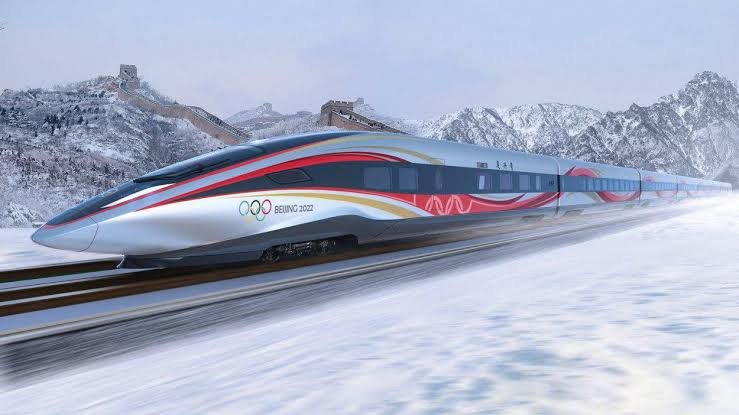
China’s ambitious pursuit of a world-leading high-speed rail network, a project of immense engineering and national pride, has brought with it a staggering financial obligation. The national railway operator, China State Railway Group, has accumulated a debt approaching $1 trillion. This financial burden is the direct result of a breakneck expansion that saw the network triple in size over a decade, reaching 48,000 kilometers by the end of 2024 . The scale is so immense that China effectively built the equivalent of Japan’s entire bullet train network every year for the past ten years .
However, this rapid infrastructure growth has not been matched by passenger numbers, leading to concerns about the economic viability of many lines, with some stations, particularly in less populated regions, remaining largely empty . Despite this, the state-backed operator’s financial narrative is complex, shifting from aggressive expansion towards a strategic focus on debt management and operational efficiency. In 2023, the company reported a modest profit of $460 million, aided by government subsidies, after three years of pandemic-induced losses, and 2025 marked its best year yet with revenues of 1.30 trillion yuan and a record net profit of 43.4 billion yuan . This financial performance is a critical counterpoint to the overwhelming debt figures, suggesting a potential for stabilization.
The heart of the matter lies in the new financial strategy being deployed by the China State Railway Group. Recognizing the colossal interest burden—which exceeds $25 billion annually—the operator is pivoting away from a singular focus on new construction to prioritize debt optimization . A key indicator of this shift is the recent issuance of railway construction bonds, which for the first time are being used primarily for debt restructuring rather than for new infrastructure projects . For instance, in a significant June 2026 bond issuance of 200 billion yuan (approx. $28 billion), the entirety of the newly issued 140 billion yuan bonds was allocated for debt repayment and restructuring, aimed at reducing short-term, high-interest debt and smoothing out future repayment schedules . This is a clear admission of the financial strain and a strategic move to improve the company’s balance sheet, with the ultimate goal of creating a virtuous cycle where interest savings are reinvested into operational improvements, competitive pricing, and upgrades . While previous bond issuances heavily favored building new lines, including for major corridors like the Xiong’an-Shangqiu high-speed railway, the trend is unmistakably moving toward consolidation .
The strategic rationale for this massive, often unprofitable, investment is deeply rooted in the broader national interest. Chinese officials and analysts argue that the value of the high-speed rail network cannot be assessed solely through narrow financial metrics like farebox recovery; its public benefit and comprehensive returns—such as boosting tourism, integrating remote regions, and stimulating local economic development—are paramount . The network is seen as a key driver for economic growth, fostering regional connectivity and contributing to GDP, with some experts viewing the railway debt as essentially a form of government debt that could potentially be written off using future fiscal revenues .
This perspective allows China to continue a long-term vision, with plans to extend the network to 60,000 kilometers by 2030, reflecting a belief that the nation’s future economic vitality is intrinsically linked to this monumental infrastructure . Despite the palpable strain of the $1 trillion debt and the focus on cost-cutting, the state remains committed to the track, viewing the high-speed rail not just as a transportation system, but as a foundational pillar of its economic and geopolitical strategy, a bet on the future that it is unwilling to abandon.