Since the dawn of the Space Age, the power of launch vehicles has been the ultimate measure of a spacefaring nation’s capability. From the mighty Saturn V that carried humans to the Moon, to the Starship designed to colonize Mars, each new thrust record represents a massive leap in engineering. Today, SpaceX’s Starship has surpassed all predecessors to become the most powerful rocket ever launched, with a liftoff thrust nearly double that of the legendary Saturn V.
The Historic Giants: Saturn V and N1
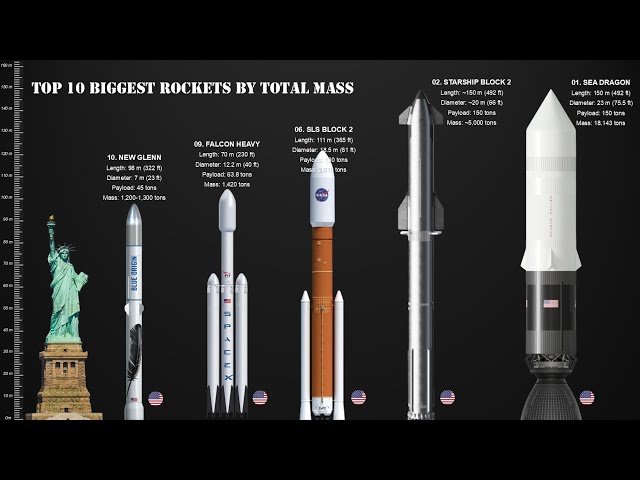
During the Apollo era, NASA’s Saturn V was the undisputed king. Standing 111 meters tall, it generated 7.6 million pounds (about 34.5 meganewtons) of thrust at liftoff, a record that stood for half a century. Its first stage was powered by five F-1 engines, each producing 1.522 million pounds of thrust, together accelerating the rocket to 6,164 mph in just two and a half minutes. Meanwhile, the Soviet Union secretly developed the N1 rocket to compete in the lunar race. Although all four N1 launches failed, its first stage clustered 30 NK-15 engines, generating approximately 10.29 million pounds of thrust—actually briefly exceeding Saturn V in raw thrust output.
The Space Shuttle Era’s Thrust Composition
Unlike traditional expendable rockets, the Space Shuttle’s thrust system consisted of three RS-25 main engines on the orbiter and two massive Solid Rocket Boosters (SRBs) . The RS-25 engines produced 491,000 pounds of thrust each in vacuum and 418,000 pounds at sea level. However, the vast majority of liftoff power came from the two solid boosters, each generating 2.8 million pounds of thrust, together contributing over 5.3 million pounds of initial thrust to help the shuttle overcome Earth’s gravity during the first two minutes of flight.
Transitional Heavyweights: Energia and Falcon Heavy
In the late Cold War era, the Soviet Union developed the Energia heavy-lift rocket. It bundled four boosters using RD-170 engines, each producing a staggering 1.63 million pounds of thrust, with a total liftoff thrust of approximately 35.83 meganewtons (about 8.05 million pounds) . Entering the commercial space era, SpaceX’s Falcon Heavy held the title of “most powerful active rocket” for a time. By clustering three Falcon 9 cores, it used 27 Merlin engines to produce 5 million pounds of liftoff thrust, capable of delivering about 64 tons of payload to orbit.
The Modern Thrust King: NASA SLS and SpaceX Starship
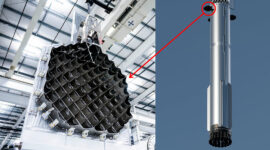
To return to the Moon, NASA developed the Space Launch System (SLS) . Its Block 1 configuration generated 8.8 million pounds (about 39.1 meganewtons) of thrust during its maiden flight, making it the most powerful active rocket in the world at its 2022 launch. However, this record was quickly shattered by SpaceX’s Starship. Standing about 121 meters tall, Starship’s first stage, the Super Heavy booster, is equipped with 33 Raptor 3 engines. Its liftoff thrust reaches an astonishing approximately 16.7 million pounds (about 74 meganewtons) —more than double that of Saturn V and far exceeding SLS and N1. This thrust gives Starship the capability to deliver over 100 tons of payload to low Earth orbit, with a design goal of full reusability that could fundamentally transform the economics of space transportation.
From the roar of Saturn V to the 33-engine salvo of Starship, humanity’s power to push skyward has more than doubled. Behind these numbers lies not just the ultimate challenge of physics and engineering, but humanity’s determined stride beyond the cradle of Earth toward the deep cosmos.