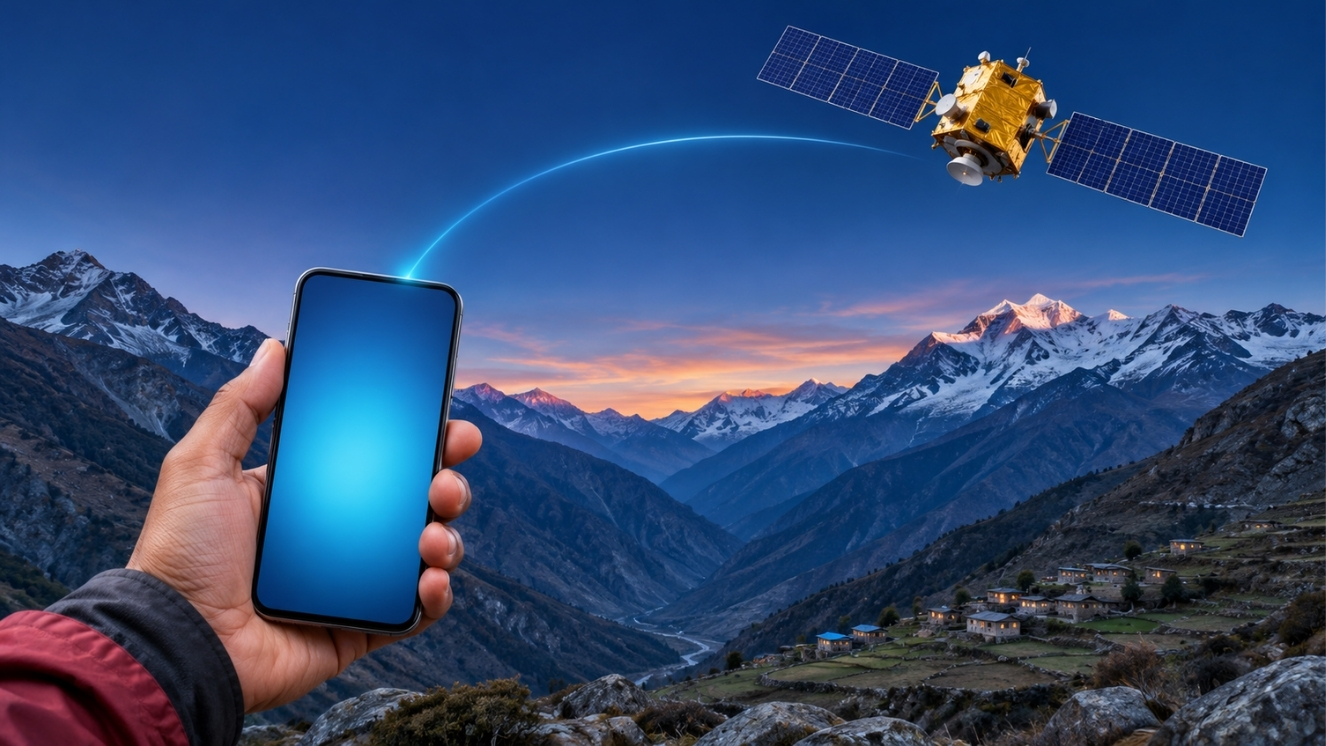
The dream of a world without network dead zones is rapidly moving from science fiction to engineering reality. For decades, mobile connectivity has been tethered to terrestrial infrastructure—cell towers, fiber-optic cables, and ground-based exchanges. This dependency has left vast swaths of the planet, from remote mountain ranges and deep rural villages to stretches of open ocean and areas struck by natural disasters, completely cut off from the digital world. However, a new era of satellite technology is emerging, one that promises to eliminate these connectivity gaps by allowing everyday smartphones to communicate directly with satellites orbiting overhead. This technology, known as Direct-to-Device (D2D) satellite communication, represents a fundamental shift in how we think about mobile networks, moving the cell tower from the ground to the sky.
The core innovation behind this revolution is the ability to bridge the immense technical gap between a low-power smartphone and a satellite hundreds of kilometers away. Traditional satellite phones are bulky, require large external antennas, and offer slow data rates. A standard smartphone, by contrast, has a tiny, omnidirectional antenna designed to connect to a cell tower that is typically no more than a few kilometers away. The signal from a phone is relatively weak, and the challenge has always been for a satellite in space to detect it. The solution lies in a combination of new satellite constellations in Low Earth Orbit (LEO) and sophisticated software-defined radio technology. LEO satellites, orbiting at altitudes between 300 and 2,000 kilometers, offer significantly lower latency and a much stronger signal path than their geostationary counterparts, which sit 35,786 kilometers away. Companies like SpaceX with its Starlink network, AST SpaceMobile, and Lynk Global are launching thousands of these LEO satellites, creating a mesh network that can blanket the Earth. These satellites are equipped with massive, unfoldable phased-array antennas—some the size of a tennis court—that act as giant, sensitive ears in the sky, capable of picking up the faint signals from a standard mobile phone.
The implications of this technology are profound and far-reaching. The most immediate and impactful benefit will be the eradication of “dead zones” for mobile users in remote and rural areas. Imagine a farmer in a remote field, a hiker in a national park, or a fisherman far out at sea being able to send a text, make a call, or access the internet with the same phone in their pocket. This goes beyond convenience; it is a matter of safety and economic inclusion. For the first time, universal coverage becomes a technically and economically viable goal. Furthermore, D2D technology provides a critical lifeline during natural disasters. When hurricanes, earthquakes, or wildfires destroy terrestrial cell towers, satellite connectivity can restore communication for emergency services and affected populations, a capability that can save lives. This resilience is a cornerstone of the technology’s value proposition.
From a commercial perspective, this innovation is poised to disrupt the telecommunications industry. Mobile network operators (MNOs) are not being sidelined; instead, they are becoming key partners. The emerging business model is one of collaboration, where satellite providers like Starlink or AST SpaceMobile partner with terrestrial carriers like T-Mobile, Vodafone, or AT&T. This allows the MNOs to extend their coverage without the colossal expense of building and maintaining towers in unprofitable areas. For the satellite companies, it provides immediate access to a global customer base and simplifies the regulatory landscape. The initial services will focus on text messaging and basic voice calls, with data speeds gradually increasing as the technology matures. The ultimate goal is to provide seamless, ubiquitous high-speed internet, though this will take time and significant investment. This partnership model allows for a smoother integration, where a user’s phone will automatically switch from a ground-based tower to a satellite when it moves out of terrestrial coverage, creating a truly seamless experience.
Despite the immense promise, the path to a fully connected planet is not without significant hurdles. A primary challenge is the need for a massive constellation of satellites to provide adequate coverage and capacity. Thousands of satellites are required to ensure that one is always in view, and even then, capacity per cell will be limited. The first generations of this technology will likely struggle to support high-bandwidth activities like video streaming for many users simultaneously. Regulatory approvals are another complex and time-consuming obstacle. Each country has its own rules for spectrum allocation and telecommunications licensing, and satellite providers must navigate a labyrinth of national and international regulations to operate legally. Concerns about space debris and the crowding of low Earth orbit are also growing, as the launch of tens of thousands of new satellites raises questions about long-term sustainability and the risk of collisions. Finally, the cost of the user terminals, the satellites themselves, and the launches is astronomical, requiring billions of dollars in investment before the service can become mainstream and affordable.
Looking ahead, the trajectory is clear. Satellite-to-smartphone connectivity is not a question of “if” but “when.” The technology is already being tested in pilot programs worldwide, with early services beginning to roll out. In the coming decade, we can expect this capability to evolve from an emergency-only feature to a standard part of mobile service plans, much like roaming. This will pave the way for a new generation of connected devices, from IoT sensors in remote locations to autonomous vehicles that can operate anywhere on Earth. The ultimate vision is a converged network where terrestrial and satellite systems work in perfect harmony, ensuring that no matter where you are—on a city street, a remote mountain trail, or the middle of the ocean—you remain connected. This journey will fundamentally redefine our relationship with communication, making the world a smaller, safer, and more interconnected place for everyone.