30 Sep, 2026
SpaceX’s Starship reached orbit for the first time on Thursday, marking a watershed moment in the company’s effort to build a fully reusable, super-heavy-lift rocket system capable of carrying people and cargo to the Moon, Mars, and beyond. The flight, which launched from SpaceX’s Starbase facility in Boca Chica, Texas, achieved the primary objective of inserting the upper stage into a stable orbital trajectory—a first for the Starship program after several high-profile test flights that ended in explosions, controlled descents, or suborbital hops. While the mission did not complete every secondary goal, the orbital insertion itself represents the most significant technical milestone since SpaceX began flying Starship prototypes in 2019.
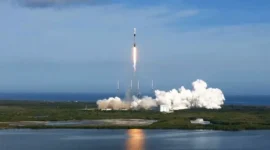
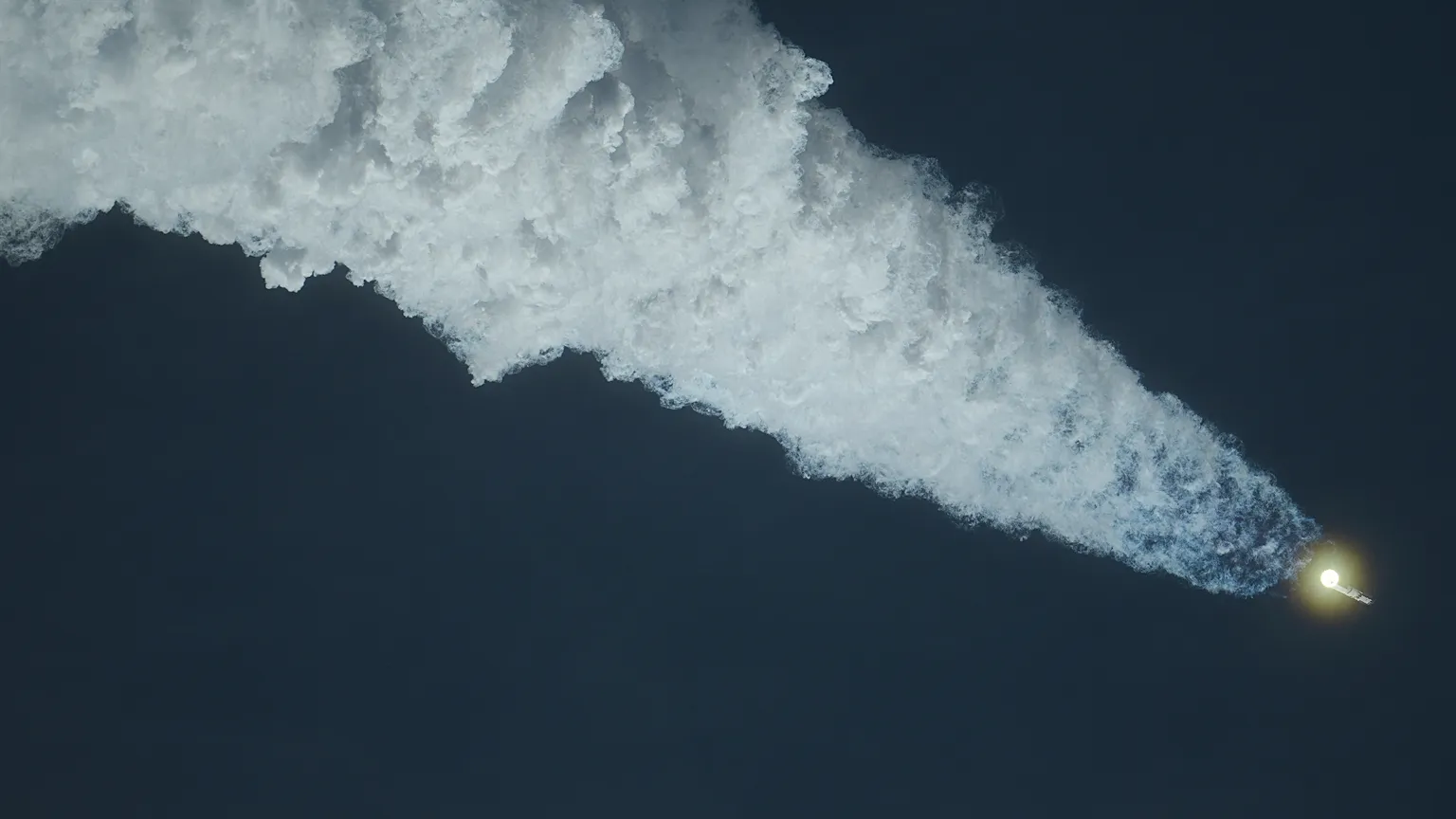
The launch occurred at 7:50 a.m. Central Time, following a smooth countdown that avoided the scrubs and weather delays that have plagued some previous attempts. All 33 Raptor engines on the Super Heavy booster ignited successfully, producing more than 16 million pounds of thrust and lifting the roughly 400-foot-tall vehicle off the pad. The ascent proceeded nominally through max dynamic pressure, or “Max Q,” and the booster continued firing until the planned hot-staging separation. Unlike earlier flights where the booster broke apart or the upper stage failed to ignite, this mission saw the Super Heavy booster separate cleanly and the Starship upper stage’s six Raptor engines light as intended. The booster then began its return sequence, while the upper stage continued toward orbit.
The Starship upper stage successfully reached orbital velocity, meaning it achieved the speed and altitude necessary to remain in space rather than falling back to Earth on a ballistic trajectory. This is the key distinction between the previous “suborbital” flights and a true orbital mission. SpaceX confirmed that the vehicle completed a full duration burn of its engines and entered a planned coast phase. The company did not attempt a deorbit burn or a controlled reentry on this flight; instead, the upper stage was intentionally placed on a trajectory that would eventually bring it down over a remote ocean area, far from populated regions. This decision reflects SpaceX’s incremental approach: prove orbital insertion first, then test reentry and landing on subsequent flights.
The Super Heavy booster’s fate was less clear in the immediate aftermath. SpaceX had hoped to guide the booster back to a soft splashdown in the Gulf of Mexico, and possibly attempt a catch with the launch tower’s “chopstick” arms on a future flight. On this mission, the booster appeared to execute a controlled descent and splashdown, though SpaceX did not immediately confirm whether it remained intact until touchdown. The company has emphasized that booster recovery is a parallel goal and that orbital insertion was the top priority. Even if the booster was lost, the flight would still be considered a success because the upper stage reached orbit.
Several important technical firsts were achieved. For the first time, Starship flew with an updated payload bay door design intended to deploy satellites in future missions. The flight also tested new heat shield tiles and improved avionics, though reentry was not part of the profile. SpaceX founder Elon Musk had said before the flight that “orbital insertion is the hardest part” and that reaching orbit would validate the vehicle’s structural integrity, propulsion, and flight software. The successful insertion suggests that the combined Super Heavy and Starship stack can survive the extreme loads of launch and stage separation—a problem that doomed the first integrated flight in April 2023, when the vehicle tumbled and exploded.
The mission did not include a payload of operational satellites. Instead, Starship carried a mass simulator to mimic the weight of future cargo. This is standard practice for early test flights. SpaceX also did not attempt to relight the upper stage’s engines in space, a capability needed for deorbit burns and orbital maneuvers. That test is expected on a later flight. Similarly, the reusable heat shield was not subjected to reentry heating on this mission, so its performance remains unproven. SpaceX plans to fly increasingly ambitious profiles, including a full orbital flight with a deorbit burn, a controlled reentry, and a vertical landing of both stages.
Regulatory and political context matters. The Federal Aviation Administration (FAA) granted SpaceX a launch license for this flight after a lengthy environmental review and a series of corrective actions following previous mishaps. The FAA required SpaceX to implement 63 corrective actions after the first integrated flight, including redesigns of the launch pad and the autonomous flight safety system. The successful orbital insertion is likely to accelerate the FAA’s approval process for future flights, though each mission still requires a license modification. NASA is watching closely: Starship is the human landing system for the Artemis III Moon mission, and a successful orbital flight keeps that timeline—already delayed to at least 2026—from slipping further.
What comes next? SpaceX has said it wants to fly Starship again within weeks, not months, leveraging the rapid iterative design philosophy that has characterized its Falcon 9 program. The next flight could attempt a booster catch, a ship reentry, and a payload deployment. Musk has also suggested that orbital refueling—a prerequisite for sending Starship to the Moon or Mars—will be tested within the next year. That involves launching a tanker Starship to rendezvous with a crewed or cargo Starship in low Earth orbit, transferring cryogenic propellant, and then sending the second vehicle onward. No one has ever demonstrated orbital propellant transfer at this scale, and it remains one of the biggest technical risks for NASA’s Artemis plans.
Critics note that reaching orbit is not the same as operational reusability. SpaceX has promised that Starship will eventually fly hundreds of times per year at a cost of a few million dollars per launch. That goal remains far off. The vehicle has not yet survived reentry, landed intact, or been refurbished and reflown. Each of those steps requires years of testing. The orbital flight is a necessary but not sufficient condition for Starship to become the transformative transportation system Musk envisions. Still, for a program that many outside observers had written off after repeated explosions, reaching orbit is a dramatic vindication of SpaceX’s hardware-rich, fail-fast approach.
In summary, the key points are: SpaceX’s Starship reached orbit for the first time, achieving orbital insertion after stage separation and a full upper-stage burn. The Super Heavy booster executed a controlled descent, though its final condition was not immediately confirmed. The flight did not include reentry, landing, or payload deployment, but it validated the integrated vehicle’s ascent and staging. The success keeps NASA’s Artemis Moon landing hopes alive and sets the stage for booster recovery, orbital refueling, and eventually crewed missions to the Moon and Mars. It is a milestone, not a finish line.