
March 30, 2026
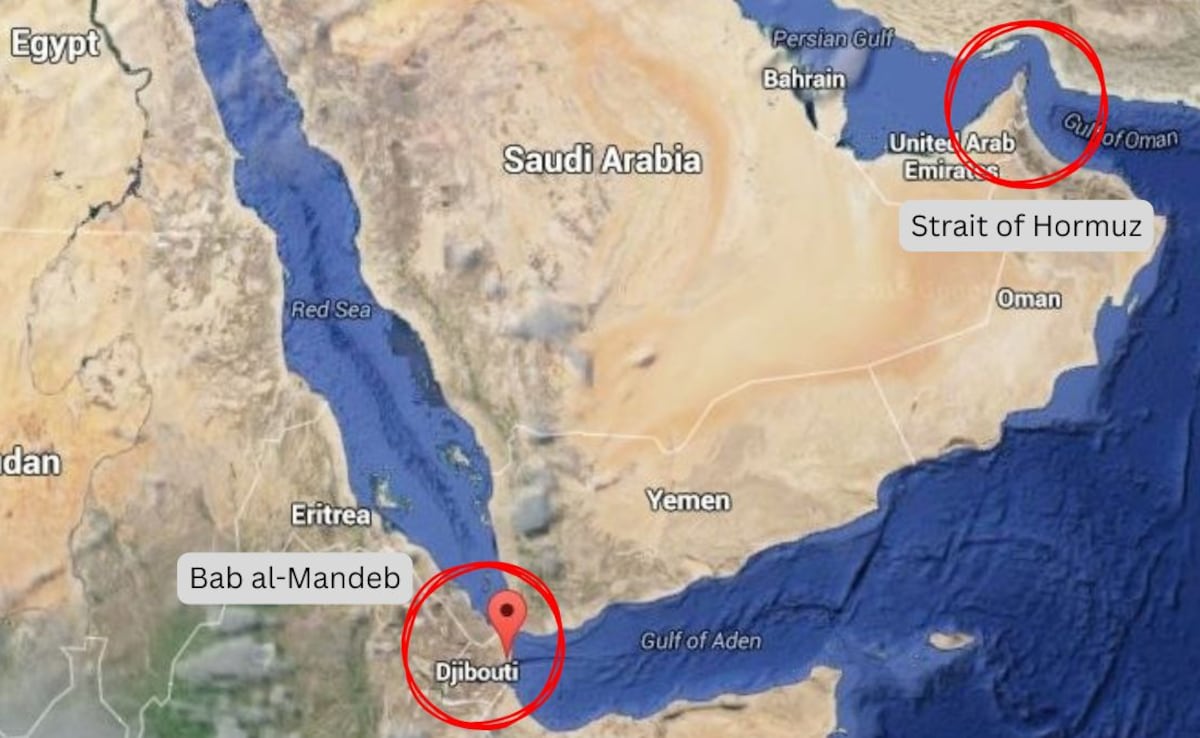
The global geopolitical landscape has reached a perilous tipping point today, March 30, 2026, as the month-long conflict between Iran, Israel, and the United States threatens to paralyze the world’s most vital maritime arteries. While the Strait of Hormuz remains effectively closed to “hostile” traffic, international attention has shifted south toward the Bab el-Mandeb Strait, the narrow “Gate of Tears” connecting the Red Sea to the Gulf of Aden. Military signals from Tehran and renewed activity by Yemen-based Houthi rebels suggest a coordinated effort to establish a “dual chokepoint” strategy, potentially cutting off the Suez Canal route and forcing the entirety of East-West trade to detour around the Cape of Good Hope. The risk of a total maritime blockade is no longer a theoretical exercise but a looming economic reality, according to analysts monitoring the region.
The Bab el-Mandeb Strait is of paramount importance because it serves as the southern gateway for approximately 12% of total global trade and nearly 10 million barrels of oil per day. For nations like India and those in the European Union, this 32-kilometer-wide passage is the primary link for energy, fertilizers, and consumer goods. In the last 24 hours, the Houthis have declared their intention to “join the fight” in solidarity with Iran, raising fears of a return to the high-intensity missile and drone strikes against commercial tankers seen in previous years. “Our fingers are on the trigger,” stated a Houthi military spokesperson, warning that any U.S. or Israeli naval movement in the Red Sea would be met with a “surprise” response. This threat is particularly potent as Saudi Arabia had recently shifted its oil exports westward to the Red Sea port of Yanbu to bypass the closed Strait of Hormuz; a closure at Bab el-Mandeb would effectively trap these shipments.
On the kinetic front, the Iran-Israel war has entered a new and more destructive phase. Overnight reports from Tehran confirm that Israeli missiles struck the building housing the Al Araby TV channel, causing extensive damage and wounding several staff members. Simultaneously, the Israel Defense Forces (IDF) have intensified their air campaign, targeting missile production facilities and military infrastructure across the Iranian capital. In a significant escalation of regional spillover, an Iranian strike on a power station in Kuwait today resulted in the death of an Indian worker, marking a tragic milestone for the expatriate community in the Gulf. “The private residences of U.S. and Israeli officials have now become legitimate targets,” Iran’s joint military command declared, signaling a shift toward asymmetrical and personal targeting as their conventional missile stockpiles are reportedly depleted by nearly two-thirds.
The economic fallout of these simultaneous crises is being felt instantly across Asian and European markets. On Monday morning, Japan’s Nikkei 225 plummeted by nearly 5%, while Brent crude prices soared toward $116 per barrel, a staggering rise from the pre-war stability of $70. Global shipping giants such as Maersk and CMA CGM have once again suspended transits through the Red Sea, citing the “unacceptable risk” posed by the new Houthi threats. This forced rerouting around Africa adds roughly 10 to 14 days to journey times and has triggered a 300% surge in maritime insurance premiums. “We are witnessing the most significant disruption to freedom of navigation in the modern era,” a senior maritime security analyst remarked, noting that the cost of these delays will soon manifest as global inflationary pressure on food and fuel.
Amidst the violence, a glimmer of diplomatic maneuvering has emerged. U.S. President Donald Trump, traveling aboard Air Force One, claimed that “regime change” has effectively occurred in Iran due to the elimination of key military leaders and that the new leadership appears “much more reasonable.” Pakistan is currently positioning itself as a primary mediator, preparing to host “meaningful talks” in Islamabad between representatives from Washington and Tehran. However, the situation remains extremely volatile; while Iran has agreed to allow limited humanitarian and agricultural shipments through the Strait of Hormuz under UN pressure, they have simultaneously warned that they will “unleash hell” if a formal deal is not reached on their terms. For now, the world remains in a state of high alert, watching the “Gate of Tears” to see if the flow of global commerce will be severed entirely.