March 27, 2026
The Middle East conflict has entered a new and more dangerous phase, driven by Iran’s deployment of its advanced Sejjil ballistic missile, known as the “Dancing Missile,” in a significant escalation against Israeli and U.S. forces. In the early hours of the day, Iran launched its 83rd wave of missile and drone strikes under the banner of “Operation True Promise 4,” targeting what it described as key U.S. and Israeli military assets across the region, including facilities in Saudi Arabia, Bahrain, and the occupied territories . This operation follows a pattern of sustained retaliatory actions that began after the death of Iran’s Supreme Leader, Ayatollah Ali Khamenei, on February 28, which triggered the current all-out war . The Iranian Islamic Revolutionary Guards Corps (IRGC) dedicated this latest wave to the people of various nations, with missiles reportedly bearing messages like “thank you” written in English, addressed to the citizens of countries including India, Pakistan, Spain, and Germany, adding a unique psychological dimension to the military operations.
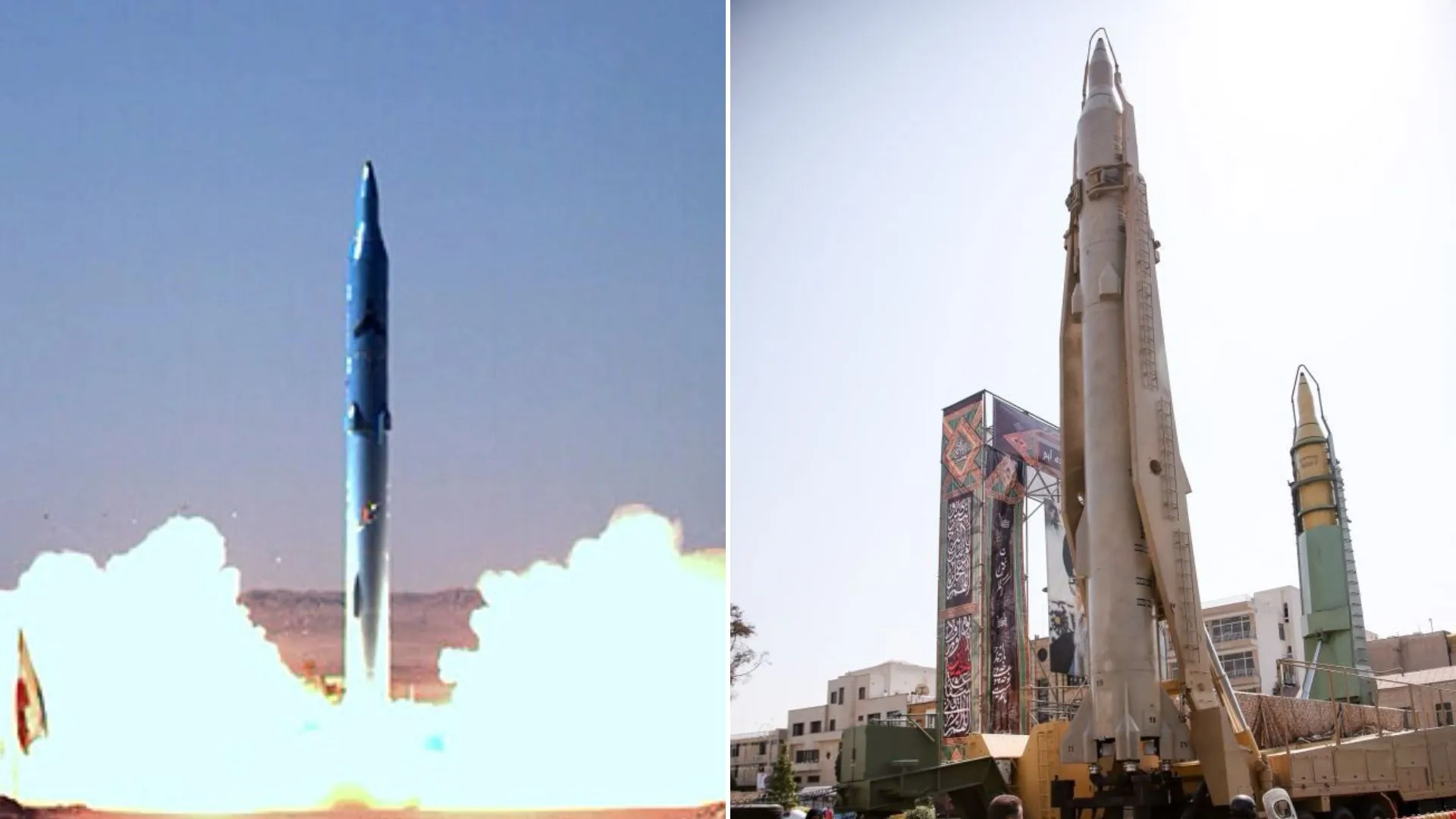
The focal point of Iran’s new military strategy is the Sejjil missile, a domestically developed, two-stage, solid-fuel medium-range ballistic missile (MRBM) that has earned the nickname “Dancing Missile” due to its unique flight capabilities . Unlike traditional missiles that follow a predictable ballistic trajectory, the Sejjil is designed to change direction while in the upper layers of the atmosphere, making it exceptionally difficult, if not impossible, for advanced defense systems like Israel’s Iron Dome or the U.S. Patriot batteries to intercept . Officially, the missile has an estimated range of approximately 2,000 kilometers, a payload capacity of up to 700 kilograms, and can be launched rapidly from mobile road-transporters thanks to its solid-fuel technology, which eliminates the lengthy fueling process required for liquid-fuel missiles . According to data from the Center for Strategic and International Studies (CSIS), the Sejjil is a massive weapon, measuring about 18 meters in length and 1.25 meters in diameter, with a total weight of around 23,600 kilograms . Its first test was conducted in 2008, and after several flight tests, it was eventually deployed, with its use in this conflict marking its first combat application against Israel and the U.S. .
However, the true extent of the threat became clear in the days leading up to March 27, when intelligence and missile trajectory analyses revealed that Iran’s reach may be far greater than previously believed. A landmark event occurred on March 21, when Iran launched two ballistic missiles targeting the U.S.-UK military airbase on Diego Garcia, a remote atoll in the Indian Ocean located 3,800 kilometers from Iran’s mainland . While one missile reportedly fell into the sea and another was intercepted by a U.S. warship using SM-3 interceptors, the launch itself demonstrated a potential strike range of up to 4,000 kilometers . This capability, if confirmed, would place major European capitals such as Paris, Berlin, and London within range of future Iranian missiles, fundamentally altering the strategic calculus for NATO and the European Union . European security analysts noted that while the accuracy of such long-range strikes remains questionable compared to Western systems, the political and psychological impact is immense, turning European infrastructure, such as the U.S. air base at Ramstein in Germany, into potential targets .
The geopolitical shockwaves of these developments are being felt globally, with the Indian Ocean region now a critical focus. The strike toward Diego Garcia, a key logistics hub for the U.S. and U.K., raised alarms in Washington and in New Delhi, as it demonstrated Iran’s ability to project power into waters close to India . U.S. officials, including General Stephen Whiting of U.S. Space Command, warned that Iran’s ballistic missile and space programs are closely linked, suggesting that the technology used to launch satellites could easily be adapted for intercontinental ballistic missiles . Concurrently, the conflict on the ground has been devastating. The Pentagon reported that since the war began, over 15,000 targets in Iran have been struck by U.S. and Israeli forces, while more than 2,000 people have been killed, the majority of whom are Iranians . In response, the U.S. has reinforced its military presence in the region, deploying the USS Tripoli amphibious assault ship and 2,500 Marines to monitor the situation, while also reportedly considering complex operations to pressure Iran’s oil infrastructure, such as the strategic Kharg Island, which handles approximately 90% of Iran’s oil exports . As Iran continues to unveil its “Dancing Missile” and extend its range, the conflict stands at a precipice, with the potential to draw in regional and global powers into a wider, more catastrophic war.