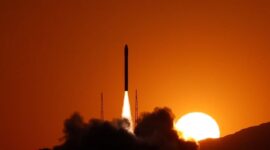
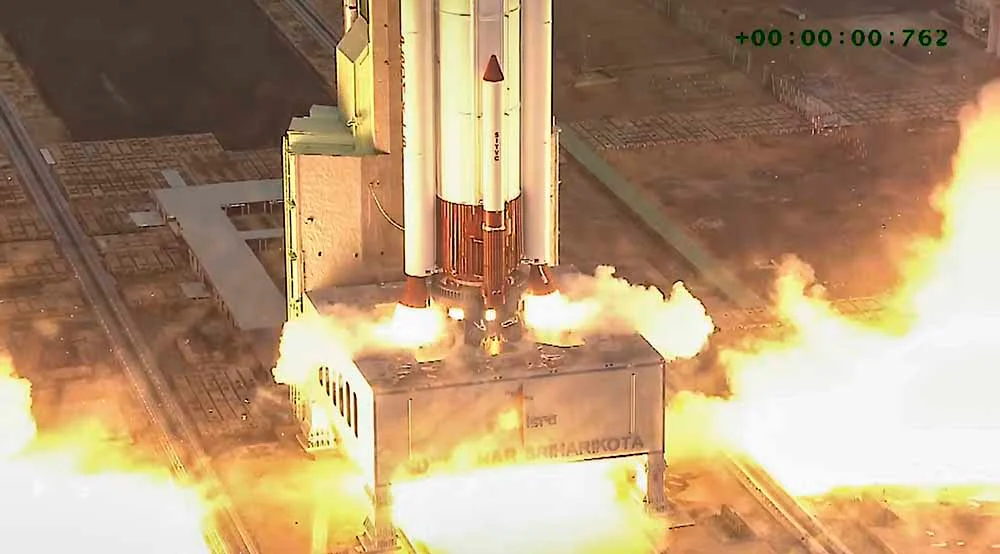
On January 12, 2026, the Indian Space Research Organisation (ISRO) faced a sobering start to the new year when its “workhorse” rocket, the Polar Satellite Launch Vehicle (PSLV-C62), suffered a catastrophic failure. The mission, which carried sixteen satellites including the high-stakes EOS-N1 surveillance satellite for the DRDO, launched at 10:17 AM IST from the Satish Dhawan Space Centre. For the first several minutes, the ascent appeared nominal; the first and second stages performed their roles flawlessly, pushing the vehicle through the thickest parts of the atmosphere. However, during the burn of the solid-fuel third stage (PS3), mission control observed a sudden and severe disturbance in the vehicle’s roll rates. This instability caused the rocket to deviate sharply from its intended flight path, a deviation that proved fatal for the mission’s objectives as the vehicle was unable to maintain the precise orientation required for the subsequent orbital insertion phase.
The technical breakdown of the PSLV-C62 mission points to a recurring and deeply troubling flaw within the PS3 stage, which is responsible for providing the final massive surge of velocity needed to achieve orbit. Unlike liquid-fueled stages, solid motors like the PS3 cannot be throttled or restarted; once ignited, they must perform exactly as designed. Telemetry data from C62 revealed a drop in chamber pressure and uncontrolled spinning, mirroring the failure of the PSLV-C61 mission just eight months prior in May 2025. This “back-to-back” failure is unprecedented in the PSLV’s thirty-year history, where it had previously maintained a success rate of over 94%. Experts suggest that these twin disasters indicate a systemic quality control issue in the manufacturing or casting of the solid propellant, rather than a fundamental design flaw, suggesting that the “workhorse” may be suffering from institutional fatigue or lapses in the rigorous assembly line standards that once made it a global leader.
The consequences of this failure extend far beyond technical data points, representing a massive financial and strategic blow to India’s space ecosystem. The primary payload, EOS-N1 (also known as Anvesha), was a sophisticated hyperspectral imaging satellite designed to provide the Indian military with advanced surveillance capabilities, such as unmasking camouflaged targets from 500 km above. Its loss leaves a significant gap in national security infrastructure at a time of heightened regional tensions. Furthermore, the mission carried fifteen other payloads from a diverse array of partners, including startups like OrbitAID, which lost its AayulSAT refuelling demonstrator, and international clients from Spain, Thailand, Brazil, and Nepal. While a small Spanish re-entry capsule named “KID” managed to transmit three minutes of data against all odds before plummeting, the remaining satellites were incinerated upon re-entry over the Southern Indian Ocean, resulting in losses estimated between $200 million and $250 million.
Looking forward, ISRO faces an uphill battle to restore its reputation as a reliable and cost-effective launch provider for the global SmallSat market. The PSLV has long been the primary revenue generator for NewSpace India Limited (NSIL), but the clustering of failures has already led to predictions that insurance premiums for future Indian launches will jump by 20–30%, effectively neutralizing the competitive price advantage ISRO once held over providers like SpaceX. The agency has formed a new Failure Analysis Committee (FAC) to investigate the C62 anomaly, but there is mounting pressure from the scientific community for greater transparency. Critics argue that the decision to rush the C62 launch while the previous C61 investigation report remained shielded from public view was a grave error. For ISRO to regain its footing, it must now balance its ambitious 2026 schedule—which includes the Gaganyaan human spaceflight trials—with a slow, transparent, and meticulous overhaul of the PSLV production line to ensure this “workhorse” can run again.