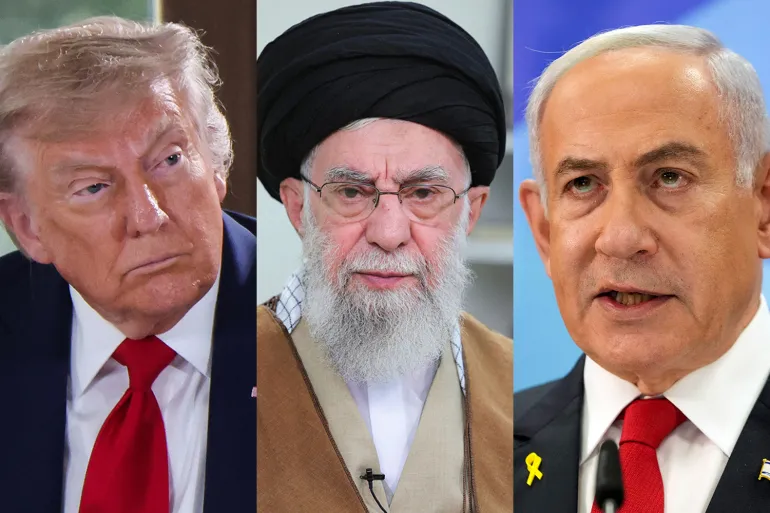
The question of whether the world stands on the brink of a third global conflict has moved from the realm of theoretical debate to a pressing geopolitical reality. As of early March 2026, a convergence of major power rivalries, escalating military actions, and a fraying international order has led world leaders, analysts, and the general public to confront a security landscape more volatile than at any point since the Cold War. While a full-scale, planet-wide war involving all major powers is not a foregone conclusion, the likelihood has increased dramatically due to two primary, interlocking crises: the ongoing war in Ukraine and a dramatic new conflagration in the Middle East involving a direct military strike on Iran by the United States and Israel.
The most immediate flashpoint is the Middle East, which has been plunged into a new and dangerous phase of open confrontation. On February 28, 2026, the United States and Israel launched joint military strikes against Iran in an operation that reportedly killed Iranian Supreme Leader Ayatollah Ali Khamenei and several of his family members. This “watershed moment,” as described by analysts, represents a fundamental shift from years of shadow warfare, managed through proxies and calibrated escalation, to direct and overt military engagement between the powers. In response, Iran launched a massive counterattack, firing over 165 ballistic missiles, two cruise missiles, and 541 drones at U.S. military infrastructure and Israeli targets across the Gulf region. The escalation has already had tangible consequences, such as the striking of an oil tanker off the coast of Oman, which led to the evacuation of 20 crew members, including 15 Indians, highlighting the immediate threat to civilian life and global shipping lanes.
The international reaction to this escalation has been swift and deeply divided, underscoring the polarized state of global politics. United Nations Secretary-General António Guterres issued a grave warning, stating that the military action carries “the risk of igniting a chain of events that no one can control in the most volatile region of the world” and calling for an immediate return to diplomacy. He urged all sides to “pull the region, and our world, back from the brink”. At an emergency UN Security Council meeting, Russia’s representative condemned the U.S.-Israeli strikes as “another unprovoked act of armed aggression,” while Iran accused the two nations of committing “war crimes and crimes against humanity”. Conversely, Israel and the U.S. defended their actions as necessary and pre-emptive, with Israel’s UN ambassador stating they acted to confront “an existential threat before it became irreversible”. The U.S. reiterated its stance that “the Iranian regime can never, ever threaten the world with a nuclear weapon”. This division within the Security Council has left the UN without a clear path to de-escalation, effectively paralyzing collective international action.
The crisis in the Middle East is unfolding against the backdrop of a prolonged and grueling war in Europe. The Russian invasion of Ukraine, now in its fourth year, shows no signs of abating, and its rhetoric continues to raise the stakes globally. Ukrainian President Volodymyr Zelenskyy has explicitly stated, “Putin has already started the Third World War,” arguing that a Russian victory in Ukraine would be a catastrophe for the entire world. This warning came after Russian President Vladimir Putin declared the development of Russia’s “nuclear triad”—a strategy to enhance deterrence by dispersing nuclear capabilities across land, sea, and air—an “absolute priority” for ensuring the country’s security and maintaining the global balance of power. With peace negotiations deadlocked over Russia’s demand for Ukrainian territory and Ukraine’s refusal to compromise its sovereignty, the conflict remains a constant, festering source of tension between Russia and the NATO alliance, with the constant, low-level risk of a direct confrontation that could spiral into a wider war.
This atmosphere of intensifying global danger is being keenly felt by ordinary citizens. A recent and extensive poll conducted by POLITICO across five major Western nations—the U.S., Canada, the U.K., France, and Germany—reveals a public bracing for a much more conflict-ridden future. The survey found that a vast majority of respondents believe the world is becoming more dangerous. Crucially, in the U.S., U.K., France, and Canada, more than 40% of those polled believe the outbreak of World War III is “likely” or “very likely” within the next five years, a significant increase in pessimism from just a year prior. This fear extends to the ultimate taboo, with at least one in three people in the U.S., U.K., France, and Canada believing a nuclear weapon is likely to be used in a war in the next five years.
Perhaps the most alarming finding of the POLITICO poll is the perception of threat among close allies. While Russia is still viewed as the primary threat to peace in Europe, a striking shift has occurred in public opinion regarding the United States. In France, Germany, and the U.K., the second-biggest threat to security is now seen to be the U.S., cited far more often than China. This perception is even more stark in Canada, where respondents view Trump’s America as the greatest danger to their national security. This data points to a profound crisis of confidence in transatlantic alliances and the reliability of long-standing security partnerships.
Experts point to a confluence of factors driving the world toward this precipice. A Turkish political analyst argues that conflict is becoming a tool to maintain the stability of the global financial system, which is “dependent on debt” and requires crises to function. This perspective suggests that wars are no longer exceptions but have become a structural pattern in international relations. Adding to this are trends such as the relative decline of U.S. hegemony, the militarization of the Asia-Pacific region, and what some analysts see as a European need for “war legitimation”. Furthermore, the erosion of international law and multilateral cooperation is creating a vacuum where force becomes the primary arbiter of disputes. As one analyst noted, the U.S. military action in Venezuela in early 2025, which led to the capture of its president, signaled that “naked force is becoming dominant”. The current escalation in the Middle East is a continuation of this trend, further entrenching divisions and reducing incentives for compromise.
The consequences of this new era of instability extend far beyond the battlefield. The global economy, already fragile, is under severe strain. Global military expenditure, which reached approximately $2.7 trillion in 2024, is projected to rise even higher in 2026 as nations prioritize securitization over social development and climate resilience. The energy market is particularly vulnerable. The Gulf region remains the backbone of global energy supply, and the conflict involving Iran has raised immediate concerns over the security of the Strait of Hormuz, through which a significant portion of the world’s oil and liquefied natural gas passes. Even the perception of a threat to this waterway causes immediate price volatility, increased insurance costs, and fears of supply chain interruptions. This economic strain exacerbates inequality, fuels inflation, and diverts resources away from critical long-term challenges like climate change adaptation.
In conclusion, while a formal declaration of World War III has not been made, the conditions that define a pre-war global landscape are increasingly present. The world is witnessing the violent intersection of two major conflicts—one in Europe and one in the Middle East—involving the world’s most powerful nations. International institutions designed to prevent such crises are gridlocked, and public faith in alliances is crumbling. The direct military strike on a sovereign state like Iran by the U.S. and Israel, coupled with the ongoing war in Ukraine and heightened nuclear rhetoric, has fundamentally altered the risk calculus. As UN Secretary-General Guterres implored the Security Council, the only responsible course of action is to “act – responsibly and together – to pull the region, and our world, back from the brink”. Whether global leaders can rediscover the path of diplomacy and mutual restraint in time to prevent a wider catastrophe remains the most urgent and uncertain question of our time.