
May 2, 2026
The elusive dream of the medieval alchemists—the transmutation of base metals into precious gold—has finally transitioned from the realm of myth into the hard reality of 21st-century particle physics. Researchers at the European Organization for Nuclear Research (CERN), utilizing the immense power of the Large Hadron Collider (LHC), have successfully demonstrated a systematic method for turning lead into gold. While the ancient pursuit of “chrysopoeia” was rooted in mysticism and chemical manipulation, this modern breakthrough relies on the violent and precise world of nuclear transmutation. By manipulating the very core of the atom, scientists have achieved what was once deemed impossible, effectively rewriting the elemental identity of matter through high-energy electromagnetic dissociation.
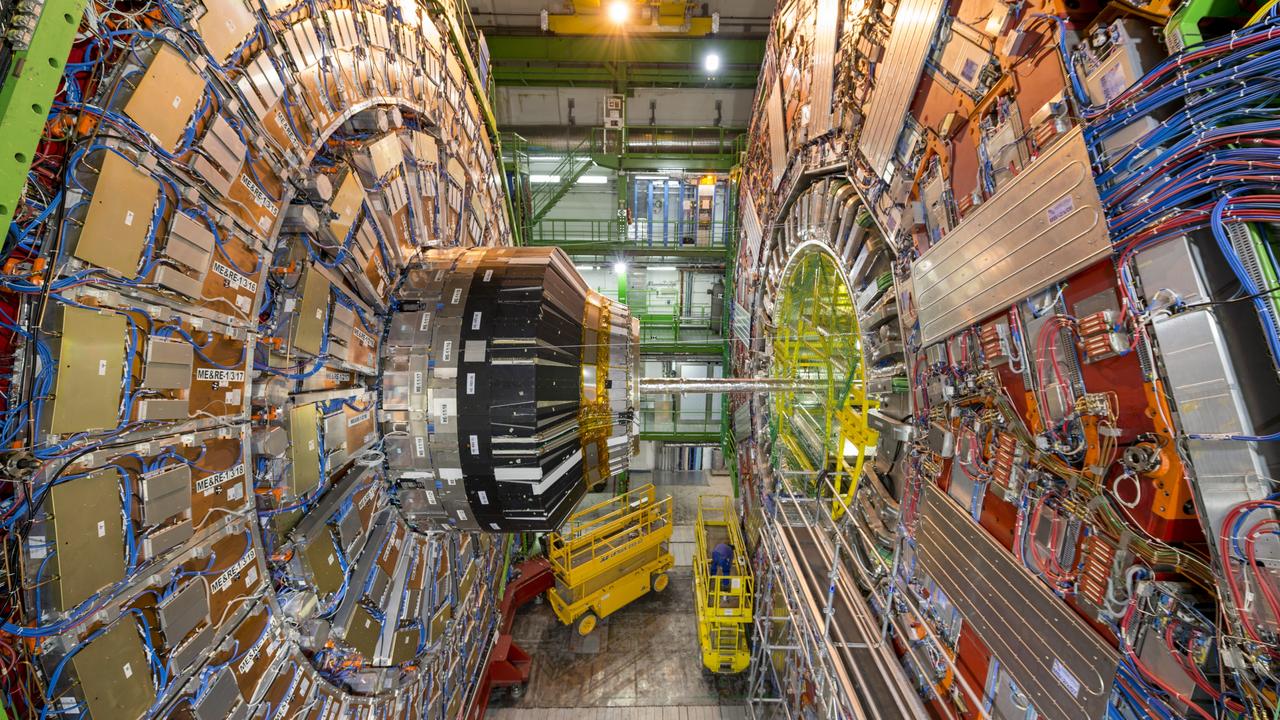
At the heart of this discovery is the ALICE experiment, a specialized detector designed to study the unique states of matter that existed shortly after the Big Bang. The process involves accelerating lead nuclei—which contain 82 protons—to speeds exceeding 99.99% of the speed of light. As these heavy ions race around the 27-kilometer underground ring, they generate incredibly powerful electromagnetic fields. These fields are so intense that when two lead nuclei experience a “near-miss” or ultra-peripheral collision, they do not physically crash into one another. Instead, the intense pulse of photons (particles of light) emanating from one nucleus “shakes” the other, causing it to eject exactly three protons. Because an element’s identity is defined solely by its proton count, the loss of three protons transforms the lead atom (82) into a gold atom (79).
“It is impressive to see that our detectors can handle head-on collisions producing thousands of particles, while also being sensitive to collisions where only a few particles are produced at a time, enabling the study of electromagnetic ‘nuclear transmutation’ processes,” stated Marco Van Leeuwen, a lead spokesperson for the ALICE collaboration. This level of sensitivity is what allowed the team to isolate the specific signature of gold production amidst the chaotic environment of the world’s largest particle accelerator.
Despite the monumental nature of the achievement, the “gold rush” is currently confined to the subatomic scale. The researchers reported that the LHC produced gold at a rate of approximately 89,000 nuclei per second. However, because these gold atoms are moving at near-light speeds and are highly energized, they are extremely unstable and exist for only a fraction of a second. Upon impact with the internal surfaces of the collider or the Zero Degree Calorimeters (ZDC), they immediately fragment into constituent particles. Over several years of data collection, the total mass of gold synthesized amounted to a mere 29 trillionths of a gram—a quantity so small it is roughly one trillionth the mass of a single human hair.
The significance of the experiment lies not in the commercial production of wealth, but in the validation of theoretical models regarding particle interaction and beam losses within accelerators. “The results also test and improve theoretical models of electromagnetic dissociation which, beyond their intrinsic physics interest, are used to understand and predict beam losses that are a major limit on the performance of the LHC and future colliders,” explained John Jowett, a senior researcher involved in the study. Understanding how atoms shed protons during near-collisions helps physicists design more efficient machines for the future, ensuring that the beams remain stable during high-luminosity runs.
Furthermore, this breakthrough offers a window into the cosmic origins of heavy elements. In nature, gold is formed during the most violent events in the universe, such as supernova explosions and the collision of neutron stars. By recreating these high-energy conditions in a controlled laboratory setting, scientists can better understand the “nuclear soup” that eventually cooled to form the planets and the resources we mine today. “This analysis is the first to experimentally and systematically detect and study the signature of gold production at the LHC,” noted Uliana Dmitrieva, highlighting the precision required to distinguish gold from other nearby elements like thallium or mercury, which are also produced in similar interactions.
While the cost of operating the LHC far exceeds the market value of the microscopic gold produced, the successful verification of modern alchemy marks a philosophical milestone. It proves that the human mind, through the lens of physics, has finally mastered the fundamental code of the periodic table. The gold produced may be fleeting and invisible to the naked eye, but the knowledge gained provides a permanent foundation for the next generation of nuclear research and energy production. For now, the alchemist’s stone remains a 27-kilometer ring of superconducting magnets, proving that while magic may be fiction, physics is the ultimate reality.