Kennedy Space Center, Florida
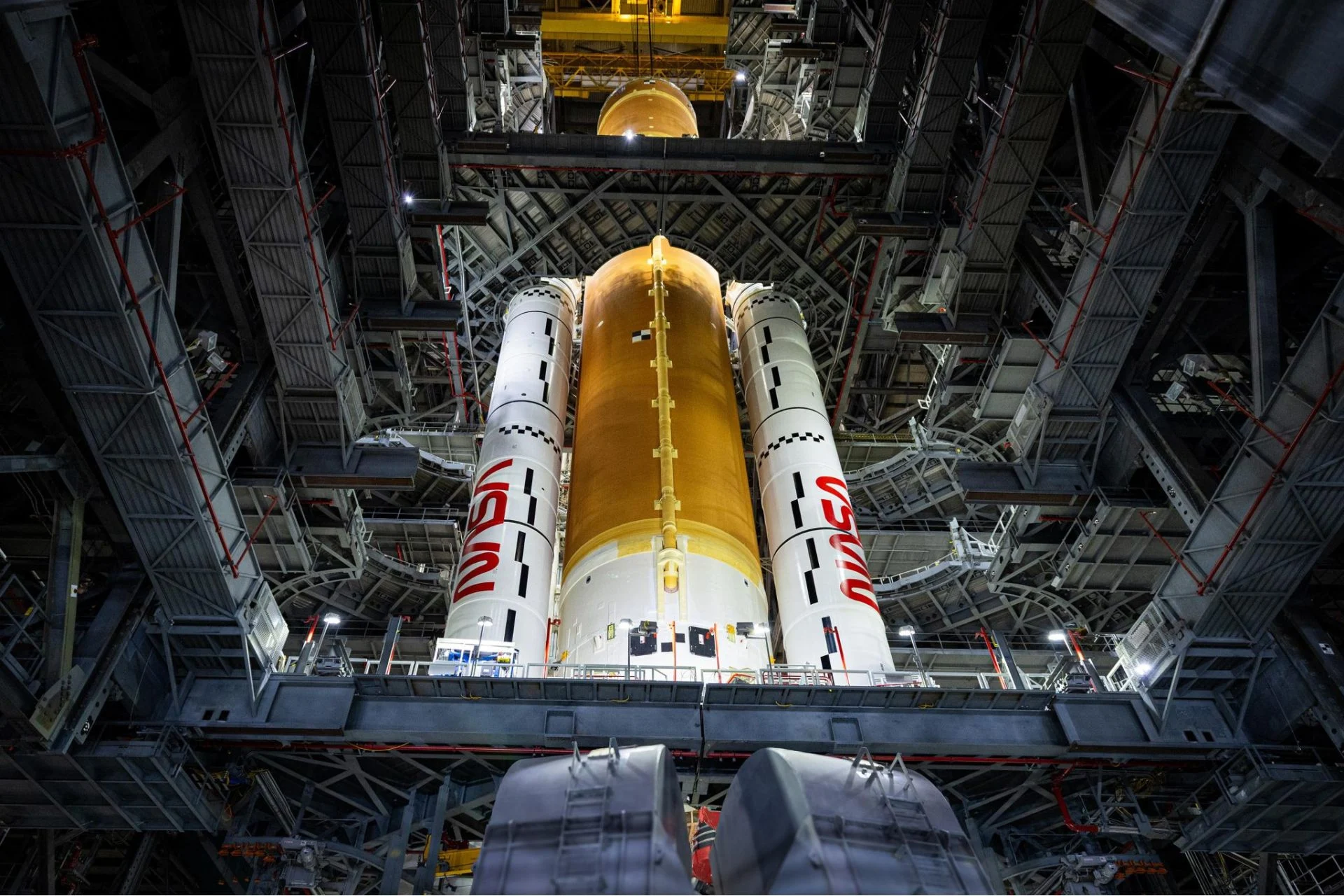
In a monumental step toward returning humans to the lunar surface, NASA has officially announced it will roll the Space Launch System (SLS) rocket and Orion spacecraft to the launch pad for the historic Artemis 2 mission on Friday, January 17, 2026. The rollout marks the first time a crew-rated moon rocket will occupy Launch Complex 39B since the Apollo era, setting the stage for the first human voyage to lunar vicinity in over half a century. The operation is scheduled to commence at 12:01 a.m. EST (0501 GMT), with the 4.2-mile journey from the iconic Vehicle Assembly Building (VAB) to the pad aboard the massive Crawler-Transporter 2 expected to take approximately 10-12 hours.
This highly anticipated move is a critical milestone in the final preparations for the Artemis 2 mission, which will send four astronauts on a 10-day journey around the Moon and back. Unlike the uncrewed Artemis 1 test flight that orbited the Moon in late 2022, Artemis 2 carries a human crew, making its success paramount for proving the complete integrated system’s readiness for deep space travel. The rollout is a vivid, physical signal that the mission is transitioning from preparation to execution. “This is the moment where theory and planning become tangible reality,” said NASA Administrator Bill Nelson in a statement. “Seeing this magnificent rocket on the pad will be a powerful reminder that we are once again on the cusp of history—sending our explorers further than any have gone this century.”
The Artemis 2 crew, announced in 2023, consists of NASA astronauts Reid Wiseman (commander), Victor Glover (pilot), Christina Koch (mission specialist), and Canadian Space Agency astronaut Jeremy Hansen (mission specialist). This diverse team represents a new generation of lunar explorers. Koch will become the first woman to travel to the Moon, Glover the first person of color, and Hansen the first non-American to venture into deep space. Their mission profile is audacious: after launch, currently targeted for no earlier than September 2026, they will perform an Earth orbit checkout before firing Orion’s upper stage to enter a free-return trajectory around the Moon. This path will take them approximately 6,400 miles beyond the far side of the Moon—farther than any human has ever traveled from Earth—before gravity naturally pulls the spacecraft back for the journey home.
The engineering marvel at the heart of this endeavor is the 322-foot-tall SLS Block 1 rocket. Comprising a core stage powered by four RS-25 engines (relics of the Space Shuttle program) and two solid rocket boosters, it will generate a ground-shaking 8.8 million pounds of thrust at liftoff. Topped with the Orion crew capsule and its European Service Module, the stacked vehicle represents the world’s only super-heavy-lift rocket designed specifically for human deep-space exploration. The rollout is not just a transport operation but a full-scale dress rehearsal. Once at Pad 39B, teams will conduct a series of final integrated tests, including a “wet dress rehearsal” where the rocket is fully loaded with over 700,000 gallons of cryogenic propellant and taken through a simulated countdown. “The pad phase is our ultimate verification environment,” explained Artemis 2 Mission Manager, Mike Sarafin. “It’s where we subject the entire stack to the conditions it will experience on launch day, minus only the ignition command. Every system, from flight computers to life support, must perform flawlessly.”
The significance of Artemis 2 extends far beyond a single lunar flyby. It is the crucial proving ground for the technologies and operations needed for Artemis 3, the mission slated to land the first woman and the next man on the lunar South Pole. Data on crew health, spacecraft performance, and navigation in deep space gathered during Artemis 2 will be invaluable. Furthermore, the mission directly supports NASA’s long-term Moon to Mars objectives, using the lunar environment as a testbed for the systems and resilience required for an eventual human mission to the Red Planet. “Artemis 2 is the essential bridge,” stated NASA Associate Administrator for Exploration Systems Development, Catherine Koerner. “We demonstrated the hardware with Artemis 1. Now, with Artemis 2, we demonstrate the human element—our ability to live, work, and safely operate in the deep space environment. The learnings from this crew’s experience will inform every step we take thereafter, from the lunar surface to Mars.”