
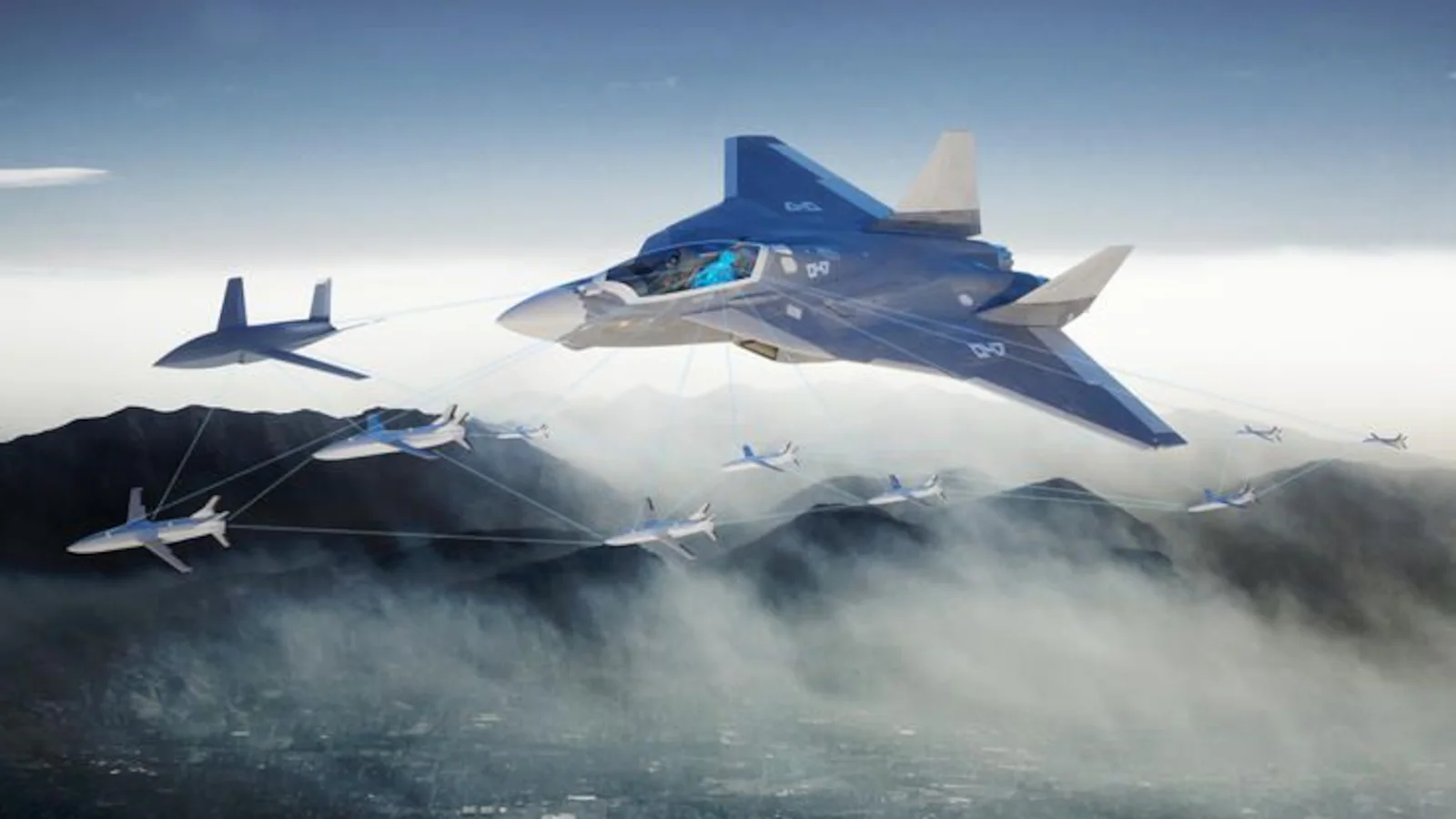
In a landmark move set to redefine India’s military aerospace landscape, Reliance Industries Limited and British aerospace giant Rolls-Royce have announced a strategic partnership to jointly design, develop, and manufacture a sovereign combat engine for India’s indigenous Advanced Medium Combat Aircraft (AMCA) programme . This collaboration, unveiled on the eve of India’s 80th independence day, represents a monumental stride in New Delhi’s ambitious ‘Make in India’ initiative, aiming to curtail the nation’s longstanding reliance on imported defence technology and establish a self-reliant, cutting-edge aerospace ecosystem within the country . The partnership between India’s largest private sector conglomerate and a world leader in jet engine technology is poised to power the AMCA, India’s flagship fifth-generation stealth multirole fighter jet, which is currently being developed locally for the Indian Air Force and is expected to play a pivotal role in the nation’s future air combat strategy .
At the heart of this proposed alliance is a plan to explore the establishment of a dedicated Aerospace Gas Turbine Complex in India, an end-to-end facility that would encompass every stage of the engine’s lifecycle—from initial design and development to manufacturing, testing, production, and through-life support . This ambitious project is designed to combine Rolls-Royce’s world-renowned advanced propulsion technology and expertise with Reliance’s formidable technical, manufacturing, and execution capabilities, creating a synergy that could transform India from a major arms importer into a globally competitive hub for advanced aerospace propulsion . The joint statement from the two industry giants quoted Rolls-Royce Chief Executive Tufan Erginbilgic, who hailed the partnership as a major milestone, while Reliance Executive Director Anant Ambani emphasized their shared aim to build an enduring national capability that would not only make India self-reliant but also globally competitive in the long term . The scale of investment for this partnership has not yet been disclosed, but the announcement signals a significant foray by Reliance into the high-stakes defence manufacturing sector, which has been a top priority for Prime Minister Narendra Modi’s administration .
The announcement of this collaboration, however, introduces a new layer of complexity to an already fiercely competitive process to power India’s next-generation fighter. While the initial AMCA Mk1 variant is expected to be powered by the General Electric F414 engine, the more advanced AMCA Mk2 variant will require a more powerful indigenous engine in the 110-130 kN thrust class . This is where the race has intensified, with the Reliance-Rolls-Royce partnership now emerging as a direct challenger to an existing proposal by French aerospace giant Safran. In a separate development confirmed by Indian Defence Minister Rajnath Singh, Safran has already been selected to collaborate with the state-owned Gas Turbine Research Establishment (GTRE) on a 70-billion-dollar project to co-develop a 120kN thrust engine for the same AMCA program . This competing Safran-GTRE joint venture has reportedly won favour due to its proposed 10-year development cycle and promises of complete technology transfer, including critical know-how for single-crystal turbine blades and advanced cooling systems, ensuring India gains full intellectual property (IP) ownership and the freedom to modify, maintain, and export the engine without restrictions . The Reliance-Rolls-Royce bid, which similarly includes an offer of full IP rights for India, ground testing targeted by 2032, and the first flight by 2034, is set to create a competitive dynamic that could potentially accelerate development timelines and offer the Indian government more negotiating power regarding technology absorption and cost .
The broader context of this development is India’s urgent need to resolve its long-standing Achilles’ heel in aerospace: the inability to manufacture reliable advanced jet engines domestically. Previous indigenous efforts, such as the GTRE’s Kaveri engine, have faltered, and ongoing imports of GE-F404 engines for the Tejas Mk-1A fighter have been plagued by delays due to supply chain issues, hampering production . Therefore, the stakes for the AMCA engine program are incredibly high. It is not merely about equipping a single aircraft but about building an entire “national aerospace ecosystem” that can secure India’s defence sovereignty and reduce its vulnerability to foreign supply shocks . The path to powering India’s future stealth fighter is now a two-horse race between the Franco-Indian state-backed joint venture and the new British-Indian private sector partnership, a competition that Defence Minister Singh has placed under a “national mission mode” to ensure rapid execution . The original timeline for the selected engine project is aggressive, aiming for core engine readiness by 2030, certification by 2032, and full production by 2036 to meet the Indian Air Force’s goal of fielding at least seven squadrons of AMCA jets by the early 2040s . As both teams prepare for what is expected to be one of the most significant defence technology partnerships in India’s history, the nation stands at the cusp of potentially transforming its defence industrial base and achieving a historic breakthrough in strategic aerospace autonomy.