
November 30, 2025
A groundbreaking study published today in the prestigious Journal of Geophysical Research has unveiled a previously unknown mechanism within Earth’s magnetosphere, a discovery that promises to fundamentally rewrite textbooks and revolutionize our understanding of how our planet interacts with the violent stream of particles from the Sun. The findings, based on data from the European Space Agency’s Magnetospheric Multiscale (MMM) mission, reveal a dynamic and unexpectedly efficient process of energy transfer that occurs during periods of relatively calm solar wind, challenging the long-held assumption that the most significant geomagnetic activity happens only during powerful solar storms. This new paradigm not only enhances our ability to predict space weather, which can cripple satellites and power grids, but also sheds light on a universal cosmic process observed throughout the solar system and beyond.
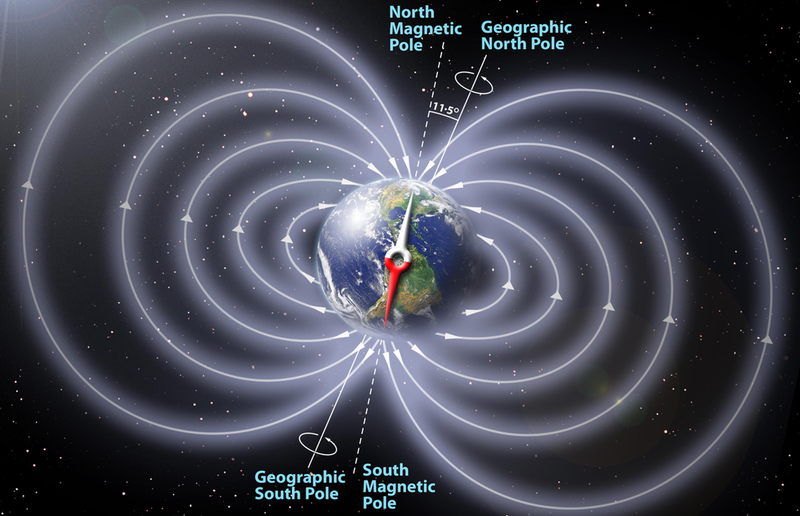
For decades, the primary focus of space physicists has been on the dramatic and often destructive interactions that occur during coronal mass ejections or high-speed solar wind streams. These events slam into Earth’s magnetic bubble, or magnetosphere, causing it to compress and vibrate, funneling immense energy into the polar regions to create brilliant auroras and inducing powerful electrical currents in the ground. The prevailing view was that a quiet solar wind meant a quiet magnetosphere. The new research systematically dismantles this assumption. The international team, led by Dr. Aris Malik from the University of Cambridge, analyzed high-resolution data collected by the MMM fleet of four identical spacecraft, which fly in a tight tetrahedral formation perfect for studying small-scale physics. They focused on a specific, common boundary within the magnetosphere known as the magnetopause—the front line where the solar wind’s magnetic pressure balances Earth’s magnetic field.
What they discovered was a hidden world of turbulence and energy conversion operating even under nominal solar conditions. The key finding is the identification of a prolific and sustained process of “magnetic reconnection” occurring in countless, tiny pockets along the magnetopause. Magnetic reconnection is a fundamental astrophysical process where magnetic field lines from different domains—in this case, the Sun’s interplanetary magnetic field and Earth’s intrinsic field—break, cross, and reconnect, explosively converting magnetic energy into heat and kinetic energy. Previously, large-scale reconnection events during solar storms were thought to be the main drivers of geomagnetic activity. This study reveals that during solar quiet, the magnetopause is not a smooth, stable boundary but is instead peppered with hundreds of these miniature reconnection sites, each acting like a tiny, efficient energy valve. “It’s as if we’ve been studying rivers only during flash floods, completely missing the fact that a vast, slow-moving delta is constantly and quietly reshaping the landscape the rest of the time,” explained Dr. Malik. “These micro-reconnection events are that delta. They are not as individually dramatic as a solar storm, but their cumulative effect is staggering and continuous.”
The implications of this discovery are profound and multifaceted. Firstly, it provides a missing piece to the puzzle of where and how the solar wind’s particles and energy consistently enter the magnetosphere. The steady drizzle of particles through these micro-reconnection sites helps explain the persistent populations of energetic particles in the Van Allen radiation belts and the background level of ionization in the upper atmosphere. This continuous, low-level injection of energy may be a primary driver of the constant, global state of the magnetosphere, rather than merely a feature of its stormy periods. Furthermore, the process is remarkably efficient. The data show that these small-scale events can, in aggregate, transfer a significant portion of the energy that a large-scale storm event does, just over a longer, more sustained period. Dr. Elena Vasquez, a co-author from the University of California, Berkeley, stated, “Our models have always had a ‘background noise’ of activity that we couldn’t quite account for. We attributed it to imperfections in the models themselves. Now we see it wasn’t noise at all; it was the signal of this ubiquitous, small-scale reconnection. We were filtering out the very phenomenon we needed to understand.”
From a practical standpoint, this new understanding has immediate ramifications for space weather forecasting. Modern forecasting models are heavily tuned to predict the large-scale impacts of major solar eruptions. This discovery means that even on days when the Sun seems quiet, the space environment around Earth is simmering with activity that can have cumulative effects on satellite orbits, subtly degrade sensitive instrumentation over time, and cause low-level, yet disruptive, radio scintillations. Integrating this “quiet time” physics into forecasting models will lead to more accurate, all-weather space weather predictions, enhancing the protection of our vital technological infrastructure. A more robust understanding of magnetic reconnection also has applications far beyond Earth. The same physics governs solar flares, the heating of the solar corona, and the dynamics of plasma around neutron stars and black hole accretion disks. By studying this process in our own backyard, scientists can refine theories that explain the most energetic events in the universe.
The publication of this study marks a pivotal moment in heliophysics. It shifts the scientific community’s gaze from solely watching for solar tempests to also appreciating the complex, hidden dance that occurs every moment at the edge of our planetary shield. The research team plans to continue their investigation, using the MMM data to map the full three-dimensional structure of these reconnection sites and quantify their total energy budget with even greater precision. As Dr. Malik concluded, “We are just beginning to appreciate the hidden vitality of our magnetic environment. The solar wind is always whispering to the magnetosphere, and we have finally learned how to listen.” This work ensures that our future exploration of space, both near Earth and in the depths of the cosmos, will be guided by a more complete and nuanced picture of the invisible magnetic forces that shape our universe.