
December 8, 2025 – Goddard Space Flight Center, Greenbelt, Maryland.
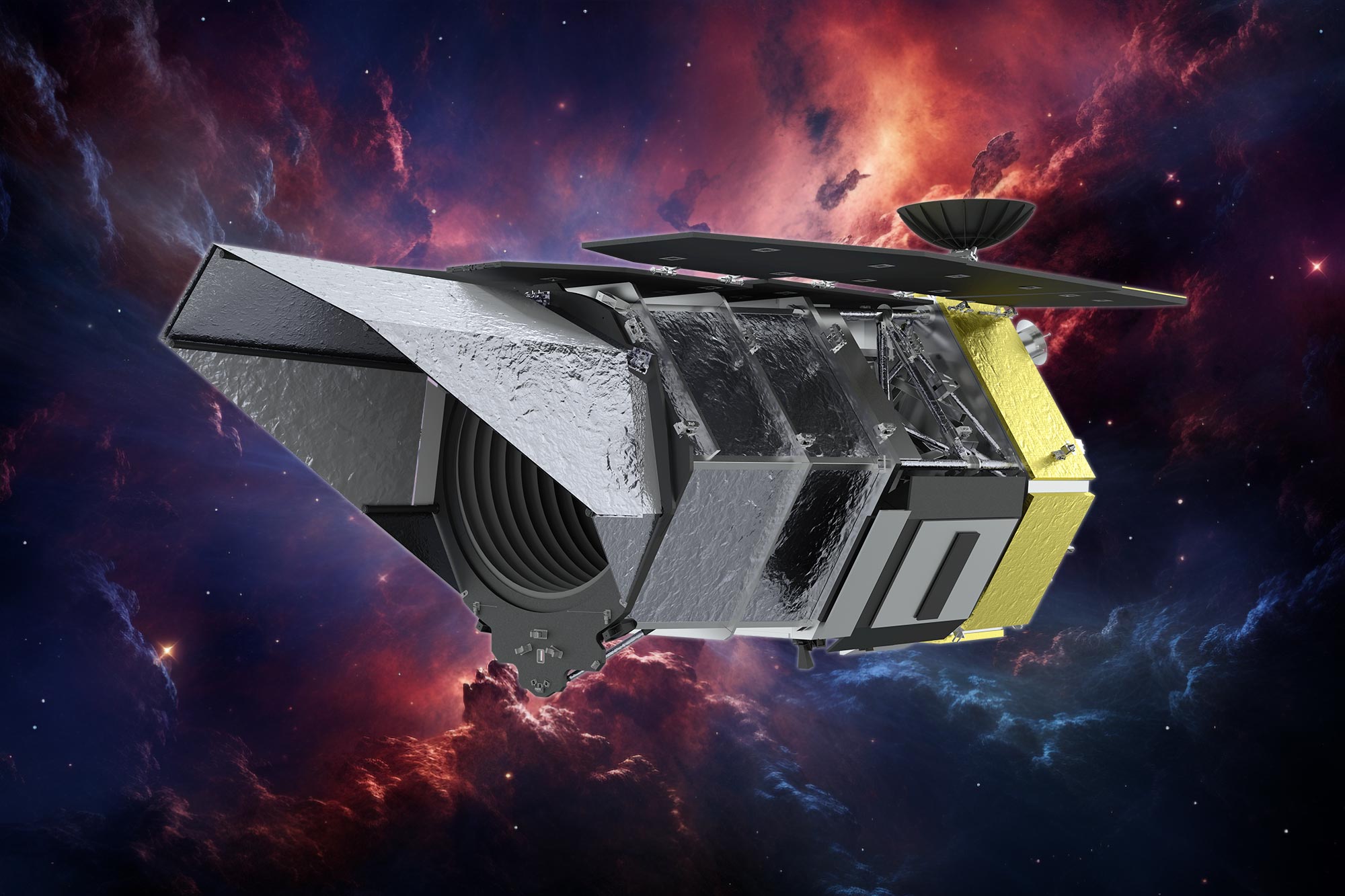
In a milestone ceremony that has sent waves of anticipation through the global astrophysics community, NASA engineers and project managers have officially declared the Nancy Grace Roman Space Telescope fully assembled, integrated, and ready for its final round of exhaustive system-level testing. The announcement, made at 10:00 AM EST, confirms that the ambitious flagship observatory—hailed as Hubble’s wide-eyed successor—has transitioned from a collection of advanced components into a complete, space-bound observatory. With this critical phase achieved, a pressing question now dominates discussions at NASA centers and scientific institutions: with assembly complete, could the Roman Space Telescope beat its current late-2026 launch target and embark on its universe-surveying mission earlier than expected?
The Roman Space Telescope represents a paradigm shift in cosmic observation. While the Hubble Space Telescope offers a stunning but narrow keyhole view of the universe, and the James Webb Space Telescope peers deeply into the infrared to see the first galaxies, Roman is designed to capture sweeping panoramas of the cosmos. Its primary instrument, the Wide Field Instrument (WFI), will possess a field of view 200 times larger than Hubble’s infrared camera while matching its exquisite resolution. This means Roman could image an area of sky equivalent to 100 full moons in a single snapshot, mapping the universe hundreds of times faster than its famous predecessor. “This isn’t just another telescope; it’s a cosmic census machine,” said Dr. Julie McEnery, Roman’s senior project scientist at NASA’s Goddard Space Flight Center. “Where Hubble might study one galaxy at a time in detail, Roman will survey millions. It will transform our understanding of dark energy, dark matter, and the population of planets beyond our solar system not through isolated studies, but through sheer statistical power.”
The declaration of full build completion encompasses the meticulous integration of the spacecraft bus, built by Ball Aerospace, with the telescope’s optical assembly, which includes a primary mirror the same size as Hubble’s (2.4 meters) but one-fourth the weight, and the state-of-the-art WFI and Coronagraph Instrument. The Coronagraph is a particularly revolutionary technology demonstration—a starlight-blocking device that will attempt to directly image and characterize giant exoplanets orbiting nearby stars, serving as a critical pathfinder for future missions aimed at imaging Earth-like worlds. The integration of this coronagraph, a complex and delicate instrument requiring nanometer-scale stability, was one of the final and most challenging steps in the assembly process.
With the observatory now physically whole, the path to the launch pad is defined by verification. The complete spacecraft will undergo months of intense environmental and operational testing, including acoustic, vibration, and thermal-vacuum tests that simulate the rigors of launch and the harsh conditions of space. The schedule for this testing campaign is now the primary variable influencing any potential shift in the launch date. Project managers have built contingency time into the schedule, acknowledging the inherent unpredictability of testing complex spacecraft. If the upcoming tests proceed with no significant anomalies or needed rework, that contingency time could convert into an earlier rollout to the launch site.
However, the launch date is not solely dependent on Roman’s readiness. A critical external factor is the launch vehicle itself. Roman is contracted to fly on a SpaceX Falcon Heavy rocket from Launch Complex 39A at Kennedy Space Center in Florida. The availability of a specific booster core and side boosters, as well as the integration of the rocket’s payload fairing and adapter with the Roman spacecraft, must be perfectly synchronized. SpaceX’s manifest is densely packed with both government and commercial launches. Any delay in the Falcon Heavy queue—whether for Roman or for another mission scheduled before it—could offset gains made in the testing phase. NASA and SpaceX launch integration teams are now engaged in detailed discussions, evaluating the test schedule against rocket availability. “We are in constant dialogue with our launch service provider,” stated Mike McAuley, Roman’s Mission Systems Engineer at Goddard. “Our goal is a ‘just-in-time’ delivery to the pad, where the spacecraft completes its testing precisely as the rocket becomes available. Any opportunity to accelerate that flow is being actively examined, but not at the expense of mission assurance.”
The scientific imperative for Roman has never been greater, adding urgency to the timeline discussions. Its two primary science pillars are investigations into the fundamental mysteries shaping the cosmos. First, through surveys of thousands of supernovae and the large-scale structure of the universe, Roman will conduct the most precise measurements to date of the effects of dark energy, the mysterious force accelerating the universe’s expansion. It will test whether dark energy’s strength has changed over time, potentially ruling out or validating whole classes of cosmological theories. Second, via a phenomenon called microlensing, Roman is predicted to discover thousands of new exoplanets, including hundreds likely to be the size of Earth or larger, dwelling far from their host stars—a population nearly invisible to other detection methods. “The exoplanet demographic map we have today is profoundly biased toward worlds close to their stars,” explained Dr. Benjamin Montet, an astrophysicist at the University of New South Wales and a Roman science team collaborator. “Roman’s microlensing survey will reveal the frozen outer planets, the rogue planets wandering between stars, and give us our first true sense of the average planetary system. It will tell us if our solar system’s architecture is common or a cosmic oddity.”
The potential for an earlier launch, even by a matter of months, is therefore electrifying for astronomers worldwide, who have spent years designing the specific surveys and preparing the data analysis pipelines needed to handle the torrent of information Roman will produce. An accelerated timeline would mean earlier access to its transformative data, potentially allowing key cosmological results to be integrated with those from the Euclid mission (launched in 2023) and the Vera C. Rubin Observatory (beginning operations in 2025) for a multi-observatory assault on dark energy.
Nonetheless, NASA leadership emphasizes caution. The staggering success of the James Webb Space Telescope, which operates flawlessly nearly a million miles from Earth, is a direct result of an exhaustive, years-long testing regimen on the ground. The temptation to rush is tempered by the hard-learned lesson that thorough verification is non-negotiable for flagship missions costing billions of dollars and the hopes of a generation of scientists. NASA’s official statement maintains a “no earlier than” date of October 2026, but acknowledges the team is evaluating opportunities within the schedule.
As the fully assembled Roman Space Telescope is carefully moved into its first major test chamber this week, it stands as a testament to a decade of engineering ingenuity. Its early launch is not guaranteed, but its eventual transformation of our cosmic understanding is. When it does launch, Roman will open a vast new window on the universe, conducting a broad-as-the-sky inventory that will redefine our place in the cosmos. The countdown, whether it ends in late 2026 or slightly sooner, has now unequivocally begun.